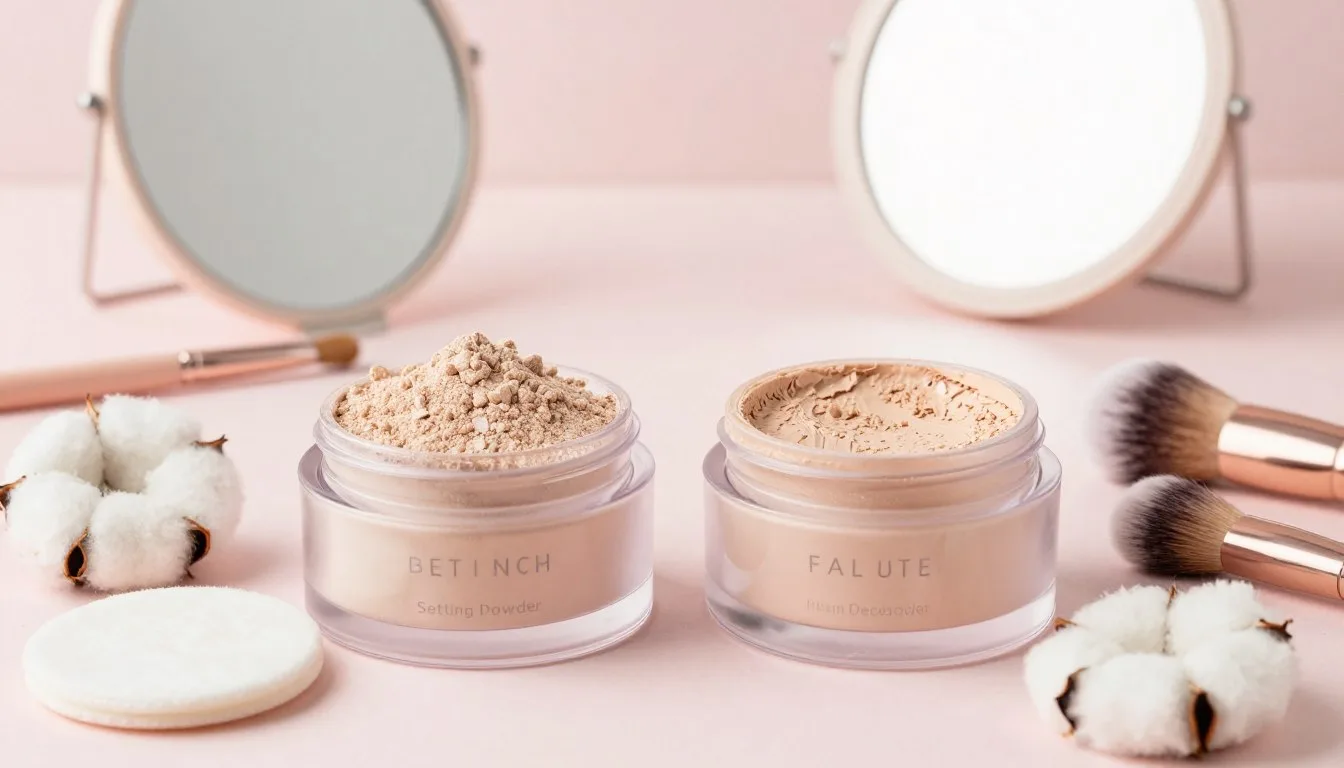
Are you using the right powder for your makeup routine? Many of us get setting and finishing powders mixed up. But, they have different jobs.
Setting powders help keep your foundation and concealer in place. They control shine and make your makeup last longer. Finishing powders, on the other hand, give your look a final touch. They smooth out your skin and make it look soft and even.
Knowing the difference between these powders is key to getting the makeup look you want. The right powder can make your natural beauty shine and keep your makeup looking great all day.
Key Takeaways
- Setting powders set foundation and concealer, while finishing powders blur texture and soften lines.
- Choose a setting powder to control shine and extend makeup wear.
- Opt for a finishing powder to add a soft-focus effect and blur imperfections.
- Understanding your skin type and makeup goals is crucial for selecting the right powder.
- Using the right powder can enhance your natural beauty and ensure long-lasting makeup.
Setting Powder vs Finishing Powder: Understanding the Key Differences
Knowing the difference between setting and finishing powders is key to a perfect makeup look. You might wonder what makes these powders unique and how they can improve your beauty routine.
Primary Functions and Benefits
Setting powder is made to set your makeup, controlling shine and making it last longer. It keeps oiliness at bay and keeps your makeup in place all day. Finishing powder, on the other hand, blurs texture and softens lines for a smooth finish. It’s the final step to perfect your skin.
Product Formats: Loose vs Pressed Options
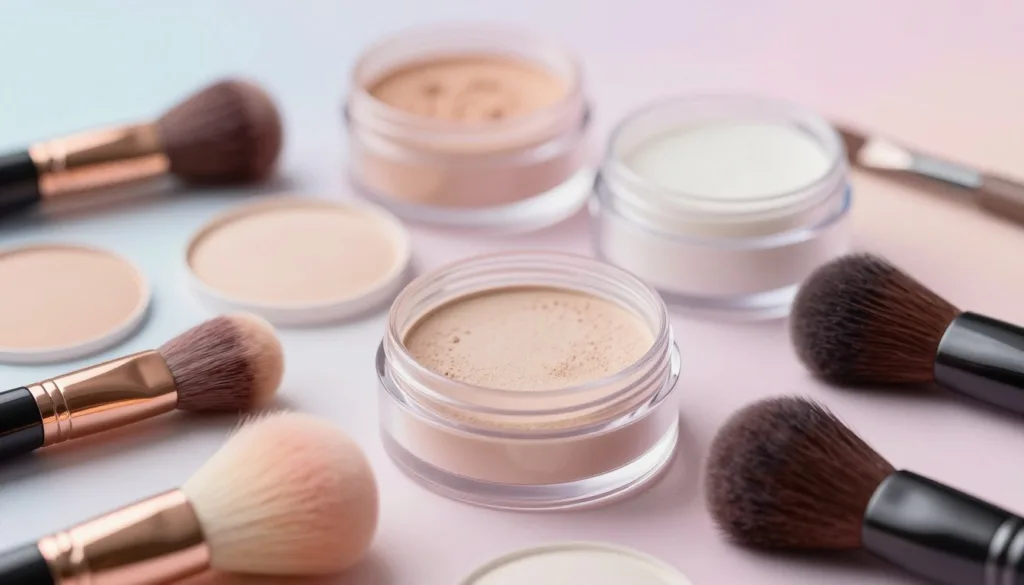
Both types of powders come in loose and pressed forms. Loose powders let you customize your application. Pressed powders are great for quick touch-ups on the go. Your choice depends on your makeup style and needs.
Color Varieties: Translucent vs Tinted Formulas
Setting and finishing powders are available in translucent and tinted shades. Translucent powders work for most skin tones. Tinted powders can boost your natural color. Pick the right shade based on your skin and desired look.
| Powder Type | Primary Function | Product Formats | Color Varieties |
|---|---|---|---|
| Setting Powder | Sets makeup, controls shine | Loose, Pressed | Translucent, Tinted |
| Finishing Powder | Blurs texture, softens lines | Loose, Pressed | Translucent, Tinted |
How to Use Setting Powder for Long-Lasting Makeup
Setting powder is key to long-lasting makeup. It makes a big difference in how your makeup looks all day.
Step-by-Step Application Techniques
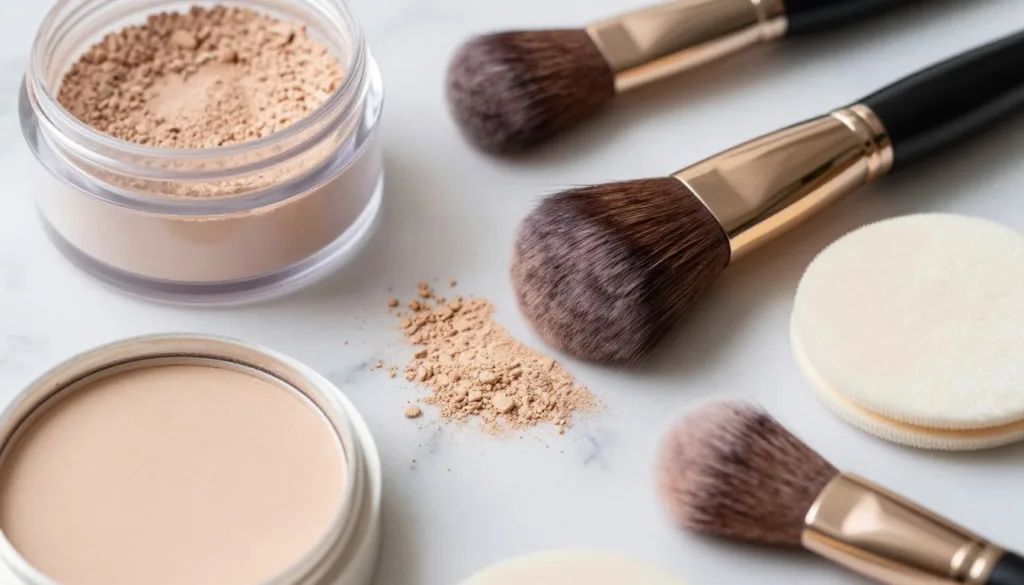
Start by tapping a small amount of setting powder onto your hand. Then, use a brush or puff to apply it to your skin. Focus on oily or worn areas.
Best Practices for Oily and Combination Skin
If you have oily or combination skin, target the T-zone. Use a light touch to avoid more oiliness. Look for “matte” or “oil-control” products for extra help.
Troubleshooting: How to Prevent Cakiness
To avoid cakiness, tap off extra powder and apply lightly. If it happens, gently buff with a clean brush.
| Application Tip | Benefit |
|---|---|
| Tap off excess powder | Prevents cakiness |
| Use a light hand | Avoids exacerbating oiliness |
| Target the T-zone | Controls shine and extends makeup wear |
Applying Finishing Powder for a Flawless Look
Finishing powder is key for a camera-ready face. It’s used at the end of your makeup routine. It blurs texture and softens lines, making your skin look smooth and even.
Perfect Timing: When to Add Finishing Touches
Timing is crucial for applying finishing powder. Do it after you’ve finished your makeup. This step keeps your makeup in place and looking perfect in photos.
Techniques for Blurring Texture and Softening Lines
When applying finishing powder, use a light touch. Focus on areas like the eyes and mouth. Use a large powder brush to dust the powder gently over these spots.
Avoiding Photo Flashback with Silica-Based Products
Silica-based powders can prevent photo flashback. They reduce pores and fine lines. Choose products with silica and apply them lightly for a natural look.
Here’s a comparison of different finishing powders and their characteristics:
| Product Type | Key Ingredients | Benefits |
|---|---|---|
| Soft Focus Finishing Powder | Silica, Talc | Blurs texture, softens lines |
| Blur Effect Powder | Silica, Dimethicone | Reduces appearance of pores, fine lines |
| Translucent Finishing Powder | Titanium Dioxide, Silica | Sets makeup, reduces shine |
Conclusion: Selecting the Right Powder for Your Skin Type and Makeup Goals
Choosing between setting powder and finishing powder depends on your skin type and makeup goals. It’s important to know the differences to get a flawless look.
For oily skin, setting powder helps control shine and keeps makeup in place longer. Finishing powder is better for blurring texture and softening lines. Think about your skin type and makeup needs when deciding.
Having the right powder is key in cosmetics and beauty. The right choice gives you a flawless, long-lasting finish. Whether you love makeup or are just starting, knowing about setting and finishing powders can improve your look.