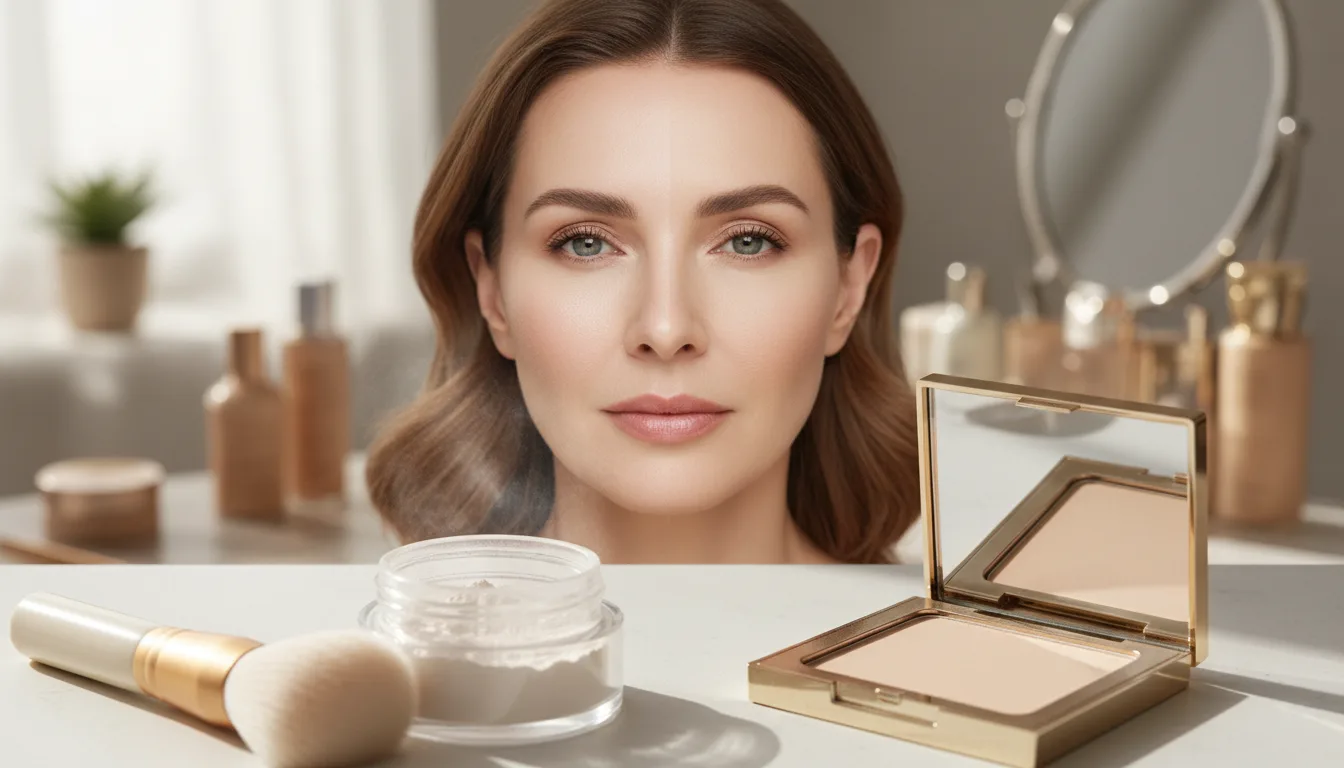
Ever wonder why one powder works perfectly while another looks cakey? The answer lies in understanding the differences between loose and pressed powders.
Face powders are a key part of makeup routines. They help set makeup, reduce shine, and smooth out skin texture. Loose powders are finely milled for a natural look. On the other hand, pressed powders are in compacts and perfect for quick touch-ups.
Choosing the right powder depends on your skin type and needs. Whether you want a light, natural look or more coverage, knowing the difference is key.
Key Takeaways
- Loose powders provide a natural, lightweight finish.
- Pressed powders are ideal for on-the-go touch-ups and offer more coverage.
- Understanding your skin type is key in choosing the right powder.
- Loose powders are great for setting makeup and reducing shine.
- Pressed powders come in compacts, making them portable.
Understanding Face Powders: The Basics
To master your makeup routine, it’s key to know the basics of face powders. Face powders are vital for setting makeup, controlling shine, and achieving a smooth finish. They come in two main types: loose and pressed powders. Each has its own benefits and uses.
What Face Powders Do
Face powders play a big role in your makeup routine. They help set your makeup to last longer and control oil to prevent shine.
Setting Makeup
Setting powders keep your makeup in place all day. This is very important for liquid foundations and concealers.
Oil Control
Many face powders absorb excess oil, reducing shine and giving your skin a matte finish. This is great for those with oily skin.
The Role of Powder in Your Makeup Routine
The type of powder you choose greatly affects your makeup’s look and how long it lasts. Loose powders are often chosen for setting makeup without adding extra coverage. On the other hand, pressed powders are easy to use for touch-ups and can add more coverage. Knowing the loose powder benefits and pressed powder advantages helps you pick the right one for you.
Loose powders are more versatile and can be used for setting or as a finishing powder. Pressed powders are more portable and easy to use for quick touch-ups.
Loose vs Pressed Powder: Key Differences
Choosing between loose and pressed powder depends on their unique features. These differences affect how they look on your skin and fit into your makeup routine. It’s not just about what you like; it’s about what works best for you.
Formulation and Ingredients
Loose powders are finely milled and have fewer ingredients. They’re great for setting makeup without extra coverage. Pressed powders, being compact, may have more ingredients for better coverage and texture. Pressed powders give a polished look, while loose powders offer a natural finish.
Packaging and Portability
Loose powders come in jars, which are less portable but allow for big scoops with a brush. Pressed powders, being compact, are perfect for quick touch-ups on the go. This makes them great for busy people.
Price Point Comparison
Prices for loose and pressed powders vary a lot. Loose powders are often cheaper, but high-quality ones can be pricey. Pressed powders range from affordable to luxury. Think about how long the product lasts and if it suits your skin.
Shelf Life and Storage
Both types of powder last a long time if stored right. But loose powders need more care to avoid contamination and air exposure. This can change their texture and how well they work. Pressed powders are easier to store because their compact design keeps the powder safe.
Knowing these differences helps you choose the right powder for your makeup needs. Think about the formulation, packaging, price, and storage. This way, you can pick a powder that improves your beauty routine.
Loose Powder: A Detailed Look
Loose powder is known for its fine texture. It sets makeup without adding extra coverage. This makes it perfect for a natural look.
Texture and Consistency
Loose powders are finely milled. This means they sit smoothly on the skin. They don’t accentuate fine lines or pores.
The fine texture also helps control shine. This is great for oily skin.
Coverage and Finish Options
Loose powders come in various options. You can choose based on coverage and finish.
Translucent vs. Tinted
Translucent loose powders work with most skin tones. They don’t contain pigment. Tinted loose powders add a subtle color to even out your skin tone.
Matte vs. Luminous
Matte loose powders control shine and give a flat finish. Luminous or satin-finish powders add a healthy glow with light-reflecting particles.
Longevity on the Skin
One big loose powder benefit is it makes makeup last longer. It sets foundation and concealer, preventing creasing. For oily skin, it controls oil and shine.
When picking a loose powder, think about your skin type and desired finish. Whether you want a natural look or need to control shine, there’s a powder for you.
Pressed Powder: A Complete Overview
Pressed powder offers many benefits, like buildable coverage and various finishes. It suits different skin types and needs, making it essential in many makeup routines.
Texture and Consistency
Pressed powders are known for their compact form and smooth texture. They have more ingredients than loose powders, giving a flawless finish. When comparing loose and pressed powder textures, you’ll see pressed powders are denser and creamier.
Coverage and Finish Options
One big pressed powder advantage is its buildable coverage and finish variety. You can get a natural look or full coverage with pressed powders.
Buildable Coverage
Pressed powders let you build coverage step by step. This is great for covering blemishes or imperfections.
Finish Varieties
Pressed powders have many finishes, like matte, satin, and radiant. This makes it easy to find one that matches your skin type and tone. For example, dry skin might prefer a hydrating finish, while oily skin might like matte.
| Finish Type | Skin Type | Benefits |
|---|---|---|
| Matte | Oily | Controls shine, reduces oiliness |
| Satin | Normal/Combination | Provides a natural finish, balances skin tone |
| Radiant | Dry/Mature | Adds a healthy glow, hydrates the skin |
Longevity on the Skin
Pressed powders are made to last all day, giving long-lasting coverage and control. They keep makeup looking fresh and flawless. For dry skin, they help lock in moisture and reduce fine lines and wrinkles.
Matching Powder to Your Skin Type
Finding the right powder is key to a perfect makeup look. Different types of powders suit different skin needs. Knowing what your skin wants is the first step.
Best Options for Oily Skin
If you have oily skin, loose powders are your best friend. They soak up excess oil and hide pores.
Oil-Absorbing Ingredients to Look For
For oily skin, look for powders with silica, talc, or kaolin clay. These ingredients soak up oil well.
- Silica: Controls oil and shine.
- Talc: Keeps skin dry by absorbing moisture.
- Kaolin Clay: Absorbs oil without drying out the skin.
Ideal Choices for Dry Skin
Dry skin needs hydrating pressed powders. They keep moisture in and skin smooth.
Hydrating Formulas
Choose pressed powders with hyaluronic acid or glycerin for dry skin. They keep skin hydrated.
| Ingredient | Benefit |
|---|---|
| Hyaluronic Acid | Keeps moisture in, hydrates. |
| Glycerin | Attracts and holds moisture, soothes dry skin. |
Solutions for Combination Skin
Combination skin can use both loose and pressed powders. Use loose on oily spots and pressed on dry ones for a balanced look.
Gentle Options for Mature Skin
Mature skin needs gentle, non-settling formulas. These formulas avoid making fine lines worse.
Avoiding Settling into Fine Lines
For mature skin, pick powders that are finely milled and have anti-aging ingredients. Stay away from heavy powders that settle into lines.
“A finely milled powder can make a significant difference for mature skin, providing a smooth finish without accentuating fine lines.”
Common Powder Concerns and Solutions
Using powder in your makeup routine can bring up some common worries. But, there are good solutions. You can get a natural look with either loose or pressed powder.
Preventing Cakiness and Creasing
To avoid cakiness and creasing, use the right amount of powder. Start with a light dusting and add more as needed. It’s also important to choose a powder that matches your skin tone for a seamless look.
Tip: Dust powder lightly, focusing on oily areas. This helps prevent cakiness and gives you a smooth finish.
Controlling Shine Throughout the Day
Shine control is a big issue, mainly for those with oily skin. Use a powder with ingredients like silica or talc to absorb oil. This keeps your skin looking matte.
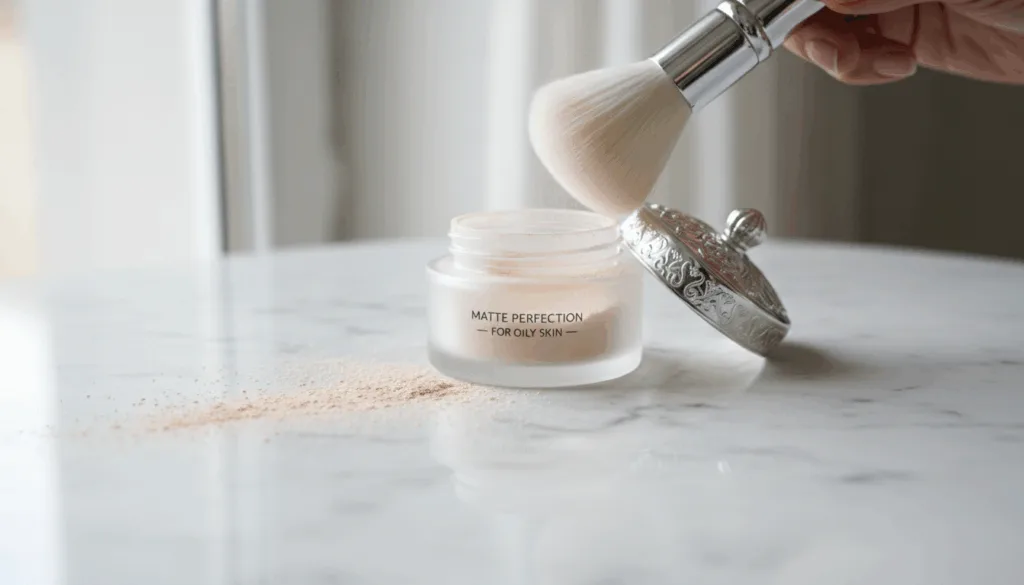
Color Matching Challenges
Finding the right powder color is key. A wrong match can show, like under your eyes. Test powders on your jawline to find the best match. You can also mix shades to create a custom color.
“The right powder can make all the difference in your makeup routine. It’s all about finding the perfect match for your skin tone.”
Flashback in Photography
Flashback in photos can be a worry with some powders. Look for non-reflective or “flashback-free” powders. These formulas help you look great in photos without flashback.
By tackling these powder worries and using the right methods, you can get a natural look all day. Whether you like loose or pressed powder, knowing the differences and picking the right one for your skin is essential.
When to Use Loose vs Pressed Powder in Your Routine
To get the most out of your makeup, knowing when to use loose versus pressed powder is key. Each type offers unique benefits for different times in your makeup routine.
Morning Makeup Application
Loose powders are perfect for morning makeup. They help keep your makeup in place all day. They give a smooth, even look that lasts.
Touch-ups Throughout the Day
Pressed powders are great for quick touch-ups. Their compact size makes them easy to carry and use anywhere.
Special Occasion Makeup
For big events, consider using both loose and pressed powders. Start with loose powder to set your makeup. Then, use pressed powder for any touch-ups.
Under-Eye vs. Full-Face Application
The area you’re applying to also matters. Loose powders are best for the under-eye area because of their fine texture. Pressed powders work well for both under-eye and full-face applications.
| Situation | Recommended Powder Type |
|---|---|
| Morning Makeup | Loose Powder |
| Touch-ups | Pressed Powder |
| Special Occasions | Both Loose and Pressed |
Understanding when to use loose versus pressed powder can enhance your makeup routine. This way, you get the best results every time.
Application Techniques for Flawless Results
Getting a flawless finish with powder is all about the right techniques. Whether you’re using loose or pressed powder, how you apply it matters a lot. It can change your makeup look completely.
Tools for Loose Powder Application
Loose powders are versatile in how you apply them. You can use a powder puff for a light dusting or a brush for more targeted coverage.
Tools for Pressed Powder Application
Pressed powders work best with tools that help build coverage. Use a sponge for a smooth, even finish or a brush for precise application.
Under-Eye Setting Techniques
When setting concealer under the eyes, use a gentle patting motion with your brush. This avoids disturbing the concealer and prevents creasing.
Full-Face Application Methods
For a full-face application, sweeping or pressing motions work well. Sweeping motions are good for an all-over look. Pressing motions are better for building coverage in specific areas.
Baking Method
The baking method involves applying a thick layer of powder under the eyes. Let it sit for a few minutes, then dust off the excess. This sets the under-eye area for long-lasting coverage.
Pressing vs. Sweeping Motions
Pressing motions are great for building coverage, where needed. Sweeping motions are better for a natural look and even coverage across the face.
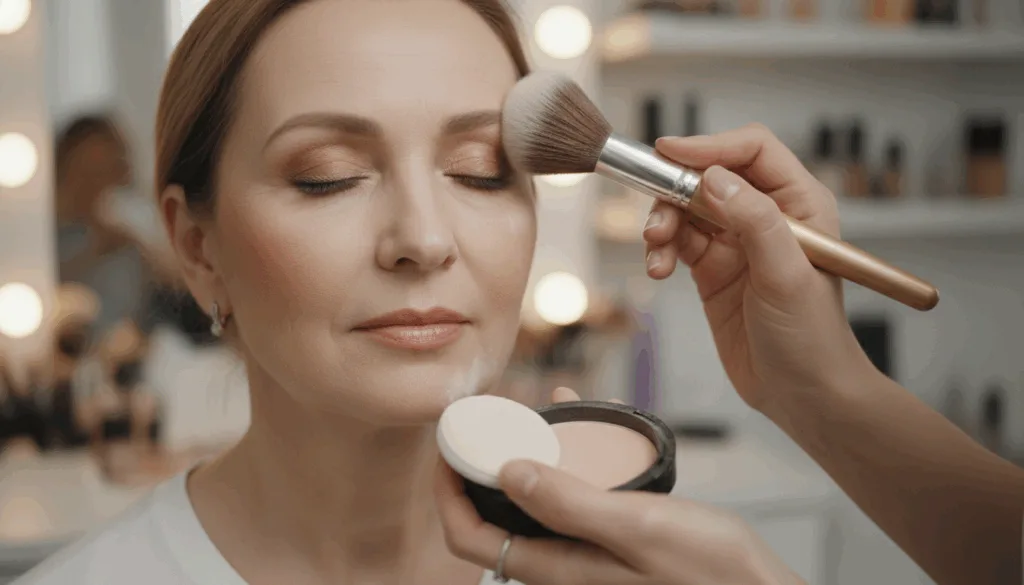
Mastering these application techniques will give you a flawless, long-lasting makeup look. It will enhance your features beautifully under soft lighting.
Pros and Cons: Making Your Final Decision
Choosing between loose and pressed powder is a big decision. Each has its own good points and downsides. These can really change how you do your makeup.
Loose Powder Advantages and Disadvantages
Loose powder is great at setting makeup and controlling oil. It’s perfect for oily skin. Its light texture gives a natural look.
When Loose Powder Excels
- Provides a smooth, matte finish
- Effective for oily skin types
- Can be used to set concealer under the eyes
Limitations of Loose Powder
But, loose powder might not cover well enough for some. It can also be messy to use.
Pressed Powder Advantages and Disadvantages
Pressed powder gives buildable coverage. It’s also easy to carry around for quick fixes.
When Pressed Powder Shines
- Provides buildable coverage
- Convenient for on-the-go touch-ups
- Available in various shades to suit different skin tones
Drawbacks of Pressed Powder
But, pressed powder can get cakey if you use too much. It also doesn’t control oil as well as loose powder.
When to Own Both Types
Having both loose and pressed powder can be smart. Use loose powder to set your makeup and pressed powder for quick fixes. This way, you get the best of both.
Conclusion: Finding Your Perfect Powder Match
Choosing between loose and pressed powder depends on your skin type and what you need. If you want a natural look, think about the texture and coverage you prefer. Loose powder is great for a light, buildable look. Pressed powder is easy to use for quick touch-ups.
Pressed powder is good for oily skin to control shine. Dry skin might like loose powder to avoid looking dry. If you have combination skin, try both to see what works best for you.
Try different ways of applying powder to find what works best for you. You might like the feel of loose powder or the convenience of pressed powder. Find the right powder to get a flawless look that lasts all day.