If you want smoother, healthier-looking skin, you’ve probably heard about vitamin A derivatives. This ingredient is a top choice in dermatology, but starting can be scary. It’s normal to worry about irritation when using such a strong active.
The good news is that patience and preparation are key. Start slow and stick to a routine to add this treatment to your life safely. We’re here to make the science easy and help you get that glow you want.
Key Takeaways
- Understand that this ingredient is a top recommendation for skin texture improvement.
- Acknowledge that initial sensitivity is common but manageable with the right approach.
- Prioritize a slow introduction to build tolerance over time.
- Focus on hydration to support your skin while using active treatments.
- Consistency is the most important factor for seeing long-term anti-aging results.
Understanding Retinol: What It Is and How It Works
Ever wondered why your skin loses its glow over time? The answer is in cell turnover science. Retinol for anti-aging is a top choice in beauty, but knowing how it works is key. This knowledge helps you choose the right products for your skin.
The Science Behind Vitamin A Derivatives
Retinol is part of the vitamin A family, made to fight aging signs. It’s two steps away from the direct vitamin A form, retinoic acid. When you use retinol skincare, your skin turns it into its active form.
This makes it gentler than stronger vitamin A forms. It slowly releases benefits, making it easier to use in your anti aging skincare routine.
How Retinol Accelerates Cell Turnover
Young skin sheds dead cells and replaces them every 28 days. But after 30, this slows to 50 to 70 days. This slowdown causes dull, tired-looking skin.
Retinol speeds up this process, revealing brighter skin. It clears away debris that makes skin look dull and congested. The table below shows how skin changes with age and how retinol helps.
| Age Group | Natural Turnover Rate | Common Skin Concern |
|---|---|---|
| Under 30 | 28 Days | Occasional breakouts |
| Over 30 | 50-70 Days | Dullness and fine lines |
| With Retinol | Restored to ~30 Days | Improved texture and tone |
Using retinol skincare regularly keeps your skin young. As you keep up with anti aging skincare, your skin will feel smoother and look brighter. Remember, patience is key with such a strong ingredient.
The Benefits of Retinol for Your Skin
If you want to change your skin, learning about retinol’s benefits is a good start. This powerful ingredient works deep in your skin to renew and repair it. It boosts your skin’s natural healing, making it look healthier and more vibrant.
Smoothing Fine Lines and Wrinkles
Retinoids are top choices for retinol for anti-aging. Regular use plumps your skin and lessens deep lines. It’s key for anyone serious about anti aging skincare.
Results may not show right away, but they come with time. With patience, your skin will look firmer and younger. Many see a big change in their skin’s look after months of use.
Improving Skin Texture and Tone
The retinol benefits also improve your skin’s look. It speeds up cell turnover, getting rid of dull skin. This brings out the fresh, glowing skin underneath and fades dark spots.
As you keep using it, your skin tone will even out. Documenting your retinol before and after can show how much it improves. You’ll see better skin brightness, less hyperpigmentation, and smoother skin.
- Overall skin brightness and radiance
- Reduction in hyperpigmentation
- Refinement of rough or bumpy patches
Clearing Pores and Managing Breakouts
Retinol is great for more than just aging skin; it’s also for clear pores. It stops dead skin cells from clogging pores, preventing blemishes. This makes it a great tool for a clear, healthy face.
If you get breakouts, this ingredient can help. It makes pores look smaller, giving your face a smoother look. Consistency is truly the key to seeing these changes in your skin.
Who Should Use Retinol and Who Should Avoid It
Deciding if retinol is right for you depends on your skin type. It’s a top choice for fighting aging signs, but it’s not for everyone. Understanding your skin’s specific needs is key to a good experience.
Identifying Your Skin Type and Concerns
People with oily, combination, or normal skin usually do well with retinol. If you worry about fine lines, uneven texture, or breakouts, it might be for you. It helps by speeding up cell turnover, keeping pores open, and skin bright.
But, if your skin is very dry or damaged, be careful. Those with eczema or rosacea might find it too harsh. Always talk to a dermatologist if you’re not sure about using it.
When to Skip Retinol: Contraindications and Precautions
There are times when you should not use retinol. If you’re pregnant or breastfeeding, you should avoid it. Doctors warn against vitamin A derivatives during these periods because of risks to the baby.
Also, if you’ve had recent skin treatments like chemical peels or laser, your skin might be too sensitive. Stay away from it if you have an active sunburn or open wounds. Always put your skin’s health first, even if you want quick results.
| Skin Condition | Suitability | Recommendation |
|---|---|---|
| Oily/Combination | High | Start with low concentration |
| Sensitive/Eczema | Low | Consult a dermatologist first |
| Pregnant/Nursing | None | Avoid completely |
| Acne-Prone | High | Use as part of a balanced routine |
Retinol for Beginners: How to Choose the Right Product
Starting your Vitamin A journey? Picking the right product is key. With so many choices, finding the best retinol for beginners is easier when you know the basics.
Understanding Concentrations and Strengths
Retinol is a step away from pure Vitamin A. Your skin needs time to adjust. So, start with a low concentration.
Experts say begin with 0.01% to 0.03% retinol. This slow start avoids irritation and lets your skin enjoy benefits over time.
Choosing Between Creams, Serums, and Oils
The type of product affects how your skin absorbs retinol. Creams are great for dry or sensitive skin. They moisturize and soften the retinol’s impact.
For oily or combination skin, try a serum. It’s light and won’t clog pores. Oils also work well, providing a nourishing layer for easier application.
Recommended Entry-Level Products for New Users
When picking a retinol product, look for soothing ingredients. Ceramides or hyaluronic acid help keep your skin healthy while the retinol works.
Dermatologists often suggest CeraVe Resurfacing Retinol Serum or La Roche-Posay Effaclar Adapalene Gel. They’re seen as top best retinol products for new users. Remember, a gentle, consistent approach is better than a strong product that irritates.
Preparing Your Skin for Your First Application
When you start incorporating retinol into your skincare routine, getting ready is key to avoid irritation. A few extra steps can keep your skin healthy and strong. Follow these simple steps for a smoother first night.
The Importance of a Gentle Cleansing Routine
Start with a clean face before using any treatment. Use a gentle, non-stripping cleanser to remove dirt and oil. Avoid harsh soaps that can damage your skin.
A balanced skin barrier is vital for success. Clean and hydrated skin can handle vitamin A derivatives better. Consistency with a mild cleanser is the base of a safe routine.
Ensuring Your Skin Is Completely Dry
Applying products to damp skin is a common mistake. Water can make active ingredients absorb too quickly, causing irritation. Always wait until your face is completely dry before applying anything.
After cleansing, gently pat your skin with a soft towel. Wait five to ten minutes. Once dry, apply a pea-sized amount of your product. Let it absorb for 20 minutes before adding more moisturizers or serums. This careful approach will lead to long-term success and glowing skin.
Step-by-Step Guide to Using Retinol
Adding retinol to your skincare routine needs patience and a smart plan. Many start using it every night right away, but your skin needs time. A structured approach helps you enjoy its benefits while keeping your skin healthy.
Starting Slow: The Once-a-Week Rule
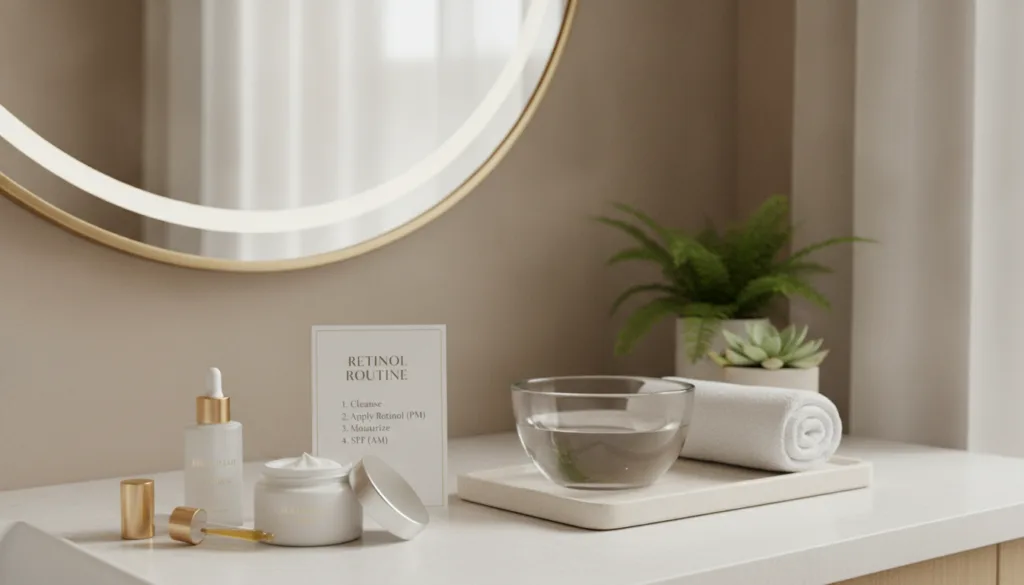
At first, consistency is more important than frequency. Start by using it just one night a week for seven days. This gentle start lets you see how your skin reacts without irritation.
Gradually Increasing Frequency
After a week with no irritation, you can use it more often. Start by using it two nights a week for two weeks. Then, move to three nights a week for three weeks. These steps help you build up to it safely.
Applying the Correct Amount
Many think more product means faster results, but it can dry out your skin. For your whole face, just use a pea-sized amount. Dot it on your forehead, cheeks, and chin, then massage it in. This way, you get the most benefit without drying out your skin.
Mastering the Sandwich Method for Sensitive Skin
The sandwich method is a simple yet effective way to introduce potent actives into your routine. It acts as a gentle buffer for your complexion. This way, you can enjoy the transformative benefits of your product while keeping your skin barrier happy and hydrated.
Layering Moisturizer Before and After
To perform this technique, start by applying a thin layer of your favorite lightweight moisturizer to clean, dry skin. Once absorbed, apply a pea-sized amount of your treatment. Then, seal everything in with a second, slightly thicker layer of moisturizer.
These retinol tips help you manage the potency of the active ingredient without sacrificing results. By creating this “sandwich,” you slow down the absorption rate of the product. This simple adjustment makes a world of difference for those with reactive or delicate skin types.
Why This Technique Reduces Irritation
The primary goal of the sandwich method is to minimize the risk of contact dermatitis or excessive flaking. When you apply a moisturizer first, you create a protective barrier. This barrier prevents the active ingredient from penetrating too deeply or too quickly. This approach is highly recommended for beginners who want to avoid the dreaded “retinol uglies.”
Consider these key advantages of using this layering strategy:
- Reduced sensitivity: It significantly lowers the chance of stinging or burning sensations.
- Better hydration: Your skin stays moisturized throughout the night, preventing tight or dry feelings.
- Consistent progress: You are more likely to stick to your routine when you experience fewer side effects.
Following these retinol tips ensures that your skin remains calm and balanced. Remember, consistency is far more important than intensity when you are just starting out. By using the sandwich method, you are setting yourself up for long-term success and a glowing, healthy complexion.
Ingredients to Pair and Ingredients to Avoid
Mastering your night skincare routine means knowing how your products work together. Retinol is powerful but can be tricky with the wrong mix. It’s important to choose ingredients that support your skin’s health for a successful retinol routine.
Best Friends: Hyaluronic Acid and Ceramides
Starting out, keeping your skin hydrated is key. Hyaluronic acid helps by pulling moisture into your skin. This helps counteract dryness from treatments.
Ceramides are also vital for your retinol skincare routine. They help keep your skin cells together, strengthening your moisture barrier. Together, they reduce irritation and keep your skin looking healthy.
What to Avoid: AHAs, BHAs, and Vitamin C
It’s tempting to use all your favorite products together. But mixing certain ingredients can cause severe sensitivity. Avoid using AHAs, BHAs, and Vitamin C at the same time to prevent damage.
Patience is your best ally when using retinol. Combining these strong ingredients can lead to inflammation. It’s safer to use them separately to keep your skin calm and balanced.
How to Space Out Your Active Ingredients
To use multiple actives, alternate them. Use exfoliating acids in the morning or on nights without retinol. This way, your skin gets the benefits without barrier damage.
Always pay attention to how your skin reacts. If it feels tight or peels, simplify your routine. Focus on hydration until your skin is strong again. Slow and steady wins the game in skincare.
Managing Common Side Effects and the Retinol Purge
Starting a new skincare routine can surprise you with changes in your skin. You might be excited to see results, but your skin needs time to adjust. Knowing what to expect helps you stay on track and feel confident in your choices.
What Is the Retinol Purge?
The retinol purge is when your skin speeds up its cell renewal. You might see more breakouts or small bumps as your skin clears out deep-seated dirt. It’s a sign that the product is working to clean your pores.
This phase usually lasts from two to six weeks. Being patient is key during this time. After it’s over, your skin will likely look clearer and smoother.
Dealing with Flaking, Redness, and Dryness
Flaking, redness, or feeling tight are common side effects of retinol. These happen because your skin is adjusting to the faster exfoliation. To manage these, focus on keeping your skin well-hydrated and gentle.
Use a thick, fragrance-free moisturizer right after applying retinol to keep moisture in. If peeling is severe, try using less product or mixing it with lotion. Choose a gentle cleanser that doesn’t take away your skin’s natural oils.
When to Take a Break from Your Routine
Some irritation is normal, but there are times to stop using retinol to let your skin heal. If you feel intense burning, stinging, or have raw patches, it’s a sign to slow down. This means your skin’s barrier is weak and needs a break.
Use soothing ingredients like ceramides or hyaluronic acid to calm your skin during the break. Once your skin feels better, you can start using retinol again. Remember, it’s better to be consistent than to push too hard for quick results.
Why Daily Sunscreen Is Non-Negotiable
Getting clearer skin means you must wear sunscreen every day. The benefits of retinol are great, but your skin gets more sensitive. So, using retinol and sunscreen together is key to keeping your skin safe and healthy.
How Retinol Increases Sun Sensitivity
Retinol speeds up cell turnover, bringing new skin cells to the surface. These new cells are very delicate and can easily get damaged by UV rays. This makes your skin more sensitive to the sun, increasing the risk of burning.
Without sun protection, all the good work from your retinol skincare can be undone. Even on cloudy days, UV rays can harm your skin. Being consistent with sun protection helps avoid irritation and dark spots.
Choosing the Right SPF for Your Daily Routine
Always choose an SPF 30 or higher for strong protection against harmful rays. A broad-spectrum sunscreen protects against UVA and UVB light. Apply it generously every morning, whether you’re staying indoors or outdoors.
Look for sunscreens that are lightweight and won’t make your skin greasy. If you find one you like, you’ll be more likely to use it every day. Being consistent is the best way to get the most out of your retinol benefits.
The Long-Term Impact of Sun Protection
Sun protection is a powerful anti-aging tool that works with your treatments. Without it, the sun can damage collagen, undoing the work of your retinol skincare. By focusing on sun safety, you keep your skin firm, smooth, and glowing for years.
| Strategy | Why It Matters | Frequency |
|---|---|---|
| Broad-Spectrum SPF | Blocks UVA and UVB rays | Every morning |
| Reapplication | Maintains protective barrier | Every 2 hours outdoors |
| Protective Clothing | Reduces direct sun exposure | When in direct sunlight |
| Seeking Shade | Limits total UV intake | During peak hours |
Conclusion
Starting your journey toward a healthier complexion is rewarding. These essential retinol tips for beginners are your guide. They help you navigate your skincare routine with ease.
You now know how to pick the right products from brands like CeraVe or SkinCeuticals. Your skin will thank you for the slow and steady approach. This way, you build tolerance over time.
Remember these retinol tips as you watch your skin change. Small tweaks to your routine often lead to great results. Patience is key as your skin transforms.
Share your journey with friends who might be starting their own skincare path. Your stories help others learn how to use these powerful ingredients safely. Enjoy the journey to a smoother, more vibrant you.