
Picture this: You’re standing in a beauty aisle, swatching foundations on your wrist under fluorescent lights. Later, you realize the shade looks completely wrong in daylight. Sound familiar? Many makeup lovers have faced the frustration of mismatched undertones creating an unflattering line along their jawline. It’s like wearing a mask that screams, “I tried!”
Getting your base right isn’t just about vanity—it’s about confidence. When your makeup blends seamlessly with your natural skin, you avoid that telltale contrast between your face and décolletage. The secret lies in understanding undertones and how light interacts with your complexion.
This guide simplifies the process. You’ll learn to identify your true skin tone, avoid common mistakes, and create harmony across your face and chest area. No more guessing games or settling for “close enough” shades.
Key Takeaways
- Achieving a seamless blend between your complexion and makeup prevents obvious lines at the jaw or chest.
- Undertone identification is critical for avoiding mismatched foundation shades.
- Natural lighting reveals how makeup truly interacts with your skin’s texture and hue.
- Testing products on multiple body areas ensures consistency across different skin zones.
- Seasonal changes in skin pigmentation require regular shade reassessments.
Face neck color matching don’t forget: Key Principles
Imagine stepping outside after perfecting your makeup, only to see harsh lines framing your jaw like a painted mask. This jarring effect occurs when products clash with your natural pigments. A cohesive base requires strategic coordination across all visible areas.
The Science of Seamless Blending
Your décolletage often receives less sun exposure than your face, creating subtle shade variations. Match foundation to your chest’s lighter hue for consistent appearance in daylight. Test three swatches along your collarbone to find your true match.
| Common Mistake | Visible Result | Smart Solution |
|---|---|---|
| Testing only jawline | Obvious contrast lines | Check shades on neck and chest |
| Ignoring undertones | Ashy or orange cast | Compare in natural light |
| Using one year-round shade | Mismatched skin color | Reassess seasonally |
Eliminating Transition Lines
Blend downward using a damp sponge, feathering product toward your shoulders. This technique creates gradient-like harmony, especially with open-neck outfits. Pro tip: Set with translucent powder to prevent transfer onto clothing.
Natural lighting reveals how foundation skin interactions change throughout the day. Check mirrors near windows before finalizing your look. Proper color match ensures your makeup enhances rather than masks your radiant skin tone.
Understanding Your Skin’s Undertones and Texture
Have you ever noticed how some foundations look perfect in-store but clash with your complexion outdoors? Your skin’s hidden hues and surface quality hold the answer. Mastering these elements ensures your base makeup enhances rather than fights your natural beauty.
Determining Your Undertone: Warm, Cool, or Neutral
Skin undertones act like invisible filters beneath your surface. Warm types glow in gold jewelry and earth tones. Cool complexions shine in silver accessories and jewel colors. Neutral? You rock both effortlessly.
| Undertone Type | Visual Clues | Best Foundation Matches |
|---|---|---|
| Warm | Golden/peachy veins | Yellow-based formulas |
| Cool | Pinkish-blue veins | Rose-tinted liquids |
| Neutral | Mixed vein colors | Adaptive neutral shades |
Considering Skin Texture for Optimal Application
Your foundation skin relationship depends on surface quality. Oily types need mattifying liquids that resist shine. Dry complexions thrive with hydrating creams. Combination skin? Try dual-finish formulas.
| Texture Type | Foundation Needs | Application Tip |
|---|---|---|
| Oily | Oil-free, long-wear | Blot before setting |
| Dry | Creamy, moisturizing | Prep with hyaluronic acid |
| Combination | Buildable coverage | Zone-specific priming |
Test products on clean, moisturized skin for accurate results. The right skin tone match disappears into your complexion, while proper texture pairing ensures all-day comfort.
Tips for a Flawless Foundation Match
Staring at foundation bottles under store lights? The shade that seems perfect indoors might transform into a mismatched mask outdoors. Lighting plays tricks on makeup pigments, making real-world testing essential for a natural finish.
Performing a Proper Color Match in Various Lighting
Foundation pigments interact differently with light sources. Daylight exposes orange or gray undertones, while fluorescent bulbs can cast unflattering shadows. Always test three stripes along your cheekbone, jawline, and collarbone.
| Lighting Type | Foundation Appearance | Testing Tip |
|---|---|---|
| Natural Daylight | Reveals true undertones | Check near windows at noon |
| Office Fluorescent | Highlights ashiness | Observe under white LEDs |
| Evening Incandescent | Warms cool tones | Test with table lamps |
Choosing the Best Foundation for Your Skin
Your skin tone and texture dictate formula success. Oily types need oil-control liquids, while dry skin thrives with hydrating serums. Combination complexions require strategic application zones.
| Skin Type | Ideal Formula | Finish |
|---|---|---|
| Oily | Matte liquid | Velvet |
| Dry | Cream compact | Dewy |
| Combination | Buildable stick | Satin |
Rotate your body when checking color match quality. A perfect foundation disappears when viewed from all angles. Your foundation skin harmony should withstand morning commutes and late dinners alike.
Step-by-Step Guide to Achieve a Harmonious Look
Your morning routine holds the key to makeup that disappears into your complexion. Start with freshly cleansed skin – oils or residue create uneven patches. Pat dry gently, then wait 90 seconds before applying products to prevent pilling.
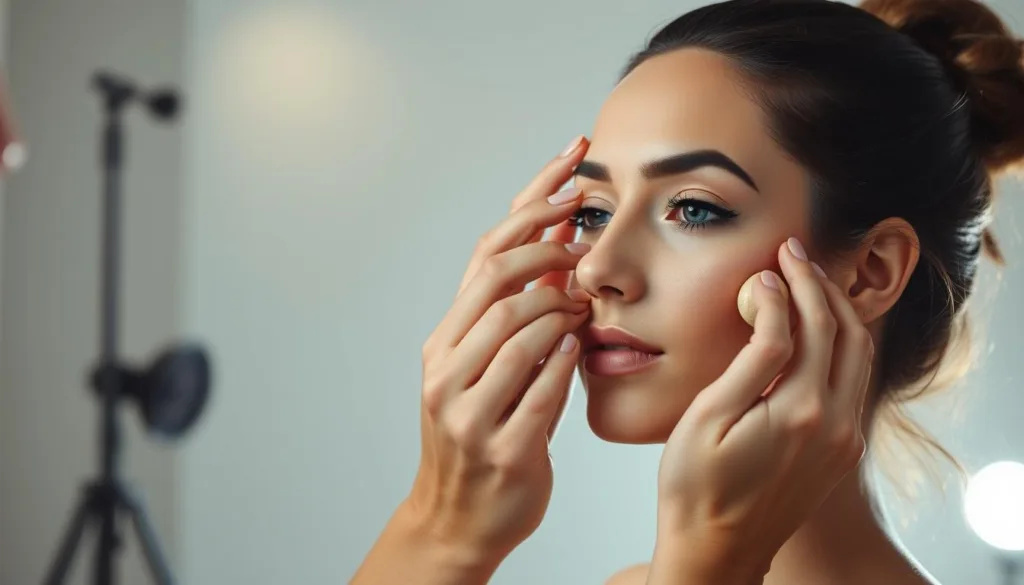
Preparing Your Skin and Applying Primer Correctly
Layer sunscreen first if needed – chemical formulas need 15 minutes to activate. Use a pea-sized amount of primer, focusing on areas where makeup fades fastest. Quality foundation adheres better to smooth, hydrated skin without feeling heavy.
| Product Type | Application Tool | Coverage Tip |
|---|---|---|
| Powder | Fluffy brush | Tap off excess first |
| Cream | Dense sponge | Warm between fingers |
| Liquid | Flat paddle | Dot then blend |
Techniques for a Smooth Blend
Work outward from your nose using windshield wiper motions. Pro move: Blend downward toward your collarbone using leftover product on tools. This prevents stark lines while adapting to different skin tone zones naturally.
Finishing Touches That Last
Mist setting spray in an X-T shape – four spritzes total. For touch-ups, press (don’t rub) a blotting paper first. Reapply only where needed using a clean fingertip.
| Setting Product | Best For | Reapplication Window |
|---|---|---|
| Translucent powder | Oily areas | 4-6 hours |
| Hydrating spray | Dry patches | 8+ hours |
| Cushion compact | Full coverage | 2-3 hours |
You’ll want to check your foundation skin harmony near windows midday. A proper match foundation stays invisible through lunch meetings and evening events alike.
Expert Advice on Managing Sensitive and Challenging Skin Tones
Dealing with reactive or uneven complexions? Specialized care transforms tricky makeup applications into smooth successes. Award winners kits offer curated solutions for redness-prone areas and patchy pigmentation.
Tailored Solutions for Unique Complexions
Calm® sensitive skin products create protective barriers without clogging pores. These formulas pair with your existing skin regimen to reduce flare-ups during professional events. Look for fragrance-free options with ceramides.
| Skin Challenge | Kit Feature | Daily Benefit |
|---|---|---|
| Redness | Color-correcting primers | Neutralizes uneven tones |
| Dry patches | Hydrating serum foundations | Prevents cakey texture |
| Oiliness | Matte-finish bundles | Controls midday shine |
The Even Up® hyperpigmentation regimen works beneath your perfect foundation to gradually balance discoloration. Apply treatment serums first, then follow with your matched foundation shade.
Create custom bundles from best sellers addressing your specific concerns. Many kits include free shipping when you take quiz recommendations. A proper finishing touch protocol involves setting sprays that lock makeup without irritation.
| Regimen Step | Product Type | Application Tip |
|---|---|---|
| Morning prep | Soothing toner | Pat gently |
| Daytime coverage | Breathable liquid | Use tapping motions |
| Evening care | Repair cream | Massage upward |
Conclusion
The right foundation becomes invisible when you match foundation skin characteristics precisely. Discovering your perfect shade transforms makeup from a daily chore into a confidence booster that moves with your natural beauty.
Understanding your foundation skin tone needs—whether warm, cool undertones, or neutral undertones—creates harmony across all visible areas. This knowledge helps you select formulas that adapt to your skin texture and lifestyle demands.
You’ll want to look foundation-free while enjoying its benefits. Test shades in natural light and reassess seasonally. A proper color match disappears into your complexion, whether you’re attending meetings or enjoying outdoor events.
Make sure to celebrate small victories in your search. The journey to find perfect coverage teaches valuable lessons about your skin’s unique language. With these insights, your makeup routine becomes a quick, rewarding ritual rather than a guessing game.