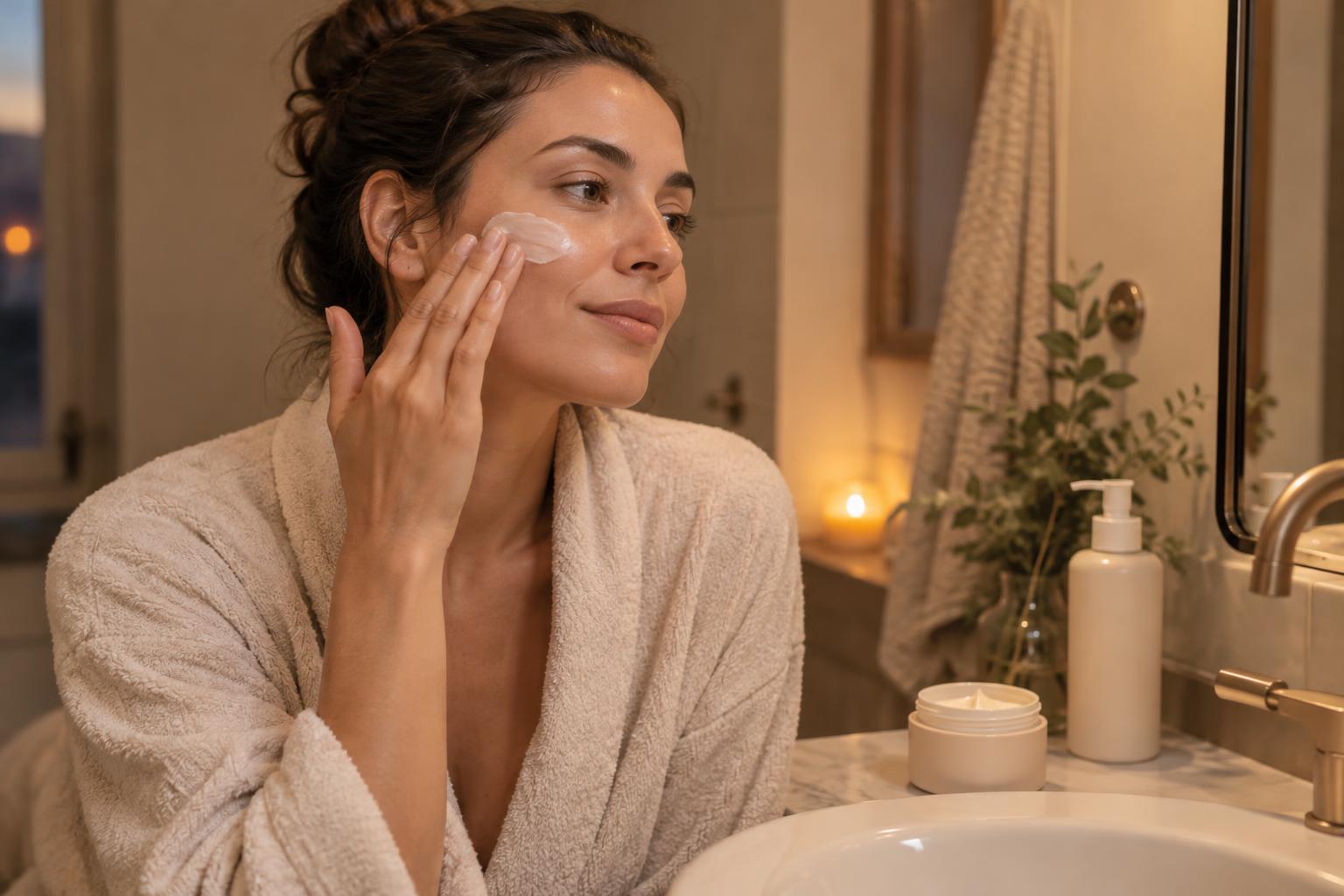
A simple evening skincare routine for sensitive skin needs just two essentials: a gentle cleanser and a fragrance-free moisturizer. Keep the water lukewarm, skip scrubbing, and patch test new products before adding them to your routine.
If your skin often feels tight, stings after skincare, or becomes visibly irritated, a smaller routine is a sensible starting point. You do not need a shelf full of products—or a nightly exfoliating step—to care for it.
Your Simple Evening Skincare Routine at a Glance
- Cleanse gently: Remove sunscreen, makeup, and everyday buildup without scrubbing.
- Moisturize: Apply a fragrance-free cream or lotion while your skin is still slightly damp.
- Keep extras optional: Toners, masks, facial oils, and serums are not essential.
- Introduce changes slowly: Patch test first, then add only one new product at a time.
The goal is skin that feels comfortable after your routine, not squeaky-clean or coated in multiple layers.
Step 1: Cleanse Without Overdoing It
Choose a gentle facial cleanser labeled fragrance-free. A creamy, lotion-style, or low-foaming formula can be a useful starting point, although texture alone does not tell you whether a product will suit your skin.
Use lukewarm water and your fingertips to spread the cleanser gently. Rinse thoroughly, then pat rather than rub with a soft, clean towel. Avoid hot water, cleansing brushes, rough washcloths, and gritty scrubs, especially when your skin already feels irritated.
Do You Need to Double Cleanse?
Not necessarily. If one gentle cleanse removes your sunscreen and makeup, there is no need to wash twice simply because a routine says so.
For long-wearing makeup or water-resistant sunscreen, you may need a separate removal step. Choose a fragrance-free remover that your skin tolerates, use minimal rubbing, and follow its directions. If necessary, finish with your gentle cleanser rather than repeatedly scrubbing away stubborn residue.
Persistent tightness, burning, or discomfort after washing is a reason to reassess your cleanser and technique. It is not a sign that the product is working better.
Step 2: Apply a Fragrance-Free Moisturizer
After cleansing, apply moisturizer to slightly damp—not dripping—skin. Use enough to cover your face comfortably, including your neck if needed, without repeatedly massaging or tugging.
A lotion may feel more comfortable on oily or combination skin, while a cream can suit skin that feels dry. Neither texture is automatically better for everyone: choose according to comfort and how your skin responds.
What to Look for on the Label
- Fragrance-free: A useful starting point when choosing products for sensitive skin.
- Glycerin or hyaluronic acid: Humectants that help attract water.
- Ceramides: Lipids used in moisturizers to support the skin barrier.
- Petrolatum or dimethicone: Ingredients that help reduce moisture loss.
You do not need every ingredient on this list. A straightforward moisturizer that feels comfortable is more useful than an elaborate formula your skin dislikes.
CeraVe Moisturizing Cream and Vanicream Moisturizing Cream are well-known fragrance-free options to consider. They are examples, not guarantees of compatibility; check the current ingredient list and patch test before using either across your face.
“Unscented” is not always the same as “fragrance-free.” Unscented products may contain ingredients that mask an odor. Essential oils can also cause irritation or allergic reactions, so “natural” does not automatically mean gentler.
What to Leave Out of a Sensitive Skin Night Routine
When building a basic routine, leave out exfoliating acids, scrubs, peels, and optional treatments at first. Retinoids and some acne treatments can also be irritating, particularly when introduced too quickly.
This does not mean sensitive skin can never use active ingredients. It means getting comfortable with the basics before deciding whether an extra product serves a clear purpose.
If you use prescribed skincare, follow your clinician’s instructions and ask about irritation rather than changing treatment on your own. Avoid applying unfamiliar products to broken or actively inflamed skin.
You can also skip toner, face mist, and overnight masks. More steps create more opportunities for irritation and make it harder to identify which product is causing trouble.
How to Patch Test New Skincare
A home patch test can help you spot a reaction before applying a product widely, although it cannot rule out every irritation or allergy.
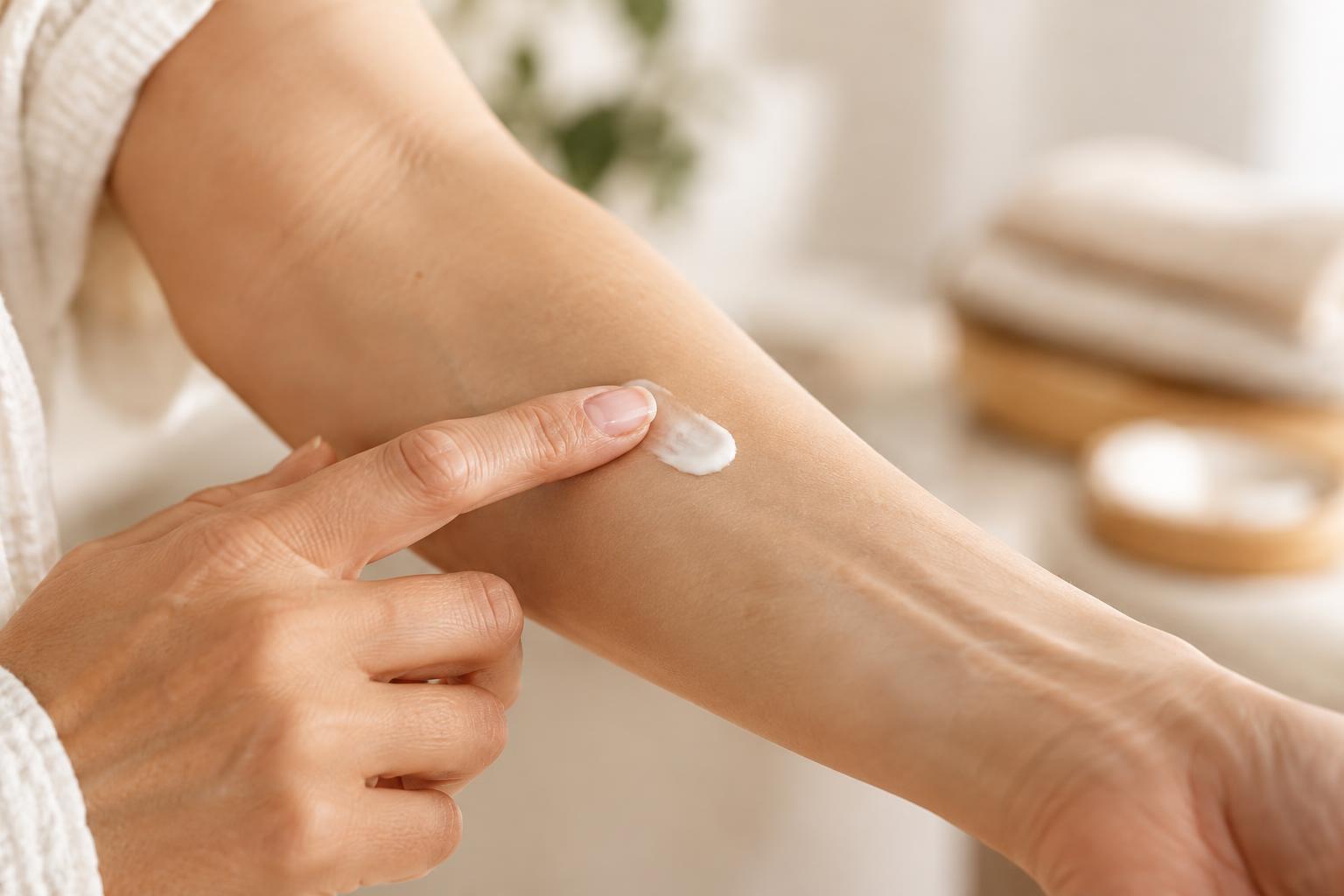
- Choose a small area: Try the underside of your arm or the bend of your elbow, away from broken or irritated skin.
- Use a normal amount: Apply the product to the same small spot twice daily for seven to ten days, unless its instructions advise otherwise.
- Follow the intended use: Rinse off cleansers as directed; do not leave a rinse-off product on overnight.
- Watch for changes: Stop if you develop itching, burning, swelling, or a rash.
If the test area stays comfortable, introduce the product cautiously to your face. Add only one new product at a time so that any reaction is easier to trace. Testing on your arm does not guarantee your face will tolerate it.
When to Consult a Dermatologist
Seek advice if irritation keeps returning, does not settle after stopping a suspected product, or makes even a basic routine uncomfortable. Persistent redness, itching, scaling, cracking, or painful skin may need assessment rather than another moisturizer.
A dermatologist can help identify whether a skin condition or contact allergy is involved. If allergy is suspected, they may recommend formal patch testing, which differs from checking a product at home.
Get prompt medical advice for blistering, rapidly worsening symptoms, or signs of infection. Trouble breathing or sudden swelling of the lips, tongue, or throat needs emergency care.
FAQ
Can I Use Just Cleanser and Moisturizer at Night?
Yes. These two steps are a practical foundation for sensitive skin. Separate treatments are only needed when they address a specific concern and your skin tolerates them.
Should I Moisturize Sensitive Skin Every Evening?
A fragrance-free moisturizer is usually a helpful daily step, especially after cleansing. Adjust the texture and amount to your skin’s comfort rather than forcing a heavy cream onto skin that prefers lotion.
Is Tingling Normal After Applying Moisturizer?
Tingling is not proof that moisturizer is working. If it stings or burns, rinse it off gently and stop using it. Seek advice if discomfort persists or happens with several products.
Do I Need SPF in My Evening Routine?
No, sunscreen is not needed at bedtime. Keep it for daytime protection; a broad-spectrum SPF 30 or higher is generally recommended when your skin will be exposed to sunlight.