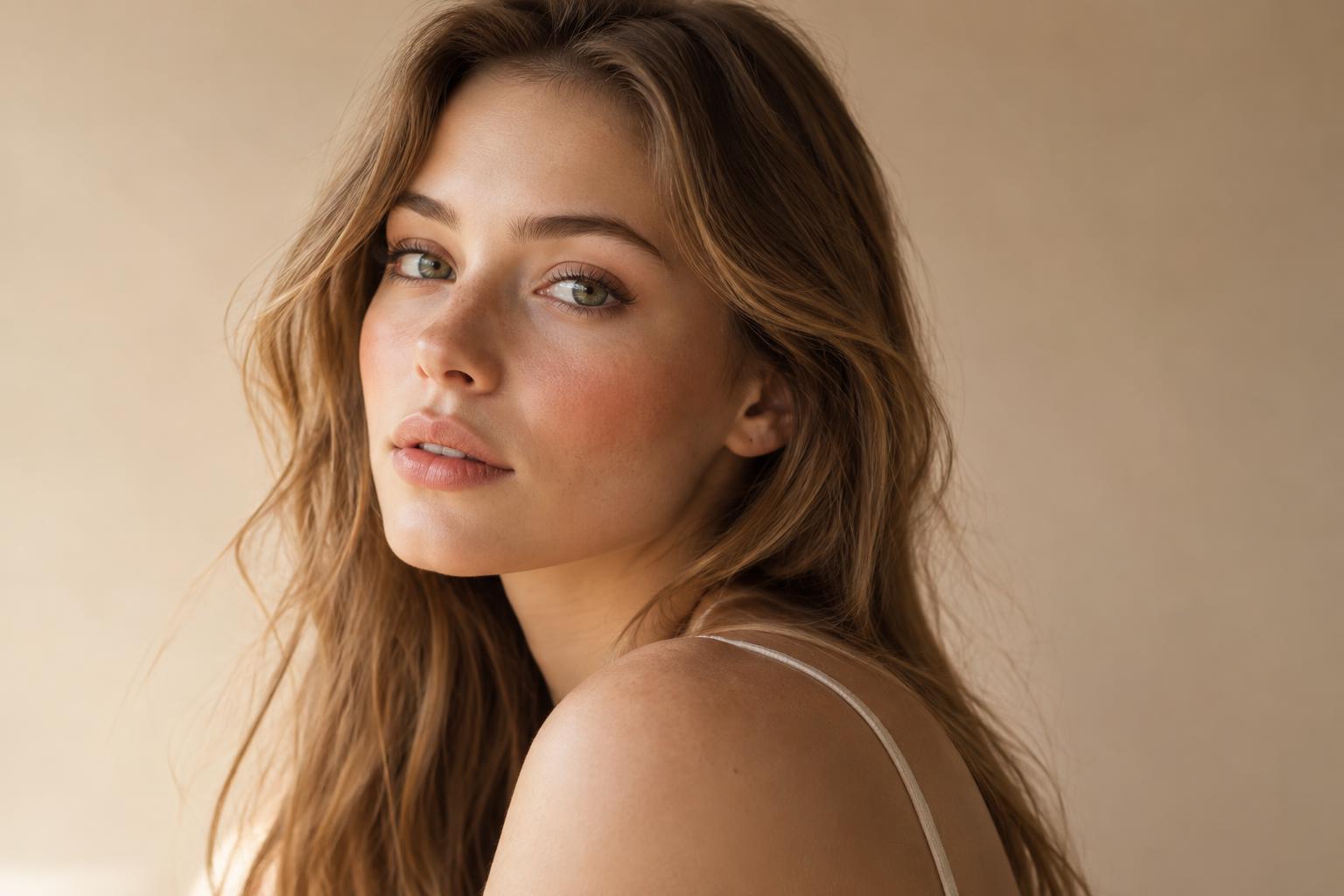
Bronzer adds warmth to your complexion, while contour uses shadow-like shades to create definition. You don’t need both: choose bronzer for a sun-kissed effect, contour for subtle sculpting, or combine them when you want warmth and dimension.
The difference isn’t necessarily the brush, formula, or product label. It’s the color you choose and where you place it. Here’s how to make each work for your makeup style.
What Is the Difference Between Bronzer and Contour?
Think of bronzer as warmth and contour as shadow. Both can add dimension, but they serve different purposes.
- Bronzer: Adds a warmer-looking tint to the complexion. It can be matte, satin, or softly luminous.
- Contour: Creates the appearance of depth with a shade that resembles a natural facial shadow. A matte finish usually makes this effect more convincing.
- Placement: Bronzer generally goes over broader, higher areas of the face; contour is applied more selectively where you want a recessed effect.
A matte brown powder isn’t automatically a contour, and a cream stick isn’t automatically sculpting. The same product can read as warm bronzer on one person and a plausible shadow on another.
How Bronzer and Contour Shades Differ
Bronzer should look warm, not necessarily orange
A flattering bronzer is usually somewhat deeper and warmer than your skin. Depending on your complexion, that warmth might look golden, peachy, rosy-brown, terracotta, or reddish-brown.
There’s no universal “best” bronzer undertone. If orange-toned makeup looks obvious on you, a muted neutral or rosy-brown bronzer may blend more naturally. Deeper complexions may suit rich red-brown or golden-brown shades better than pale, beige-heavy formulas.
Start with a shade that adds visible warmth in a sheer layer. Going dramatically darker can make blending harder, particularly with a highly pigmented formula.
Contour should resemble your shadows, not turn gray
Contour generally looks more neutral or cool than bronzer, but “cool” doesn’t mean everyone needs gray taupe. On some skin tones, that can look ashy rather than dimensional.
Look at the natural shading beneath your cheekbones in soft daylight. A muted brown that echoes that depth is a useful starting point. Fair skin may suit a light taupe-brown; deeper skin may need a richer neutral or cool brown with enough depth to show up.
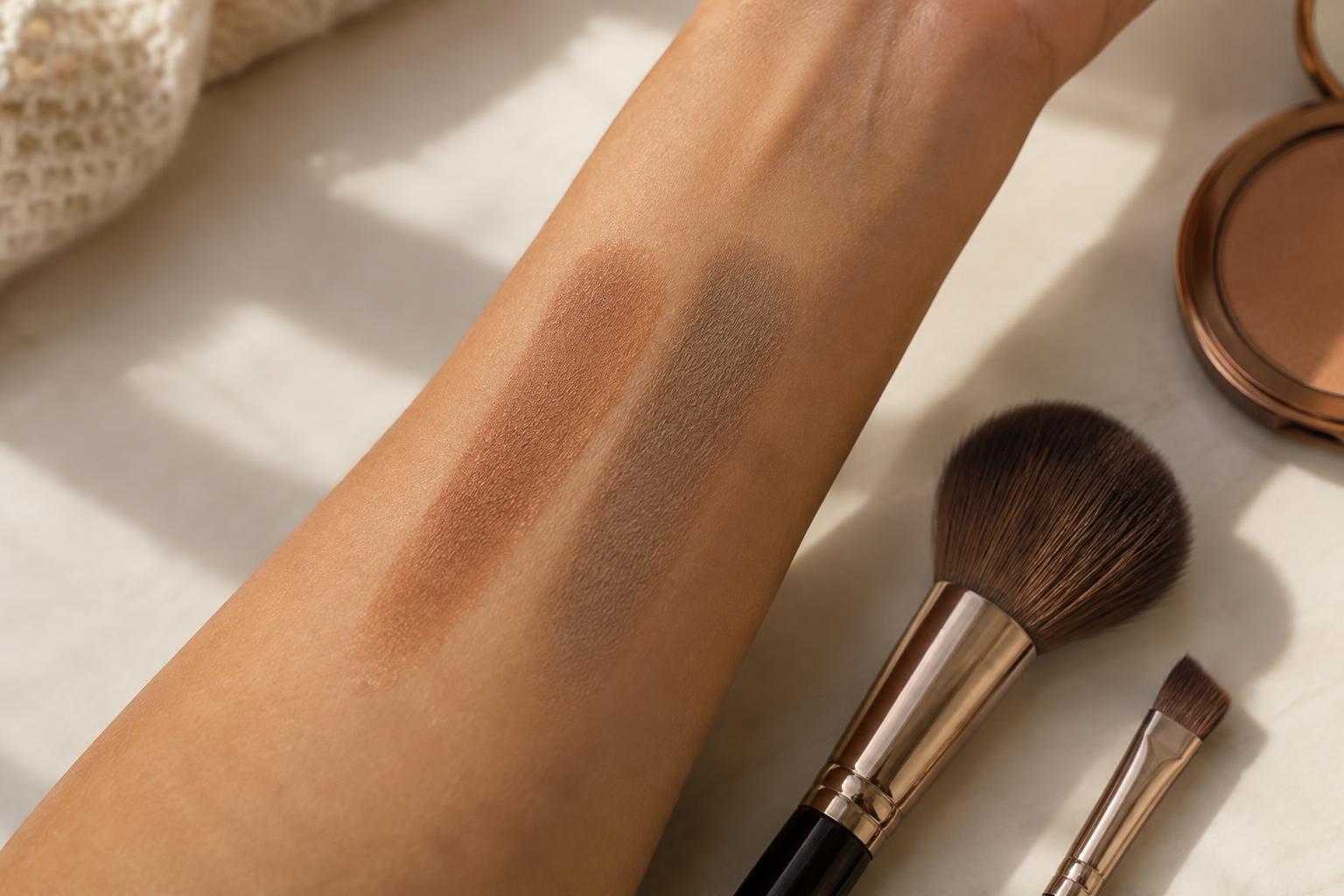
Check shades on your face when possible, rather than relying only on an arm swatch. Blend a small amount near the intended placement and assess it in daylight. A suitable contour should suggest depth without leaving an obvious gray or orange stripe.
Where to Apply Bronzer vs. Contour
Bronzer placement: diffuse warmth across higher areas
Apply bronzer lightly around the outer forehead and temples, then sweep it over the upper, outer cheeks. A small amount across the nose can create a sun-kissed effect if that suits your look.
- Use a fluffy brush for a sheer wash of powder.
- For cream, tap on a small amount with a brush or sponge.
- Blend the edges so the warmth connects naturally with the rest of your complexion.
You don’t have to follow the classic “3” shape from forehead to cheeks to jaw. It’s a starting point, not a rule. If you only want warmth on your cheeks and temples, stop there.
Contour placement: keep shadows targeted
For cheek contour, start near the ear, just beneath the cheekbone, and keep the application concentrated toward the outer face. Blend the upper edge softly toward the cheekbone rather than dragging the color downward.
You can also add a little contour beneath the jaw or around the forehead if you want definition there. Nose contour is optional and benefits from a very light hand and careful blending.
Avoid treating a face-shape chart as a checklist of things to “fix.” Choose one area you’d like to emphasize, step back from the mirror, and see whether the effect adds anything you enjoy.
Do You Need Bronzer, Contour, Both, or Neither?
Choose bronzer when you want warmth
Bronzer is a useful choice when foundation makes your complexion look flatter or more uniform than you prefer. It also works well for a relaxed makeup look with concealer, blush, and mascara.
If your goal is simply to look a little warmer, contour adds an extra step without necessarily helping.
Choose contour when you want definition
Contour makes sense when you want to emphasize cheekbones or add targeted dimension without warming your overall complexion. A little contour and blush can be enough; bronzer isn’t required.
Use both when you want separate effects
You can combine them without making your makeup heavy. Keep contour narrow and shadow-like beneath the cheekbone, then blend bronzer more broadly above it and toward the temples.
The edges can overlap softly, but avoid layering both colors densely in exactly the same spot. That can blur the distinction between warmth and shadow.
Skip both when they don’t serve your look
Neither product is essential. Sheer base makeup may leave plenty of your natural dimension visible, while blush alone can add the color you want. A routine isn’t incomplete because it leaves out sculpting or bronzing.
How to Layer Bronzer and Contour Without Muddy Results
For a straightforward routine, apply your base, add a small amount of contour, then place bronzer where you want warmth. Finish with blush and reassess before adding more.
- Match textures thoughtfully: Creams usually blend most easily before setting powder; powders can be easier to diffuse over a lightly set base.
- Start small: Build sheer layers instead of trying to blend away a heavy stripe.
- Use an appropriately sized tool: A smaller brush helps keep contour precise; a fluffier one spreads bronzer softly.
- Keep tools reasonably clean: Residual color can muddy your placement.
If a product causes irritation, stop using it. And remember: a bronzed makeup effect offers no sun protection, so keep sunscreen separate from your color routine.
FAQ
Can you use bronzer as contour?
Sometimes. A matte bronzer with a neutral undertone may create believable shading on your skin. A very warm or shimmery bronzer will usually read as color or glow rather than shadow.
Is contour always darker than bronzer?
No. Contour needs enough depth to suggest shadow, but undertone and placement matter more than which product is darker. Bronzer can be equally deep while looking warmer and more diffused.
Should beginners buy bronzer or contour first?
Choose based on your goal. For overall warmth, start with bronzer. For targeted definition, start with contour. Buying one first makes it easier to learn what it adds before expanding your routine.
Does bronzer go above or below contour?
On the cheeks, bronzer generally sits above contour and blends toward the temples. Contour stays more concentrated beneath the cheekbone. Blend their edges softly without merging them into one dense band.