
The best heat protectant for fine hair is usually a lightweight spray or mist labeled for your styling method. Choose a formula that distributes easily, apply it evenly without soaking your roots, and use the lowest effective heat setting—heat protection does not make hair damage-proof.
What to Look for in a Heat Protectant for Fine Hair
Fine hair has small-diameter strands, but it can still be dense, sparse, oily, dry, or color-treated. Choose for both strand thickness and condition: fine, bleached ends may appreciate some conditioning, while healthy hair that falls flat easily may need very little.
- Clear heat-protection labeling: A detangler, shine spray, or hair oil is not automatically a heat protectant.
- Directions matching your routine: Check whether it belongs on damp hair before blow-drying, dry hair before hot tools, or both.
- Easy distribution: A fine, even spray can be easier to spread than a concentrated stream.
- A manageable conditioning load: If your hair collapses easily, start with a mist rather than a rich cream or oil-heavy leave-in.
“Weightless” and “lightweight” are useful shopping clues, not guarantees. Silicones are not automatically too heavy, either; the complete formula and how much you apply matter more than avoiding one ingredient category.
Sprays vs. Mists vs. Creams: Which Should You Choose?
Sprays: a practical starting point
A lightweight heat-protection spray is a sensible first choice for fine hair. However, “spray” describes the packaging, not the finish: some are conditioning, while others add hold or texture.
For flat irons and curling irons, look specifically for directions that allow dry-hair application. A damp-hair blow-dry product is not automatically suitable for spraying onto a finished style.
Mists: useful for blow-drying and even coverage
Mists often disperse product in smaller droplets, which can help avoid wet, concentrated patches. Blow-dry mists may also provide slip or styling support. The terms “spray” and “mist” overlap, so read the directions rather than choosing by name alone.
Creams: an option for dry or damaged ends
A cream can make sense when fine hair is bleached, rough, or prone to tangling. It is usually easier to overapply than a mist, so start conservatively and concentrate on the lengths and ends.
Most blow-dry creams belong on damp hair. Do not smooth a damp cream over dry hair immediately before ironing unless its directions explicitly permit that use.
Heat Protectant Picks Across Budgets
These are shopping candidates, not firsthand-tested rankings. Budget categories are relative; prices, names, and formulas can vary by retailer and country. Check the current package for application directions and heat-protection claims.
Budget starting point: TRESemmé Thermal Creations Heat Tamer Spray
This familiar drugstore heat-protection spray is worth comparing if you want an accessible starting point without committing to a salon purchase. Apply in sections to avoid concentrating product on the top layer. If your hair also needs detangling, assess the finish before adding another leave-in.
Midrange hot-tool candidate: CHI 44 Iron Guard Thermal Protection Spray
CHI 44 Iron Guard is a relevant option for an iron-focused styling routine. Follow the current bottle’s directions for hair condition and application. For fine hair, pay attention to whether the finish feels too styled or coated; do not assume every thermal spray will feel like a bare-hair mist.
Salon blow-dry option: Redken Quick Blowout
Redken Quick Blowout is a blow-dry spray to consider if you prefer a liquid format over cream. Follow its shaking and application instructions. It is a useful comparison point for someone seeking a dedicated blow-dry product rather than a rich smoothing leave-in.
Higher-budget multitasker: Living Proof Restore Perfecting Spray
This conditioning detangling spray includes heat protection and is worth considering when fine hair needs help with tangles. Try it in place of, rather than automatically underneath, another leave-in conditioner. Hair that gets weighed down easily may prefer a less conditioning option.
Luxury cream option: Kérastase Résistance Ciment Thermique
This heat-protective blow-dry cream is a more targeted candidate for fine hair with damaged-feeling lengths. Start with a small amount and keep it away from roots. If your hair is healthy and your main goal is airy volume, begin with a spray instead.
How Much Heat Protectant Should You Use?
Follow the product’s directions first. Pump output and formula concentration vary, so a universal spray count cannot guarantee protection.
- For blow-drying, blot excess water first. Apply a damp-hair product to towel-dried hair as directed.
- Divide hair into four to six sections. This helps you reach underneath without repeatedly coating the surface.
- Distribute spray evenly. Use the recommended distance and amount, focusing on the hair you will heat-style rather than soaking the scalp.
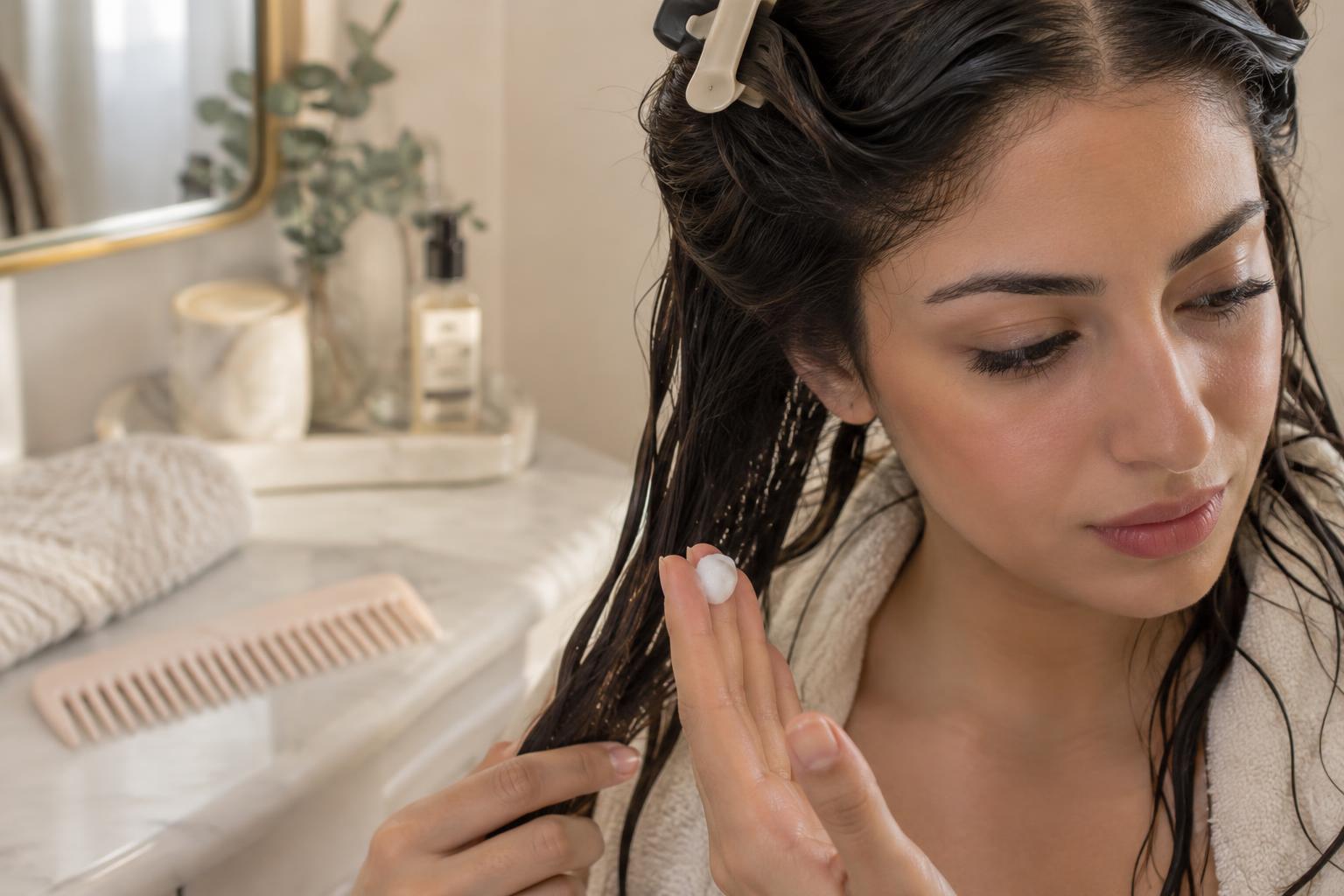
- Start conservatively with cream. If no amount is specified, a small pea-sized amount can be a trial starting point for fine, shoulder-length hair. Spread between your palms before applying; adjust for length and density.
- Gently comb through if directed. Distribution matters more than leaving one patch heavily coated.
If the directed amount feels heavy, switch formulas rather than continually underapplying. Before using a conventional flat iron or curling iron, make sure hair—and any freshly applied spray—is fully dry.
What Heat-Protection Claims Actually Mean
A claim such as “protects up to 450°F” is not a recommended styling temperature or a promise of zero damage. It reflects a brand’s claim under its testing conditions; without comparable test details, those numbers cannot reliably rank products.
Heat protectants help reduce heat-related damage, but results also depend on coverage, tool temperature, contact time, repeated passes, and hair condition. They do not permanently repair split ends or cancel out excessive heat.
Use the lowest setting that works, keep your dryer moving, and avoid repeatedly ironing the same section. Stop if you notice sizzling or a burning smell, and discontinue a product if it irritates your skin.
FAQ
What is the best heat protectant format for fine hair?
A lightweight spray or mist is usually the easiest starting point. A small amount of cream may suit dry or damaged lengths, especially if it replaces another conditioning product.
Can I use the same heat protectant for blow-drying and curling?
Yes, if its directions cover both uses. Check whether reapplication is recommended, and let any dry-hair spray dry completely before using a conventional curling iron.
Does hair oil count as heat protection?
Not automatically. Use an oil as your heat protectant only if the finished product is specifically labeled for that purpose and your styling method.
Why does heat protectant make my fine hair greasy?
You may be applying too much, concentrating it near the roots, or layering it with other conditioning products. Try better distribution and fewer overlapping leave-ins; if heaviness persists, choose a lighter formula.