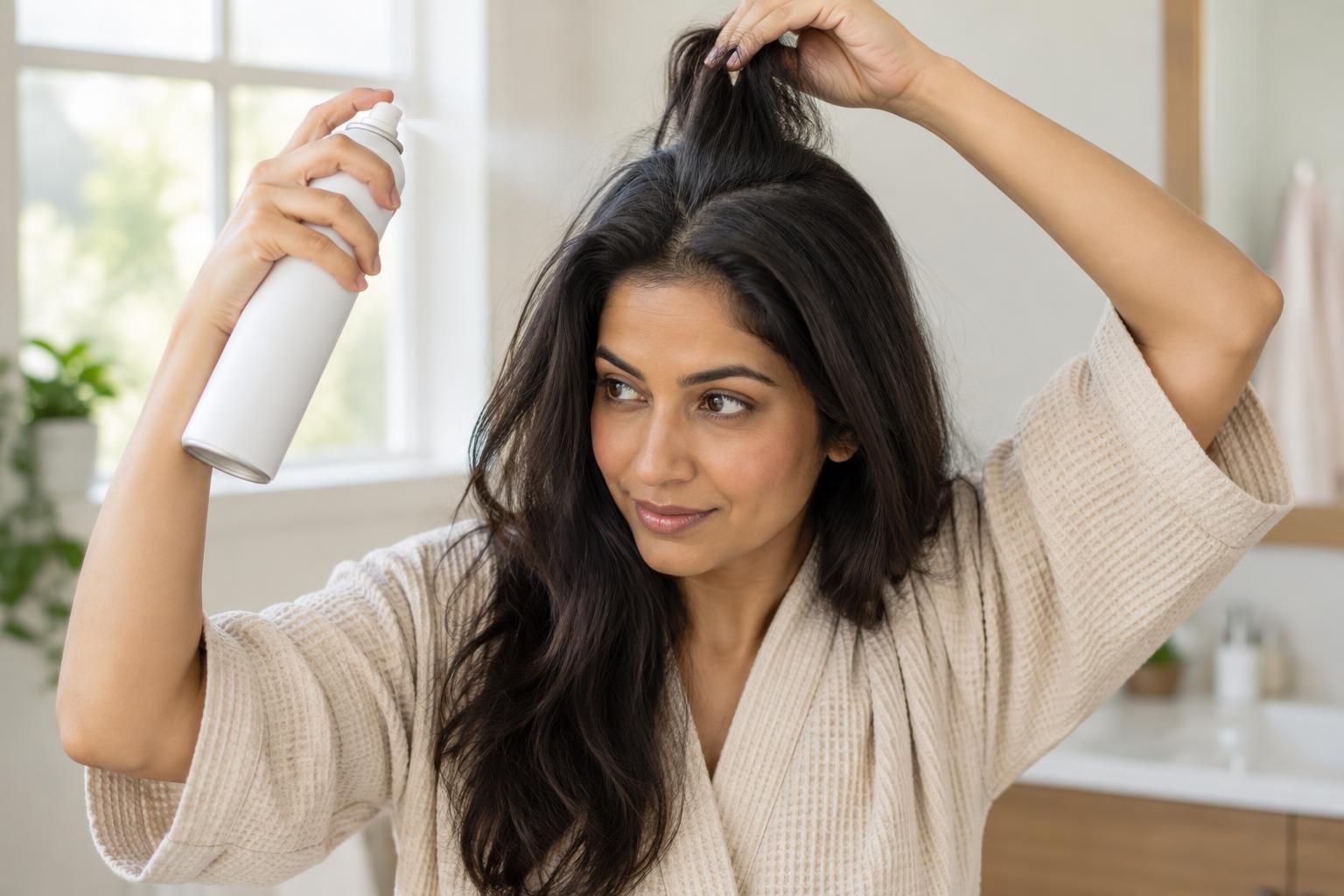
To use dry shampoo without leaving white residue, apply a small amount to oily roots from the distance listed on the label, let it sit, then gently massage or brush it through. Work in light layers: adding more is easier than removing a heavy, chalky coating.
Why Does Dry Shampoo Leave White Residue?
Dry shampoo uses absorbent ingredients, often starches or powders, to take up excess oil. Those particles can remain visible when you apply too much, concentrate the product in one spot, or skip the blending step. Pale powders are especially noticeable against dark hair.
A little initial powderiness does not necessarily mean the formula is wrong for you. It may just need time and gentle blending. If a visible cast keeps returning despite careful application, a different formula may be a better match.
How to Apply Dry Shampoo Without a White Cast
1. Start with dry hair and identify oily areas
Unless your product specifically says otherwise, apply dry shampoo to dry hair. Damp or sweaty roots can make powder harder to distribute evenly. Let your roots dry and cool after a workout before applying it.
Target areas that look oily rather than spraying your entire head. For many people, that means the part, crown, or roots around the hairline. Keep it off the lengths and ends unless the product directions recommend otherwise.
2. Shake the container as directed
For aerosol formulas, shake the can according to the label before spraying. This helps mix the contents for application. Non-aerosol powders and pump products may have different instructions, so do not assume every dry shampoo works the same way.
3. Keep the recommended application distance
Check the label first. Many aerosol dry shampoos call for holding the can roughly 6–10 inches from the roots, but your product's directions take priority. Spraying too close concentrates powder in a small area, making a bright white patch more likely.
Lift a section of hair and use a brief spray toward the oily roots. Avoid holding the nozzle over one spot for a long burst. Apply underneath the top layer where practical, rather than coating your visible part directly.
4. Use small amounts in sections
Start with one light pass on the areas that need it. Separate your hair into a few loose sections so you can reach the roots without repeatedly spraying the surface.
- For aerosols: Use short bursts rather than a continuous spray.
- For loose powders: Use the applicator as directed and dispense a tiny amount, not a generous shake.
- For either format: Blend your first application before deciding whether you need more.
The goal is less visible oil, not completely powder-coated roots.
5. Give it time before blending
Let the product sit for the time recommended on the label. If no waiting time is listed, a minute or two is a practical starting point. This gives the absorbent ingredients time to work before you distribute or remove the excess.
Do not immediately add another layer just because the roots still look powdery. Wait, blend, and check the result first.
How to Remove Residue on Different Hair Textures
Straight or fine hair
Use clean, dry fingertips to gently loosen the product at the roots. Then brush lightly through the treated sections to distribute it and lift away excess powder. A clean brush matters; an oily, product-coated brush can undo your refresh.
Fine hair can look coated quickly, so keep the application especially light. If brushing makes your roots flat, lift small sections as you blend instead of pressing everything against your scalp.
Wavy hair
Start with a fingertip massage at the roots, keeping the movement small. If needed, brush only the root area or carefully separate sections with your fingers. Brushing all the way through may disrupt your wave pattern or create unwanted fluffiness.
Curly and coily hair
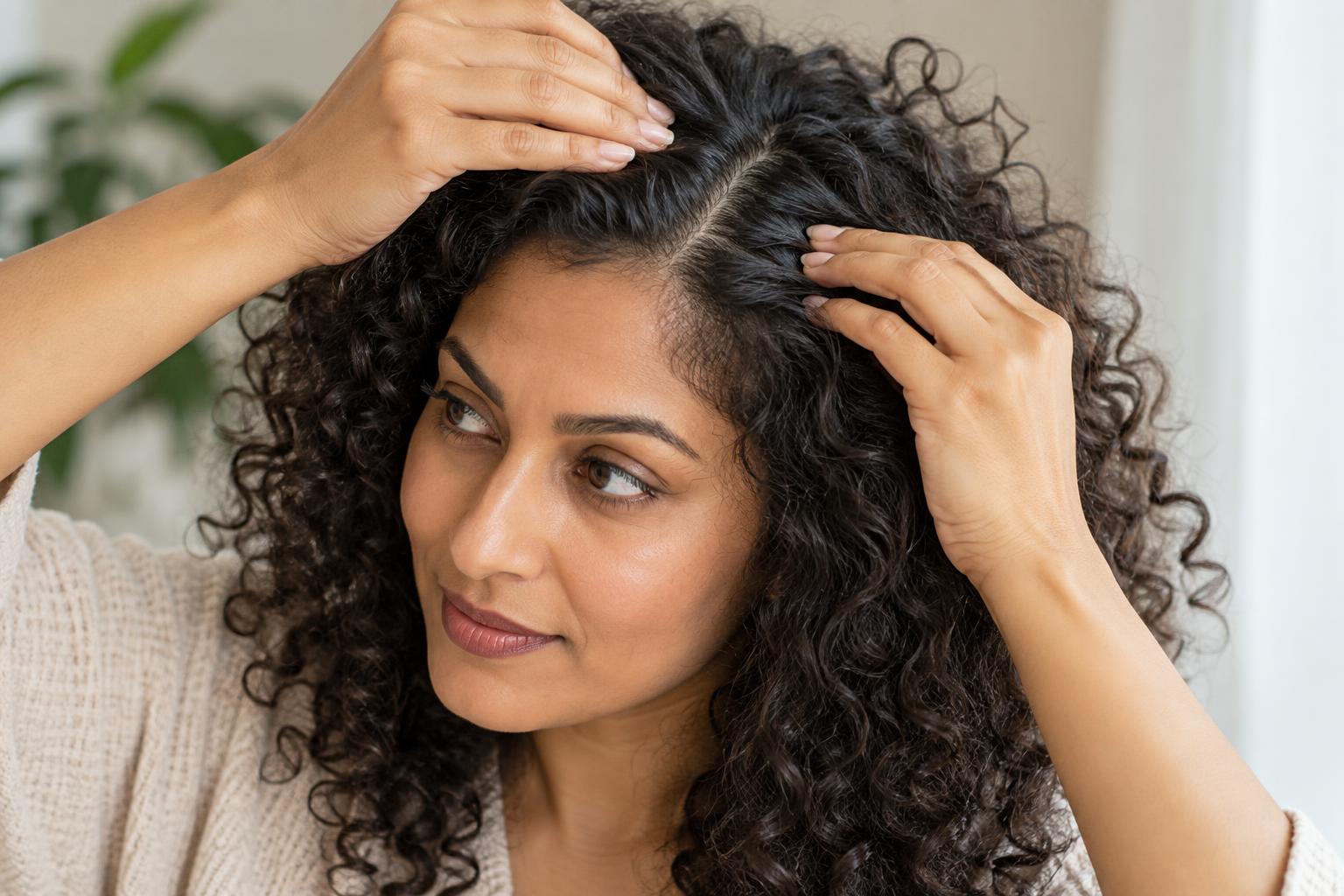
Avoid automatically brushing dry curls or coils just to remove dry shampoo. That can disturb definition and create frizz. Instead, gently separate the treated sections and massage the roots with the pads of your fingers, not your nails.
Lift the roots lightly as you work, leaving the curl lengths alone. For a stubborn powdery spot, try gently blotting with a clean, dry microfiber cloth. Start with very little product because removing excess without disrupting your style can be challenging.
Braids, twists, and other protective styles
Use a minimal amount on accessible oily areas, avoiding heavy deposits between parts or around the base of the style. Blend gently with fingertips or blot visible excess with a dry cloth. Dry shampoo does not clean buildup beneath a style or replace an appropriate scalp-cleansing routine.
How to Fix Too Much Dry Shampoo
If your roots already look chalky, stop adding product. Let the application settle, then gently massage and use the texture-appropriate methods above to remove excess.
Check your part and hairline in good light, especially on dark hair. Avoid trying to hide the powder with oil or serum at the roots; adding more product can leave the area looking coated instead. If a heavy deposit will not blend out, washing is the most straightforward reset.
Choose a Formula That Suits Your Hair
A tinted dry shampoo can make pale residue less noticeable on brunette or black hair, but it still needs careful application. Tinted powders can transfer to fingers, pillowcases, clothing, or hats, so check for loose residue before getting dressed.
Products labeled “invisible” are another option, but that wording is not a guarantee of a residue-free result. Your hair color, application amount, and blending technique still matter.
Dry Shampoo Does Not Replace Scalp Washing
Dry shampoo absorbs oil; it does not rinse away sweat, dead skin, or accumulated styling products. Use it as an occasional refresh between washes, not as a substitute for cleansing your scalp with shampoo and water.
If your scalp feels itchy, irritated, or heavily coated, wash rather than layering on more. Stop using a product that causes irritation, and seek medical advice for persistent symptoms. Use sprays in a ventilated area, avoid inhaling the mist, and follow label precautions about eyes, heat, and flames.
FAQ
How far away should I hold dry shampoo?
Follow the label. Many aerosol formulas recommend approximately 6–10 inches from the roots. Holding the nozzle too close can leave a concentrated patch of powder.
How long should I leave dry shampoo before brushing?
Use the waiting time on your product's label. If none is given, start with a minute or two, then gently massage or brush out the excess as appropriate for your texture.
How do I avoid white residue on dark hair?
Apply light layers underneath the top section, allow time before blending, and inspect your part in good light. A tinted formula may help, but watch for transfer.
Do I have to brush out dry shampoo?
No. Gentle fingertip massage and careful blotting can help blend or remove excess without brushing through curls, coils, or waves. Follow your product's directions and avoid rough rubbing.