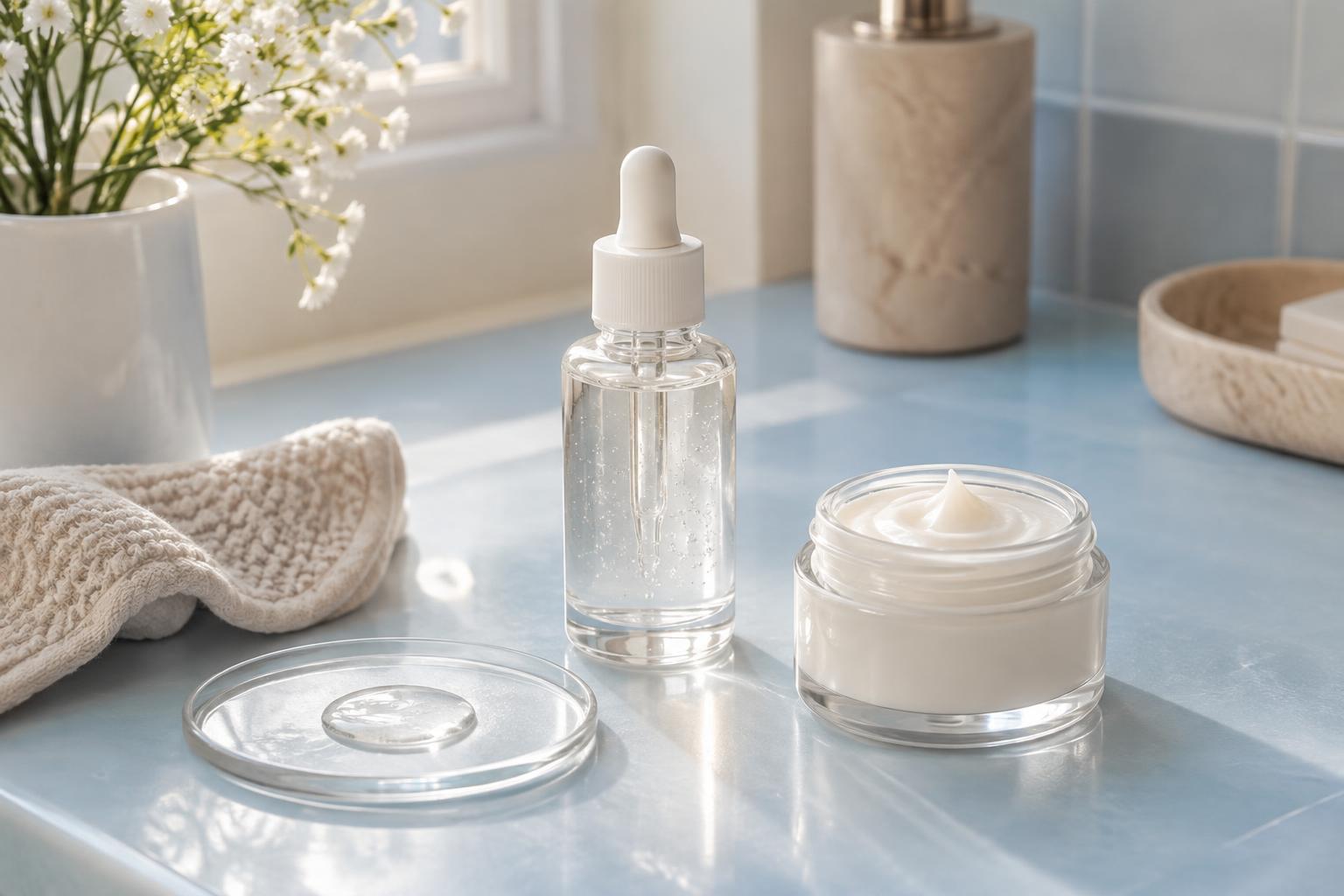
PDRN skincare uses DNA fragments, usually derived from salmon or trout, in products marketed for hydration and skin recovery. The research is promising, but evidence for everyday serums is limited—and findings from injected or medical PDRN cannot automatically support cosmetic claims.
What is PDRN in skincare?
PDRN stands for polydeoxyribonucleotide: a mixture of DNA fragments. Traditionally, it is extracted and purified from salmonid fish sperm, which explains the nickname “salmon DNA skincare.” A finished product contains processed ingredients, not raw reproductive material.
Its popularity in Korean skincare reflects interest in professional skin treatments and products marketed around recovery and a hydrated, smoother-looking complexion. However, sharing an ingredient name with a clinic treatment does not make a serum equivalent.
PDRN vs. polynucleotides: Are they different?
Polynucleotides, or PN, are chains of nucleotides—the building blocks of DNA and RNA. PDRN generally describes shorter DNA fragments, while aesthetic PN products often contain longer chains with different physical properties.
Terminology and size ranges are not universally consistent. “PN,” “PDRN,” and “salmon DNA” should not be treated as interchangeable guarantees of composition, quality, or results.
How is PDRN supposed to work?
A peer-reviewed review of PDRN’s pharmacology and clinical use describes two proposed pathways:
- Cell signaling: breakdown products may influence adenosine A2A receptor signaling, which is involved in inflammation and tissue repair.
- Recycling building blocks: cells may reuse DNA breakdown products through a “salvage pathway,” potentially supporting repair under stressed conditions.
These mechanisms help explain scientific interest. They do not establish that a cosmetic serum delivers an effective amount through intact skin—or that it “rewrites” your DNA.
Does PDRN skincare work? An evidence comparison
Laboratory findings show possible mechanisms; animal studies explore biological effects; human trials test particular treatments. None of these categories should be casually substituted for another.
| Claim | Evidence context | Takeaway for topical skincare |
|---|---|---|
| Hydration | A finished formula may improve hydration, but its humectants and moisturizers can contribute. | Benefit is plausible; attributing it specifically to PDRN requires controlled comparisons. |
| Barrier repair | Repair-related mechanisms do not establish better barrier function in routine cosmetic use. | Evidence for PDRN itself remains limited. |
| Fine lines | Small aesthetic studies are product- and procedure-specific. | Durable wrinkle improvement from ordinary serums is not established. |
| Collagen production | Laboratory and animal findings support investigation of tissue-repair pathways. | They do not prove visible collagen rebuilding from a topical product. |
| Recovery and wound healing | Human clinical research exists in selected medical settings, alongside preclinical work. | Medical evidence does not validate a cosmetic serum for wounds or post-procedure use. |
The review above brings together laboratory, animal, and human research. It is useful background, not proof that every current PDRN serum works. Small human studies can identify promising signals, but confidence depends on controls, sample size, follow-up, and independent replication.
What about the 2026 topical PDRN clinical study?
The specific 2026 topical study requested for this guide could not be verified. Its formulation, findings, and limitations therefore cannot responsibly be reported here. The sources linked in this article have not been live-checked.
When assessing that paper, look for the exact formula, PDRN concentration and source, participant numbers, study duration, and a comparison against the same formula without PDRN. Even positive results would support the tested formulation—not all PDRN skincare. Without a matched control, benefits from other ingredients cannot be separated reliably.
Topical PDRN vs. professional injections
DNA fragments are relatively large, water-loving molecules, making passage through the intact outer skin barrier challenging. Delivery claims involving capsules or other technologies need evidence for the finished formula, not just an explanation of the technology.
Injections bypass that barrier, but injectable PDRN and PN products also differ in composition, placement, and treatment schedules. Results from one cannot validate another.
Professional injections carry risks including bruising, swelling, infection, and other injection-related complications. Product authorization varies by country and indication. Consult a qualified medical professional, and never inject a cosmetic serum or use home microneedling to force it into the skin.
Sources, allergies, and ingredient transparency
Fish-derived PDRN is not vegan. Some products advertise plant-derived or fermentation-derived alternatives, but those labels do not establish the same fragment profile, purity, or clinical performance as researched fish-derived material.
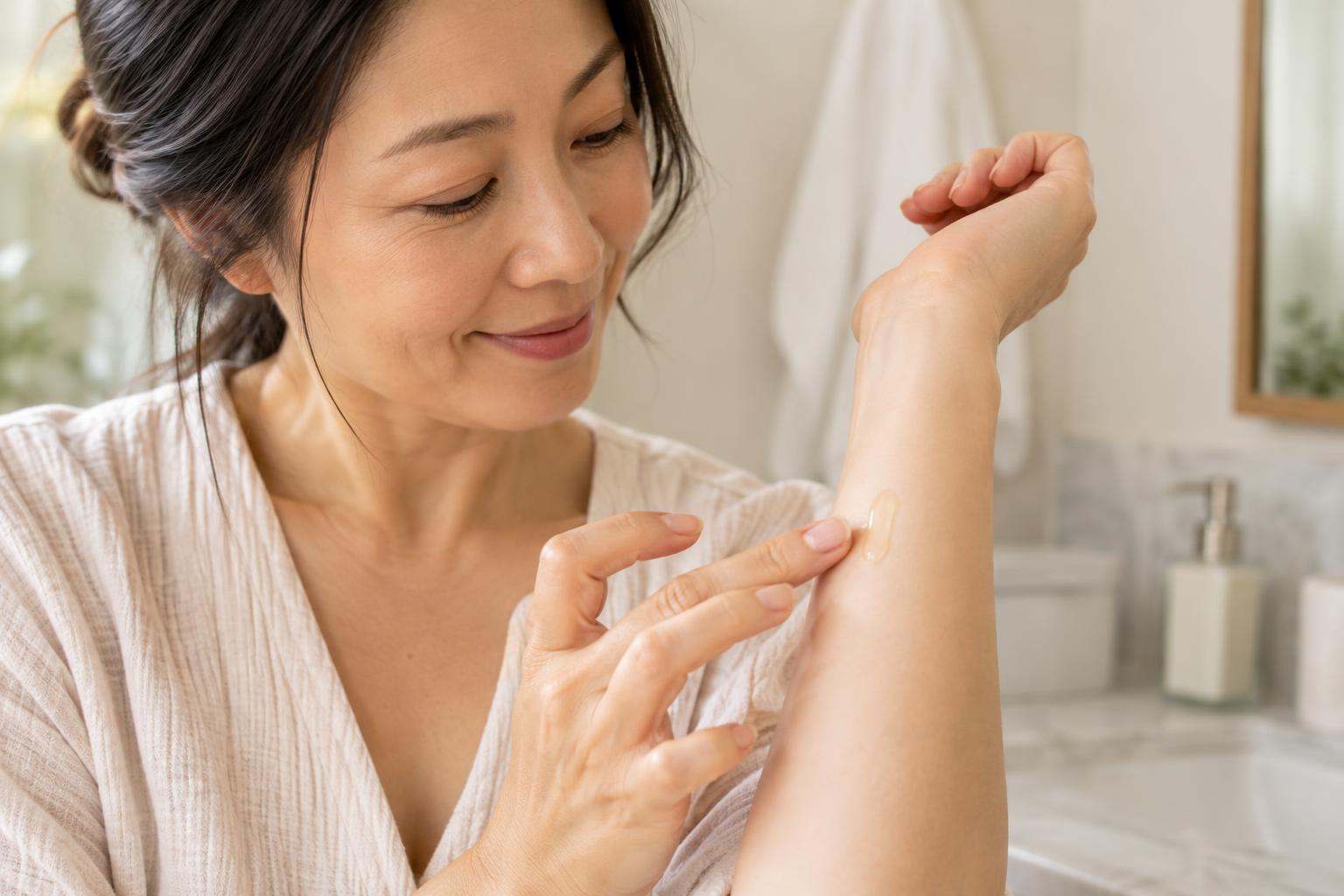
Fish allergy generally involves proteins rather than DNA. Nevertheless, purification and residual protein information matter, and “highly purified” is not a guarantee of safety. If you have a fish allergy, ask your allergist before using a fish-derived product. A home patch test cannot rule out a serious allergic reaction.
Compatibility also depends on the complete formula. Fragrance, exfoliating acids, and other ingredients may matter more to sensitive skin than the headline PDRN ingredient.
A practical buying checklist
- Look for a complete ingredient list; terms such as Sodium DNA or Hydrolyzed DNA may appear, but do not disclose every relevant specification.
- Ask about biological source, purification, and what the stated concentration measures: DNA itself or a diluted ingredient blend.
- Favor finished-product studies over ingredient-supplier claims.
- For hydration, look for familiar supporting ingredients such as glycerin and hyaluronic acid; for moisturizing support, consider ceramides.
- Avoid products promising scar removal, wound treatment, or injectable-level results from a serum.
PDRN vs. retinol, peptides, and hyaluronic acid
Retinol and other retinoids have a more established role in addressing photoaging, although irritation and suitability matter. The American Academy of Dermatology’s dermatologist-written guidance explains their uses and precautions. Avoid retinoids during pregnancy.
Peptides are short amino-acid chains; their effects depend on the particular peptide and formulation. Hyaluronic acid is a humectant that helps retain water. Neither is chemically equivalent to PDRN, and there is no reason to assume PDRN is universally superior.
How to introduce a PDRN serum
Test a small area first, then introduce it a few times weekly according to the label. Apply after cleansing and before moisturizer; finish morning skincare with broad-spectrum SPF 30 or higher.
Add only one new product at a time. Stop if burning, itching, or a persistent rash develops. Use it after procedures only if your treating clinician approves that exact product.
Is PDRN worth buying?
- Pros: interesting repair-related research, an optional addition to a moisturizing routine, and potentially pleasant hydrating formulas.
- Cons: uncertain topical delivery, limited ingredient-specific cosmetic evidence, variable labeling, and possible source-related concerns.
Consider PDRN an optional extra, not a skincare essential. A comfortable, reasonably priced formula may be worth trying, but a large premium based on “salmon DNA” alone is difficult to justify. Prioritize sunscreen, moisturizer, and treatments with evidence suited to your goals.
FAQ
Does PDRN skincare change your DNA?
No evidence supports that claim. PDRN skincare is not gene therapy; proposed mechanisms concern signaling and recycling molecular building blocks.
Can you use PDRN with retinol?
There is no established blanket incompatibility, but the complete formulas matter. Introduce products separately and do not assume PDRN will prevent retinol irritation.
Is PDRN suitable for sensitive or acne-prone skin?
Possibly, but neither suitability nor acne treatment is guaranteed. Choose a simple formula and assess tolerance. For active eczema, rosacea, or persistent acne, seek individualized advice.
How long does PDRN take to work?
There is no reliable universal timeline for topical PDRN. Early softness or plumping may come from moisturizing ingredients and does not demonstrate collagen production.