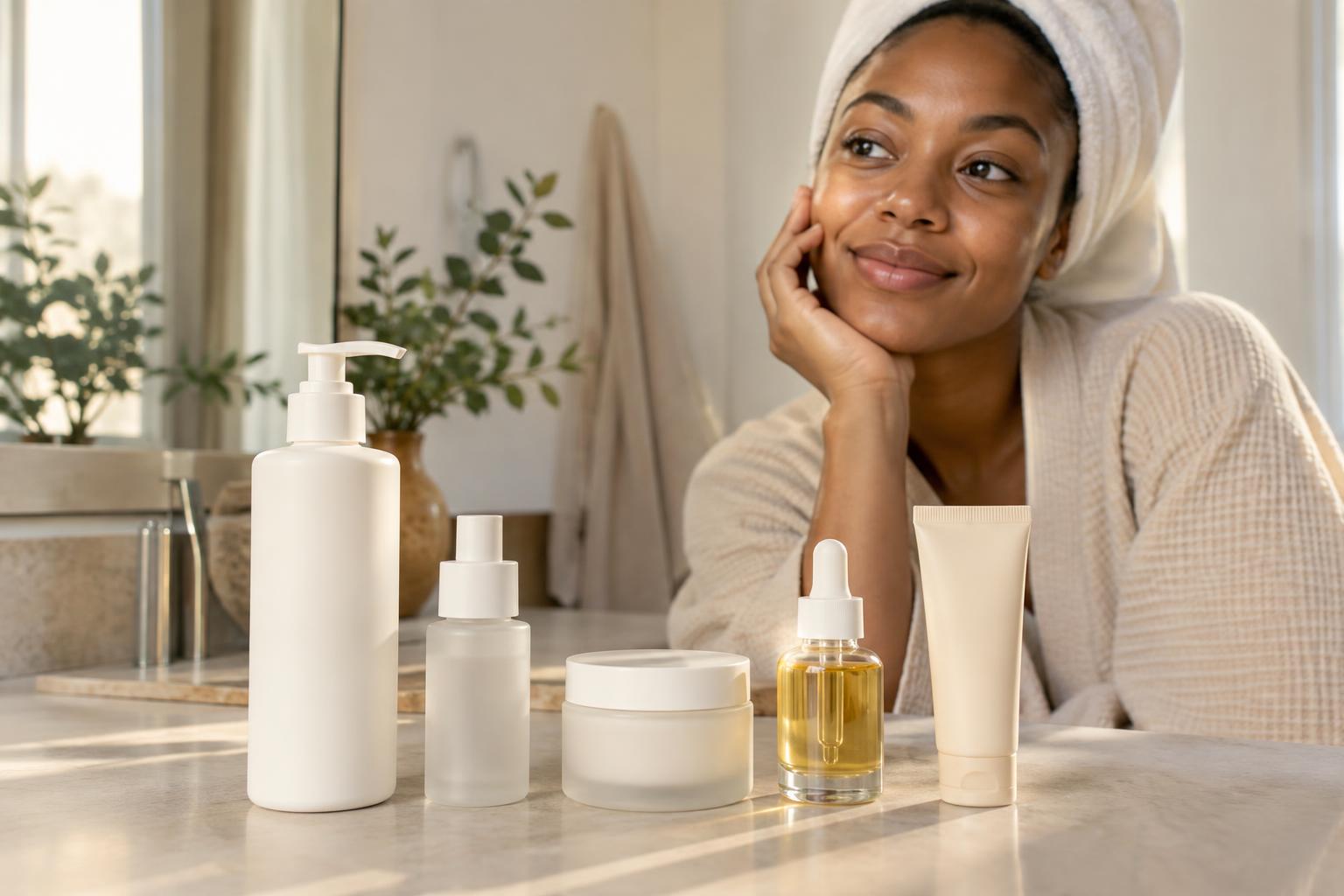
Apply skincare in this general order: cleanse, use optional hydrating layers and treatments, then moisturize. In the morning, finish with sunscreen; at night, use retinol or an exfoliant only if it suits your skin and the product’s directions.
You don’t need every step below. Cleansing, moisturizing, and daytime sun protection form the foundation; toners, essences, serums, exfoliants, and face oils are optional.
Morning vs. Night Skincare Order
This table is a flexible guide—not a checklist of products to buy. Treatment order can change with formulation, prescription instructions, and your skin’s tolerance.
| Step | Morning routine | Night routine |
|---|---|---|
| 1. Cleanse | Gentle cleanser, or a water rinse if appropriate | Remove makeup and sunscreen; cleanse |
| 2. Optional prep | Hydrating toner, then essence | Hydrating toner, then essence |
| 3. Optional treatments | Vitamin C, niacinamide, or hyaluronic acid | Retinol OR an exfoliant; hydrating serum if needed |
| 4. Moisturize | Moisturizer as needed | Moisturizer |
| 5. Optional oil | Usually easiest to skip under SPF | Face oil, usually after moisturizer |
| 6. Protect | Broad-spectrum SPF 30 or higher | No sunscreen needed for bedtime |
Morning Skincare Routine, Step by Step
1. Cleanser
Start with a gentle cleanser to remove overnight oil and residue. If your skin is dry or sensitive and feels clean, a lukewarm-water rinse may be enough. Avoid scrubbing and very hot water.
2. Toner and essence: optional
Apply a hydrating toner after cleansing, followed by an essence if you use one. These overlapping categories can add hydration, but neither is required. An acid-containing toner is an exfoliating treatment—not just a hydrating prep step.
3. Vitamin C, niacinamide, and hyaluronic acid: optional
Choose a serum for a specific concern rather than stacking several automatically.
- Vitamin C: Often used in the morning before moisturizer and sunscreen. It does not replace SPF. Follow the formula’s instructions, particularly if it calls for clean, dry skin.
- Niacinamide: Can be used morning or night, generally before moisturizer when supplied as a lightweight serum. It does not automatically need to be separated from vitamin C.
- Hyaluronic acid: A hydrating ingredient, not an exfoliating acid. Apply a serum before moisturizer; slightly damp skin can help with application unless the label directs otherwise.
If using multiple serums, thinner textures usually go before thicker ones. However, a watery hydrating serum does not always need to precede a treatment designed for direct contact with clean skin. Product directions take priority.
4. Moisturizer
Apply moisturizer to help maintain hydration. Choose a texture your skin tolerates: lighter lotions may suit oily skin, while richer creams may feel better on dry skin. If your sunscreen provides enough moisture, you may not need a separate morning moisturizer.
5. Sunscreen: the last morning skincare step
Finish with broad-spectrum, water-resistant SPF 30 or higher, then apply makeup. Follow the label for application amount and timing; the American Academy of Dermatology recommends applying sunscreen about 15 minutes before going outdoors.
Reapply approximately every two hours outdoors and after swimming or sweating, following the label. Never mix sunscreen with moisturizer, serum, or oil: that can interfere with forming an even protective layer.
Night Skincare Routine, Step by Step
1. Remove makeup and sunscreen, then cleanse
One effective, gentle cleanse may be enough. For stubborn makeup or water-resistant sunscreen, use a suitable makeup remover or cleansing oil, followed by a gentle cleanser if needed. Double cleansing is optional, not a requirement for everyone.
2. Choose hydration, exfoliation, or retinol
On a simple recovery night, use an optional hydrating toner, essence, or serum, then moisturizer.
On exfoliation nights: A leave-on AHA or BHA commonly goes after cleansing and before moisturizer. Whether it goes before other serums depends on its formulation. Rinse-off exfoliants and exfoliating cleansers follow their own instructions. Start conservatively, such as once weekly, rather than assuming daily use is necessary.
On retinol nights: Apply as directed, usually to dry skin before moisturizer. Start with a low frequency, such as two nights weekly, and increase only if tolerated. Some people use moisturizer before and after retinol to reduce irritation; check the product or prescriber’s instructions.
Beginners should generally alternate retinol and exfoliation nights rather than combine them. Avoid retinoids during pregnancy or when trying to conceive; discuss breastfeeding use with your clinician.
3. Moisturizer, then optional face oil
Finish with moisturizer. A few drops of face oil usually go afterward, although some formulas specify a different order. Oil can help soften skin but does not necessarily replace a moisturizer’s water-attracting ingredients.
If you prefer oil in the morning, keep it before sunscreen and skip it if it causes slipping or pilling.

Simple Routines for Your Skin Type
Dry skin
- AM: Water rinse or gentle cleanser → optional hyaluronic acid → cream moisturizer → sunscreen.
- PM: Gentle cleanse → optional hydrating serum → cream moisturizer → optional face oil.
Oily skin
- AM: Gentle cleanser → optional niacinamide → lightweight moisturizer if needed → sunscreen.
- PM: Cleanser → optional BHA on occasional nights → lightweight moisturizer.
Avoid trying to scrub away all oil. Oily skin can still become irritated or dehydrated.
Sensitive skin
- AM: Rinse or gentle cleanser → fragrance-free moisturizer → sunscreen.
- PM: Gentle cleanser → fragrance-free moisturizer.
Keep the routine minimal before introducing treatments. If you have eczema, rosacea, or persistent irritation, seek individualized advice.
How to Avoid Pilling, Irritation, and Common Mistakes
- Use fewer layers: Multiple thick or film-forming products may roll into flakes when rubbed.
- Let layers settle: Apply the next product once the previous one is no longer very wet or slippery. Avoid vigorous rubbing.
- Don’t reduce sunscreen to prevent pilling: Simplify the products underneath instead.
- Add one new product at a time: Test it on a small area first; this does not guarantee that irritation won’t develop later.
- Count actives across products: An exfoliating cleanser, acid toner, and peeling serum can create an unnecessarily aggressive routine.
- Don’t push through burning: Stop irritating products if you develop persistent stinging, redness, or peeling. Seek care for significant or ongoing reactions.
Dermatology References
For general guidance, see the American Academy of Dermatology’s advice on applying sunscreen and retinoids and retinol. These support the safety principles here; there is no single universal layering sequence for every formulation.
FAQ
Does serum go before or after moisturizer?
Most lightweight serums go before moisturizer. Oil-based serums or specialized treatments may differ, so follow the label rather than relying only on the word “serum.”
When should you apply retinol?
Retinol is generally used at night, after cleansing and before moisturizer. Let skin dry first unless directed otherwise. Moisturizer-first buffering may help sensitive skin tolerate it.
Is SPF always the last morning skincare step?
Sunscreen should generally be your last morning skincare step, before makeup. Don’t apply face oil over it or mix it with other products.
How long should you wait between skincare layers?
There is no universal waiting time. Let each layer settle enough to avoid smearing or pilling, and follow any specific instructions. Allow sunscreen to set before makeup and observe its recommended pre-sun application time.