
Did you know your body sheds nearly 40,000 dead skin cells every minute? Over a year, you lose about nine pounds of surface cells without noticing. These dead cells trap dirt, making your skin look dull.
To improve your skin care routine, removing these dead cells is key. This simple step clears clogged pores and smooths out your skin. You deserve to look your best every day.
Achieving glowing skin is easier than you think. By adding a regular exfoliation step, you can reveal your skin’s natural glow. This guide will show you how to brighten your complexion safely.
Understanding exfoliation is the first step to a healthier lifestyle. We’ll cover the best tools and techniques to boost your confidence. Let’s start your journey to radiant skin.
Key Takeaways
- Remove dead cells to prevent a dull complexion.
- Clear out clogged pores for smoother texture.
- Improve the absorption of your favorite moisturizers.
- Learn the difference between chemical and physical methods.
- Discover how often you should treat your face.
- Identify the best tools for your specific needs.
What is Exfoliation and Why is it Important?
Exfoliation is the process of removing dead skin cells from the skin’s surface. It’s a key step for keeping the skin healthy. As we age, our skin sheds cells more slowly, leading to dullness, dryness, and clogged pores.

Understanding the Different Types of Exfoliation
There are two main types of exfoliation: physical and chemical. Physical exfoliation uses tools like scrubs to remove dead skin cells. Chemical exfoliation uses acids to break down the ‘glue’ between cells, making it gentler and more effective.
Choosing between physical and chemical exfoliation depends on your skin type and concerns. Sensitive skin might do better with chemical exfoliation. Physical exfoliation is better for removing tough dead skin cells.
Benefits of Regular Exfoliation for Your Skin
Regular exfoliation greatly improves your skin’s health and look. It removes dead skin cells, revealing fresh, healthy skin that looks brighter and feels smoother. It also makes your skin more receptive to skincare products.
- Improves skin texture and tone
- Unclogs pores, reducing acne
- Enhances skincare product absorption
Adding an exfoliation routine to your skincare can tackle many skin issues. It helps keep your skin healthy and glowing.
How to Choose the Right Exfoliator for Your Skin Type
Effective exfoliation starts with knowing your skin type. Then, pick an exfoliator that meets its needs. Your skin type is key to finding the best exfoliation method. Whether you have oily, dry, sensitive, or combination skin, there’s a perfect exfoliator for you.
Exfoliation for Oily Skin
For oily skin, choose an exfoliator that removes dead skin cells and controls oil. Look for exfoliators with salicylic acid or glycolic acid. These ingredients go deep into pores and cut down on oil. Exfoliating 2-3 times a week can make your skin look matte and reduce acne.
Exfoliation for Dry or Sensitive Skin
If you have dry or sensitive skin, go for a gentler exfoliation. Physical exfoliants with fine, round particles or chemical exfoliants with alpha-hydroxy acids (AHAs) are good choices. They remove dead skin cells without irritating your skin. Exfoliate once or twice a week to keep your skin from losing its natural oils.
Exfoliation for Combination Skin
Combination skin needs a balanced exfoliation approach. You might need to use different techniques on different face areas. For the T-zone (forehead, nose, and chin), use a stronger exfoliation to control oil and blackheads. But, be gentle on the cheeks and other dry areas.
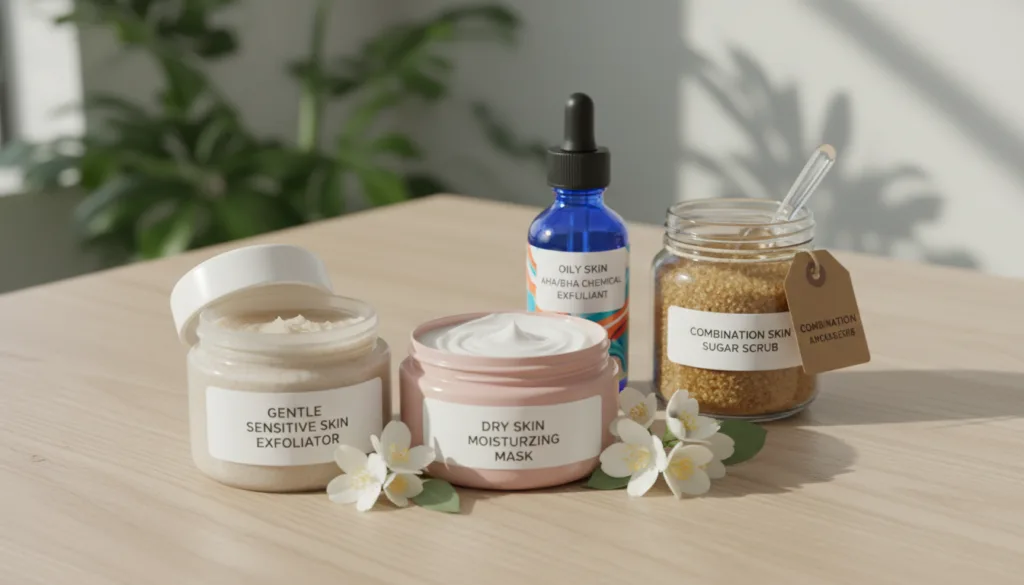
By understanding your skin type and picking the right exfoliator, you can enjoy brighter, smoother skin. You’ll also see a reduction in pore appearance.
Step-by-Step Exfoliation Routine for Glowing Skin
To get your skin glowing, follow this easy exfoliation guide. Adding this simple step to your skincare routine will help you say goodbye to dull skin. You’ll soon have a healthier, glowing complexion.
Preparing Your Skin for Exfoliation
Before you start exfoliating, prepare your skin. Clean your face with a gentle cleanser to remove dirt and makeup. This makes sure your skin is clean and ready for exfoliation.
Tip: Clean your face with lukewarm water. Hot water can take away your skin’s natural oils.
How Often Should You Exfoliate?
How often you exfoliate depends on your skin type. Most people exfoliate 1-3 times a week. But if you have sensitive skin, you might need to do it less often.
| Skin Type | Exfoliation Frequency |
|---|---|
| Normal Skin | 2-3 times a week |
| Sensitive Skin | 1 time a week |
| Oily Skin | 2-3 times a week |
Post-Exfoliation Care Tips
After exfoliating, moisturize your skin to keep it hydrated and nourished. Choose a gentle moisturizer that fits your skin type.
“Exfoliating is not just about removing dead skin cells; it’s also about revealing the brighter, smoother skin underneath.”
Also, apply sunscreen during the day to protect your skin from UV damage.
By following this step-by-step exfoliation routine, you’ll be on your way to achieving glowing, healthy-looking skin.
- Cleanse your skin before exfoliating
- Exfoliate according to your skin type
- Moisturize after exfoliating
Natural Exfoliation Methods You Can Try at Home
You don’t need expensive skincare products to get glowing skin. Natural exfoliation methods are gentle and effective. They help remove dead skin cells, revealing smoother skin.
Creating Your Own DIY Scrubs
Making your own scrubs is fun and saves money. Use natural ingredients like sugar, salt, and coffee grounds. For example, a sugar scrub with olive oil and lemon juice nourishes and brightens your skin.
Benefits of Natural Ingredients
Natural ingredients in your exfoliation routine are good for your skin. Honey and avocado moisturize, while turmeric and cinnamon reduce inflammation.
Safety Precautions for Home Remedies
Always test new ingredients on a small skin area before using them. This prevents any bad reactions. Be gentle when exfoliating to avoid irritation and dryness.
Adding natural exfoliation to your skincare routine can make your skin healthier and glow. It’s a way to avoid harsh chemicals in some commercial products.