Using expired makeup can lead to skin irritation and infections. This risk affects millions of Americans. Many of us keep our favorite products too long, not knowing the harm they can cause.
It’s important to check the PAO symbol and look for changes in texture, smell, or color. These signs help you know if your makeup is safe to use. By knowing your makeup shelf life, you can keep your skin safe from damage.
Key Takeaways
- Expired makeup can cause skin irritation and infections.
- Check the PAO symbol to determine the product’s shelf life.
- Observe changes in texture, smell, or color to identify expired products.
- Regularly cleaning your makeup bag can help prevent the growth of bacteria.
- Proper storage can extend the life of your makeup products.
The Hidden Dangers of Expired Cosmetics
Expired cosmetics are not just useless; they can also harm you. This is because they might have bacterial contamination and chemical degradation. Using expired cosmetics can lead to bad reactions and infections.
Bacterial Growth and Contamination
Expired cosmetics can grow bacteria. This is a big worry, as products like creams and liquid foundations can harbor bacteria. Using these products on your skin can lead to infections, acne, and irritation.
Mascara and eyeliner are at high risk because they’re liquids. They stay moist, making them perfect for bacteria to grow.
| Product Type | Bacterial Growth Risk | Common Issues |
|---|---|---|
| Liquid Foundations | High | Acne, Skin Irritation |
| Mascara | High | Eye Infections |
| Powder Products | Low | Less Common |
Chemical Degradation Over Time
Expired cosmetics also face chemical breakdown. This means their active ingredients can lose power. It can also cause skin problems.
Preservatives in cosmetics can break down, letting bacteria grow. Some ingredients can even turn toxic, making skin issues worse.
Knowing the makeup expiration date is key. It helps avoid these problems. Being aware of expired products keeps your skin safe and your makeup routine effective.
When to Throw Away Old Makeup: Key Indicators
To keep your makeup routine safe and effective, it’s key to know when to replace products. Makeup has a limited shelf life. After that, it can harbor bacteria or lose its power.
Visual Changes to Watch For
One main sign your makeup has expired is a visible change. Look for mold, separation, or an odd color change. For example, if your foundation is darker or has an odd color, it’s bad.
Also, mold or fungus in your products means it’s time to get rid of them.
Texture and Smell Indicators
Texture or smell changes also show your makeup has expired. If a product feels thick, dry, or separated, it’s old. A strong, bad smell means it’s degraded and should be replaced.
For example, if mascara is dry and crumbly or lipstick smells bad, it’s time to throw them away.
Performance Issues That Signal Expiration
Performance problems can also mean your makeup has expired. If products don’t apply smoothly or cause irritation, they’re bad. For instance, if foundation doesn’t blend well or eyeshadow is hard to apply, it’s time for new ones.
By watching for these signs, you keep your makeup safe and effective. Regular checks for expiration help keep your makeup quality high and protect your skin.
Shelf Life Guide for Face Makeup Products
Knowing how long face makeup lasts is key to keeping your skin healthy. Different products last for different times. Liquids usually don’t last as long as powders.
Foundation and Concealer Expiration Timelines
Foundation and concealer are essential in many beauty routines. Liquid foundations and concealers typically last 6 to 12 months. After opening, watch for changes in texture and smell. If it looks or smells off, it’s time for a new one.
Creme or stick foundations can last up to 18 months. This is because they have less water, which means less chance of bacteria. But, always look for signs of spoilage.
When to Replace Powders, Blushes, and Bronzers
Powder products like blushes, bronzers, and powders last longer than liquids. They can stay good for 1 to 2 years. Look for changes in color, texture, or smell to know when to replace them. Powders are less likely to grow bacteria, so they stay safe longer.
| Product Type | Average Shelf Life | Replacement Indicators |
|---|---|---|
| Liquid Foundation/Concealer | 6-12 months | Change in texture, smell, or color |
| Creme/Stick Foundation | Up to 18 months | Visible signs of spoilage |
| Powders, Blushes, Bronzers | 1-2 years | Change in color, texture, or smell |
Highlighters and Setting Sprays Longevity
Highlighters, whether liquid, cream, or powder, follow similar shelf life rules. Liquid highlighters usually last 6-12 months. Powder highlighters can last up to 2 years.
Setting sprays, being liquid, have a shorter shelf life. They usually last 6 months to 1 year. Always check for any changes in consistency, smell, or how well it works.
By following these guidelines, you can keep your makeup products effective and safe. This helps maintain a healthy beauty routine.
Eye Makeup Expiration Guidelines
Knowing when to replace eye makeup is key for eye health. Products for the eye area have shorter lives because of contamination risks. It’s vital to know when to replace your eye makeup to avoid infections and other issues.
Mascara: The Three-Month Rule
Mascara is at high risk for bacterial contamination because it’s wet and the wand goes in and out of the tube. This means mascara should be replaced every three months. After three months, the chance of bacterial growth and eye infections goes up. So, it’s best to get new mascara every three months.
Eyeliners and Eye Shadows Replacement Schedule
Eyeliners and eye shadows last longer than mascara. But, their shelf life depends on their type and how often you use them. Pencil eyeliners can last up to two years if you keep them sharp. Liquid or gel eyeliners should be replaced every six to twelve months.
Eye shadows, in powder or cream, usually last one to two years. It’s important to check them regularly. Replace them if you notice any changes in texture, smell, or how they apply.
Eye Primer and Glitter Products
Eye primers are more durable but should be replaced every six to twelve months. Glitter products, with their loose particles, are more likely to get contaminated. It’s best to use them within a year and not share them to avoid eye infections.
Following these guidelines can help keep your eyes healthy and beautiful. It’s all about knowing when to replace your eye makeup.
Lip Products Shelf Life and Replacement Schedule
It’s important to know when to throw away old lip products. This is for both their effectiveness and your health. Lip products, like lipsticks and lip balms, last different lengths of time. This depends on what’s in them and how you store them.
Shelf Life of Lipsticks and Lip Liners
Lipsticks and lip liners usually last longer than other lip products. They can stay good for up to 2 years if kept right. But, how long they last also depends on air, temperature, and how you handle them. Products without water tend to last longer.
To keep them fresh, store lipsticks and liners in a cool, dry spot. Keep them away from sunlight. Also, sharpening lip liners often helps stop bacteria from growing.
Lip Gloss and Liquid Lip Products
Lip glosses and liquid lip products don’t last as long, usually 6 to 12 months. They have a lot of water, which can lead to bacteria and contamination. Watch for any changes in texture or smell. If you notice anything different, it’s time to get a new one.
Keep them in a cool, dry place and don’t share. Using applicators instead of dipping your finger can also help avoid germs.
Lip Balms and Treatments
Lip balms and treatments, with natural ingredients, last 6 to 12 months. They can go bad because of oils and waxes. Look for changes in smell, texture, or color to see if they’re good to use.
Store lip balms in airtight containers and keep them cool. Use clean fingers or applicators to apply. This helps prevent germs.
| Lip Product | Typical Shelf Life | Factors Affecting Longevity |
|---|---|---|
| Lipsticks and Lip Liners | Up to 2 years | Exposure to air, temperature, handling |
| Lip Gloss and Liquid Lip | 6 to 12 months | Water content, contamination risk |
| Lip Balms and Treatments | 6 to 12 months | Oxidation, contamination, storage |
Makeup Tools and Applicators: Replacement Timelines
Keeping makeup tools and applicators clean is key for a healthy beauty routine. These items can collect bacteria and dirt, causing skin problems and infections if not cleaned right.
Brushes and Sponges Maintenance Schedule
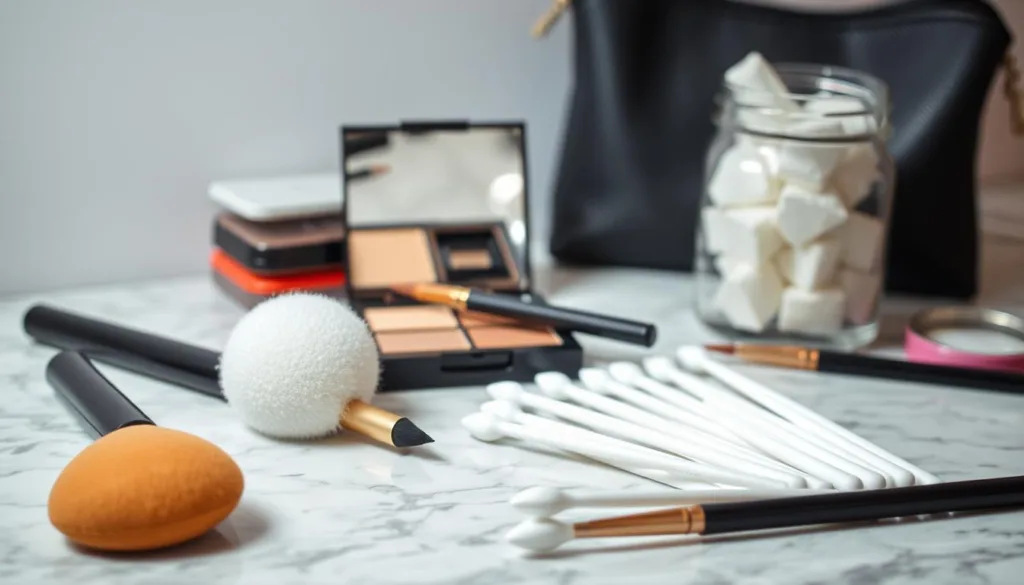
It’s important to clean makeup brushes and sponges often to stop bacteria and product buildup. Wash brushes with a mild cleanser once a week, or more if you use them every day. Sponges need cleaning after each use and should be replaced every 1-3 months, based on how much you use them.
- Clean brushes weekly with a gentle cleanser
- Replace brushes every 1-2 years or when showing signs of wear
- Sponges should be cleaned after every use
When to Replace Eyelash Curlers and Tweezers
Eyelash curlers and tweezers need regular care to stay effective and clean. Replace eyelash curlers every 6-12 months, or sooner if the rubber pad is worn. Tweezers should be cleaned often and replaced if the tips get damaged or worn out.
Key signs to replace eyelash curlers and tweezers include:
- Rust or corrosion on metal parts
- Worn or damaged tips
- Visible signs of wear on the rubber pad of eyelash curlers
Makeup Bags and Storage Containers
Makeup bags and containers can also get dirty and harbor bacteria and dust. Clean these items often and replace them if they’re worn or damaged. Choose bags made from easy-to-clean materials or pouches that can be washed.
Regularly maintaining and replacing makeup tools and applicators keeps your makeup application clean and effective. This not only makes your tools last longer but also keeps your skin safe from irritants and infections.
Health Risks of Using Expired Makeup
Using old makeup can lead to serious health problems. Expired cosmetics can harbor bacteria and other contaminants. These can cause a range of health issues.
Skin Irritations and Allergic Reactions
Expired makeup can cause skin irritations and allergic reactions. As makeup ages, its chemical composition changes. This makes it more likely to cause adverse reactions on the skin. This is a big concern for people with sensitive skin.
Eye Infections and Complications
Expired eye makeup, like mascara and eyeliner, is very risky. These products can become breeding grounds for bacteria. This can lead to eye infections like conjunctivitis or even more serious complications that could potentially threaten vision.
Long-term Skin Damage Concerns
Using expired makeup can also cause long-term skin damage. Continuous exposure to degraded products can lead to chronic skin issues. This includes persistent irritation and potentially even premature aging of the skin.
It’s important to be aware of these risks. Regularly inspect and replace makeup products to avoid these health issues. By doing so, individuals can protect their skin and overall health.
How to Extend Your Makeup’s Shelf Life
To keep your makeup fresh, you need to store it right, follow good hygiene, and think about the climate. These steps help your makeup stay good for longer.
Proper Storage Techniques
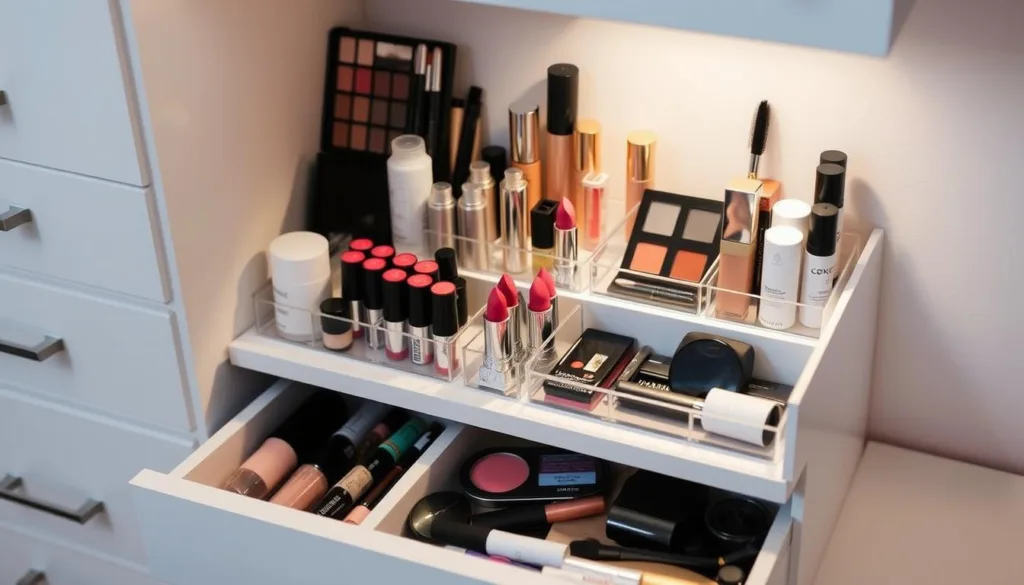
Storing makeup well is key to keeping it quality. Store it in a cool, dry spot, away from sunlight. Don’t keep makeup in humid places like bathrooms because moisture harms it. Use tight containers or bags to keep dust out.
Hygiene Practices That Prevent Contamination
Good hygiene stops makeup from getting contaminated. Always wash your hands before applying makeup. Clean your brushes and tools often. Don’t share makeup or use fingers to get it from containers, as this spreads bacteria.
| Hygiene Practice | Benefit |
|---|---|
| Washing hands before application | Reduces bacterial transfer to makeup |
| Regularly cleaning brushes and applicators | Prevents buildup of bacteria and product residue |
| Avoiding sharing makeup | Minimizes risk of cross-contamination |
Climate Considerations for Makeup Storage
The climate affects makeup’s life. High temperatures can melt or separate products, and cold can change their texture. Think about your area’s climate and adjust storage. In hot places, keep makeup in the fridge.
Following these tips, you can make your makeup last longer. This keeps it safe and effective to use.
Eco-Friendly Disposal and Budget-Friendly Replacements
Expired makeup doesn’t have to go to the landfill. There are many ways to dispose of it responsibly. The beauty industry is now focusing on sustainable practices.
Responsible Ways to Discard Expired Makeup
Many brands have recycling programs for their products. For instance, MAC’s Back to MAC lets you get a free lipstick by returning empty containers. L’Oréal’s Collection & Recycling program also encourages recycling beauty products. These efforts help cut down on waste and support a greener beauty industry.
Another way to be eco-friendly is to reuse old makeup containers. You can turn them into storage for small items or even planters for herbs. This approach reduces plastic waste and gives old containers a new purpose.
Strategies for Affordable Makeup Replacement
Replacing expired makeup doesn’t have to be expensive. Look for sales or use coupon codes from beauty stores. Also, consider dupes or cheaper alternatives to pricey products. Many brands offer quality, affordable options that work just as well as the high-end ones.
Keep an eye on brand loyalty programs and rewards too. Some brands offer special discounts to their members. This can help you save money and keep your beauty routine going without overspending.
Conclusion
It’s important to check and keep your makeup fresh for your health and beauty. Expired makeup can cause problems like bacteria growth and skin issues.
To keep your makeup safe and effective, remember to check expiration dates. Also, store your makeup right and keep clean. This helps avoid infections and skin problems.
In short, taking care of your makeup is vital for a healthy beauty routine. By following these tips, you can use your makeup safely and keep your skin healthy. Remember, taking care of your makeup is a big part of your beauty care.