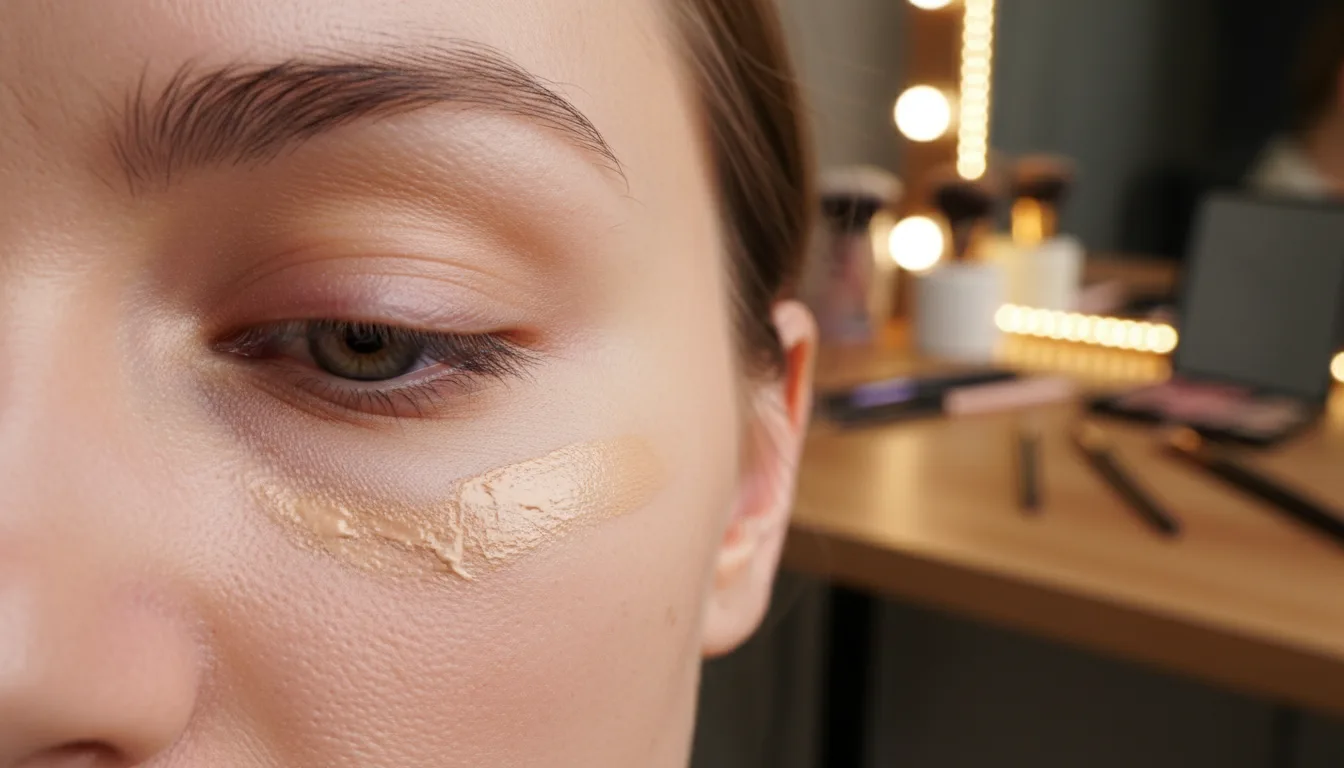
Are you tired of concealer creasing under your eyes? It’s a problem that makes your makeup look uneven and highlights fine lines. Concealer creasing happens when the product settles into wrinkles and fine lines, giving an unflattering look.
This issue can be caused by not preparing your skin right, using too much product, and applying powder. Dry skin can make creasing worse. Also, too much concealer can make your skin look cakey and settle into lines.
Key Takeaways
- Understand the causes of concealer creasing under the eyes.
- Learn how to prepare your skin to prevent creasing.
- Discover tips to apply concealer effectively.
- Find out how to set your concealer for long-lasting results.
- Explore additional strategies to minimize the appearance of fine lines.
Why Concealer Creases Under Your Eyes
Many people struggle with concealer creasing under their eyes. This problem can come from the under-eye skin’s nature and the products used.
What Is Concealer Creasing?
Concealer creasing shows as lines or folds after applying. It makes the under-eye area look old or tired. It means the concealer isn’t sticking well to the skin. This can happen because of skin texture and product type.
The Unique Nature of Under-Eye Skin
The skin under your eyes is delicate and prone to dryness. This makes it more likely to crease. As
“The skin around the eyes is thinner and more fragile than skin on other parts of the face.”
This special skin needs careful care and the right products to avoid creasing.
Why Setting Powder Alone Doesn’t Solve Creasing
Setting powder is used to keep concealer in place, but it doesn’t always work. Some setting powders can make dryness worse, making creasing more noticeable. Choosing the right products and techniques is key to preventing creasing.
Common Causes of Concealer Creasing
Knowing why concealer creases is key to a smooth face. Creasing can happen due to your skin’s natural texture, the concealer’s type, and skin prep.
Fine Lines and Skin Texture
Fine lines and skin texture greatly affect concealer creasing. As we age, our skin loses its smoothness and fine lines show more. These lines make concealer settle unevenly, causing creases. Using a hydrating eye cream can help plump up the skin, reducing the appearance of fine lines.
Dryness and Dehydration Issues
Dryness and dehydration also cause concealer creasing. Dry skin under the eyes makes concealer cling to dry spots, highlighting lines and wrinkles. Keeping the under-eye area moisturized is essential to preventing creasing.
How Concealer Formulas Affect Creasing
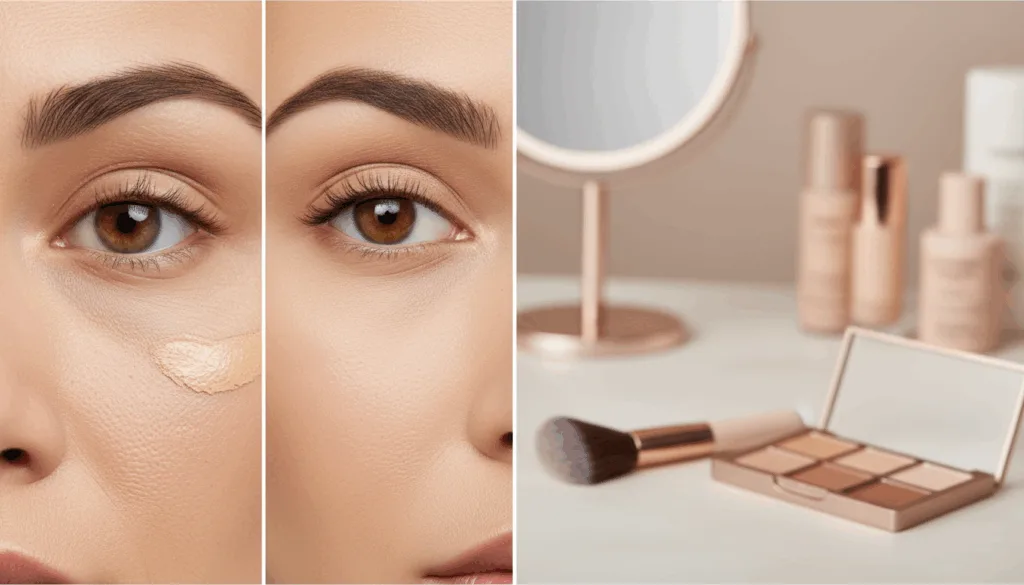
The type of concealer you use greatly impacts creasing. Some concealers are more likely to crease due to their ingredients and texture. Choosing a concealer that is labeled as “creasing-resistant” or “long-lasting” can help. Also, picking concealers with hydrating ingredients is beneficial.
Age-Related Factors
Age changes how concealer looks. As we age, our skin loses collagen and elastin, causing sagging and fine lines. This makes it harder to get a smooth finish with concealer. Knowing these changes helps you adjust your makeup routine.
| Cause | Solution |
|---|---|
| Fine Lines | Hydrating eye cream |
| Dryness | Moisturizing under-eye area |
| Concealer Formula | Choosing creasing-resistant concealer |
| Age-Related Changes | Adapting makeup routine |
Step-by-Step Guide to Prevent Concealer Creasing
Concealer creasing is a common issue, but you can avoid it with the right techniques and products. The secret to a flawless look is in how you prepare your skin and apply the concealer.
Proper Skin Preparation
Getting your skin ready is key for smooth concealer application. This means hydrating the under-eye area and preparing it for makeup.
Proper Skin Preparation
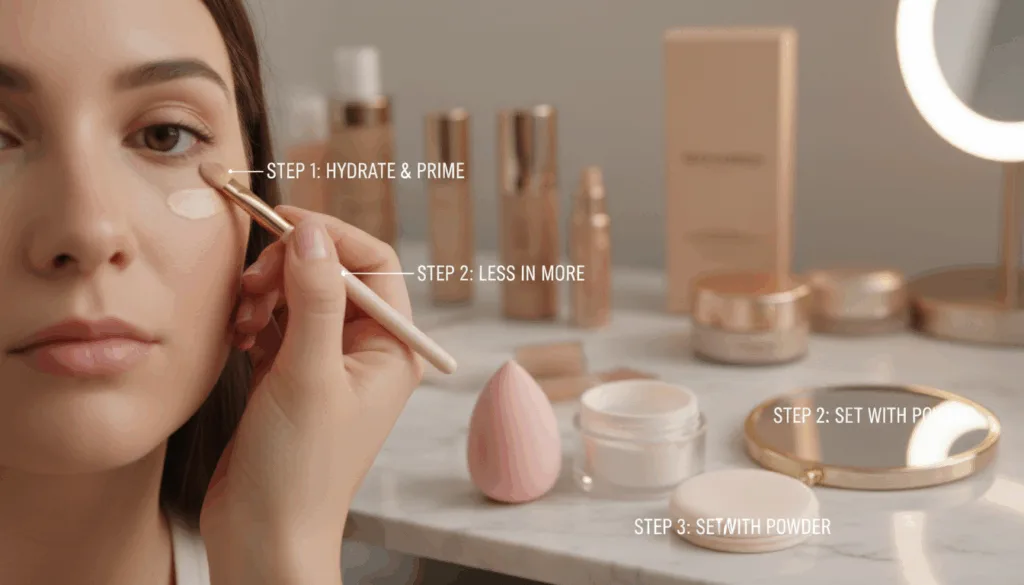
Start by hydrating the under-eye area with an eye cream. This reduces fine lines and makes the surface smooth for concealer.
Proper Skin Preparation
Next, prime the under-eye area with a special eye primer. This keeps the concealer in place longer.
Application Techniques That Work
How you apply concealer greatly affects its longevity.
Application Techniques That Work
Use a small amount of concealer and build coverage as needed. Too much can cause creasing.
Application Techniques That Work
Apply with a precision brush or a beauty blender for a smooth finish.
Setting Techniques That Actually Work
Set your concealer with a light dusting of translucent powder. This prevents creasing and keeps coverage long-lasting.
| Technique | Benefit |
|---|---|
| Hydrating under-eye area | Reduces fine lines and creates a smooth surface |
| Priming under-eye area | Helps concealer stay in place longer |
| Using less product | Prevents excessive creasing |
Common Mistakes to Avoid
Knowing common mistakes helps you apply concealer better.
Common Mistakes to Avoid
Avoid layering too much concealer. It can make fine lines worse and cause creasing.
Common Mistakes to Avoid
Using too much powder or the wrong type can make your makeup look cakey and creased.
Common Mistakes to Avoid
Not moisturizing and caring for the under-eye area can lead to dryness and creasing.
Conclusion: Your Simple Anti-Creasing Routine
To avoid concealer creasing, start with a good skincare routine and the right makeup methods. For the under eyes of mature skin, a hydrating eye cream and a gentle primer are key.
Choosing the right concealer is vital. It should match your skin tone and be made for your skin type. Look for “makeup for mature under eyes” products for the best results.
To prevent creasing, apply a thin layer of concealer under your eyes. Then, set it with a light dusting of powder. This simple trick, along with the right solutions, will give you a smooth look.
By following these steps and considering your skin’s needs, you can get a flawless, lasting makeup look. It will highlight your natural beauty.