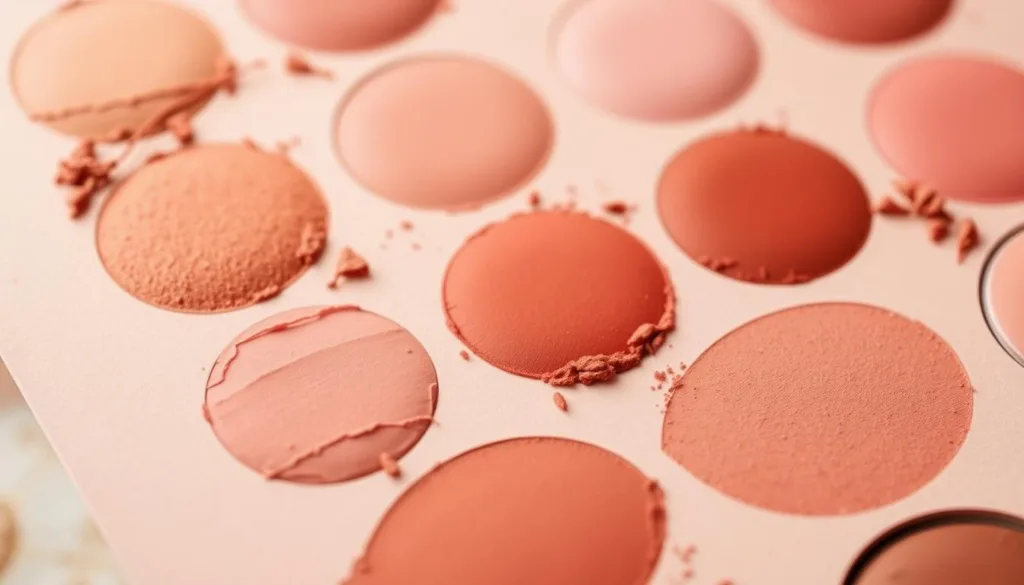
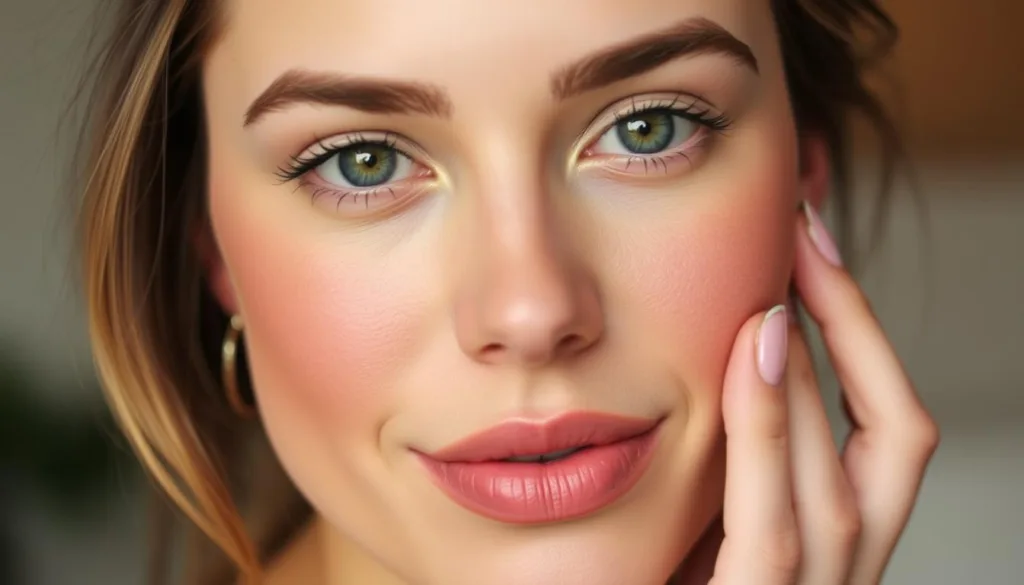
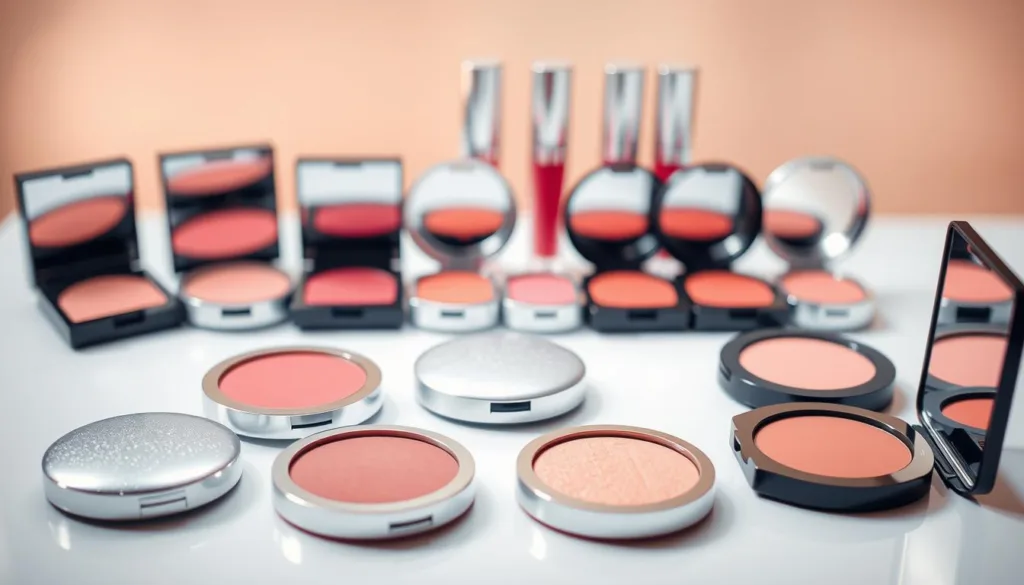
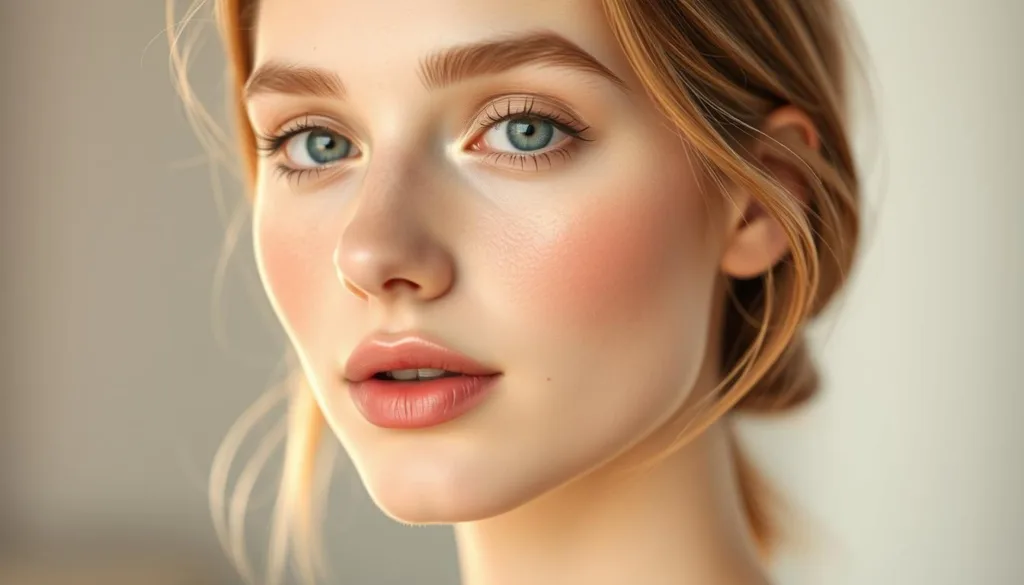
Looking for a makeup trend that’s warm and inviting? The toasty blush look is all the rage for 2025. It’s a softer choice than bold lip colors.
This look is more than a trend; it’s a versatile choice for everyone. It works well with different skin tones and styles. Adding warm blush tones to your makeup routine gives you a healthy, glowing look. It’s great for daily use or special events.
The beauty of this trend is its subtle elegance. It’s easy to adjust to fit your personal style. Whether you want a natural look or something more dramatic, toasty blush is perfect.
Key Takeaways
Toasty blush is a warm, sun-kissed makeup trend for 2025.
It offers a softer alternative to bold lip colors.
Warm blush tones complement various skin tones.
This trend is versatile and suitable for everyday wear or special occasions.
It’s easy to customize to individual preferences.
The Rise of Toasty Blush 2025: What You Need to Know
In 2025, the beauty world is buzzing with the toasty blush trend. This makeup staple is warm and inviting. It brings a cozy glow to your skin.
The Warm Earth Tone Revolution
The warm earth tone revolution is here, changing makeup forever. We’re saying goodbye to cool, pink hues. Instead, we’re embracing earthy tones that feel like the warmth of the earth. Earth tone blush is becoming a favorite because it gives a natural-looking flush.
Why Makeup Artists Are Obsessed with This Trend
Makeup artists love the toasty blush trend. It’s easy to see why. The warm, sun-kissed hues work for any skin tone. Whether you want a natural look or something more dramatic, on-trend blush colors have you covered.
Blush Type
Description
Best For
Cream Blush
Rich, blendable formula that adds a natural flush
Dry or mature skin
Powder Blush
Lightweight, buildable coverage that’s easy to blend
Normal to oily skin
Liquid Blush
Highly pigmented, long-lasting formula that gives a radiant glow
All skin types, specially for those wanting intense color
Essential Products and Tools for Your Toasty Glow Kit
To get a flawless toasty glow, you need the right blush and tools. Choose products that work well together for the best look.
Finding Your Perfect Toasty Blush Shade
Choosing the right blush shade is key. For fair skin, soft peach or pink works well. Medium skin tones look great in coral or rose. Deeper skin tones shine in berry or terracotta.
Makeup artist Pat McGrath said,
“The right blush color can make your complexion look healthy and radiant.”
Formulas That Work Best: Cream vs. Powder vs. Liquid
The blush formula affects your look. Cream blushes give a dewy finish. Powder blushes offer buildable coverage. Liquid blushes provide a sheer color.
Try different formulas to see what suits you best.
Complementary Products to Complete Your Look
To boost your toasty blush, add some extra products. A highlighter adds a glow. Bronzer deepens your tan. Use a setting spray for lasting results.
Must-Have Application Tools
The right tools are essential for a smooth blush application. Get a good blush brush or beauty blender. For precision, use a makeup sponge or angled brush.
Step-by-Step Application Guide for All Skin Tones
Ready to learn the latest makeup trends for 2025? Our guide will show you how to apply toasty blush for every skin tone. You’ll learn how to prep your skin, pick the right spot for your face shape, blend for a natural look, and set it for all day.
Prepping Your Canvas: Skincare and Base
Before you start with toasty blush, get your skin ready. Begin with a skincare routine to keep your skin hydrated and smooth. Use a moisturizer that fits your skin type, then a primer for an even base.
Next, apply your foundation or tinted moisturizer. Make sure to blend it well into your skin.
Placement Techniques for Your Face Shape
Getting the right spot for your toasty blush is key for a natural look. The spot changes based on your face shape:
Oval: Put blush on the apples of your cheeks, blending a bit towards your hairline.
Round: Apply blush above the apples to lift your cheeks.
Square: Soften your features by blending blush from the apples towards your hairline.
Heart-Shaped: Place blush on the lower apples, blending down to balance your forehead and chin.
Blending for a Natural, Seamless Finish
Blending is key for a smooth finish. Use a fluffy brush or beauty blender to blend the blush edges softly. For a natural look, blend upwards and outwards towards your hairline.
Setting and Maintaining Your Toasty Glow All Day
To keep your blush looking fresh, set it with translucent powder. You can also use a setting spray. For lasting wear, try a cream or liquid blush formula.
Face Shape
Blush Placement
Blending Tip
Oval
Apples of cheeks, blending upwards
Blend towards hairline
Round
Upper part of cheeks
Blend upwards for a lifting effect
Square
Apples, blending towards hairline
Soften features by blending outwards
Heart-Shaped
Lower part of apples, blending downwards
Balance width by blending downwards
Conclusion
The beauty trends 2025 highlight the toasty blush look as a must-try. It offers a warm, sun-kissed glow. This is ideal for anyone wanting to add radiance to their skin.
To nail the toasty blush 2025 look, pick a shade that matches your skin. Blend well to achieve a seamless finish. This will leave you with a radiant blush finish.
Now, you have the knowledge and tools to try this look. Get creative and find what works best for you. Experiment with different products and techniques.
The toasty blush trend gives you a healthy, rosy glow. It boosts your natural beauty. So, try it out and get your perfect, radiant complexion!
FAQ
What is the toasty blush look, and why is it trending in 2025?
The toasty blush look is a makeup trend for 2025. It’s about getting a natural, rosy glow. You use warm blush tones that match your skin.
How do I choose the right toasty blush shade for my skin tone?
Pick a shade based on your skin’s undertones. Cool skin tones look good with pink blushes. Warm skin tones do well with peach or coral. Neutral skin tones can try many earthy tones.
What’s the best formula for a toasty blush: cream, powder, or liquid?
The best formula depends on your skin and the look you want. Cream blushes are great for dry skin. Powder blushes are best for oily skin. Liquid blushes are versatile for most skin types.
How do I apply toasty blush for a natural look?
For a natural look, start with skincare and a base. Then, use a blush brush on the apples of your cheeks. Blend upwards and outwards towards your hairline.
Can I achieve a toasty blush look with other on-trend makeup shades?
Yes, you can mix toasty blush with 2025 makeup trends. Try warm eyeshadows and highlighters for a stylish look. Experiment to find your favorite combination.
How do I make my toasty blush last all day?
To keep your blush on, set it with translucent powder. Also, use a setting spray to keep your makeup in place all day.
Are there any specific application tools I need for a toasty blush?
For a smooth finish, use a fluffy blush brush or a beauty blender. These tools blend the blush into your skin for a natural glow.
Are you tired of using skincare products that promise the world but don’t deliver? You’re not alone. With the rise of biotech beauty, a new player has entered the game: exosome serums. But what makes them so special?
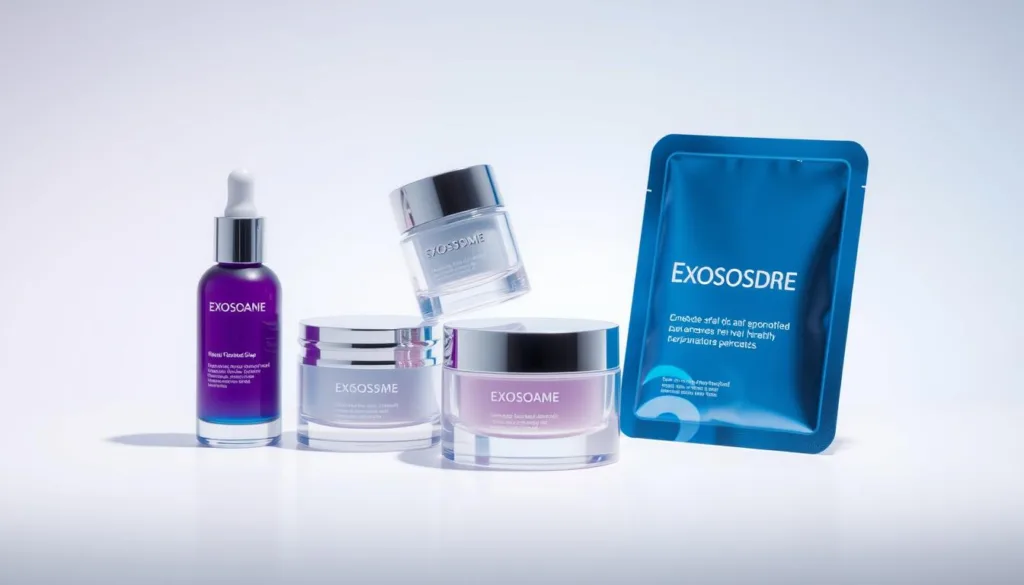
Exosome serums are changing the skincare game. They offer regenerative skincare and anti-aging benefits. These serums use exosomes to rejuvenate the skin, reducing aging signs and promoting a healthier look.
As anti-aging skincare evolves, exosome serums are becoming a top choice. But how do they work, and how can you add them to your skincare routine?
Key Takeaways
Exosome serums offer a new approach to regenerative skincare.
They have the power to reduce aging signs and promote healthier skin.
Adding exosome serums to your routine can be a game-changer for anti-aging.
Biotech beauty is on the rise, with exosome serums leading the way.
Knowing how to use exosome serums effectively is key to maximizing their benefits.
Understanding Exosome Skincare: The Science Behind the Revolution
Exosome skincare is changing the game for skin health. It uses tiny sacs from cells to send messages that help skin heal and grow. This technology is making waves in the skincare world.
What Are Exosomes and How Do They Work?
Exosomes come from plants, bacteria, and human cells. They help cells talk to each other, sharing important info for skin health. Skincare products use exosomes to boost collagen, improve skin’s stretchiness, and fix skin problems.
How Exosome Technology Transforms Skin Cells
Exosome tech makes skin cells better by boosting collagen and making skin more elastic. This makes skin look younger and brighter. It’s a new way to tackle wrinkles, fine lines, and skin texture issues.
Learning about exosome technology can help you get healthier, stronger skin.
The Revolutionary Benefits of Exosome Serums for Your Skin
Exosome serums are changing the skincare world with their amazing benefits. They use exosomes to make your skin better, fixing aging and damage.
Accelerated Cell Regeneration and Repair
Exosome serums help your skin heal fast. They fix damaged cells and make your skin look younger and brighter.
Enhanced Collagen Production and Wrinkle Reduction
Exosome serums boost collagen, which keeps your skin elastic and smooth. Using them regularly makes your skin look younger and smoother.
Superior Healing and Inflammation Control
These serums also heal your skin better, perfect for after treatments. They reduce swelling, helping your skin heal faster and safer.
Studies support the benefits of exosome serums, making them a great choice for effective skincare. The main advantages are:
Improved skin regeneration
Enhanced collagen production
Effective inflammation control
Adding exosome serums to your skincare routine can give you healthier, stronger skin.
How to Use Exosome Skincare Products Effectively
Using exosome skincare products right is key. You need to pick the best one, get your skin ready, apply it right, and use it with other products.
Step 1: Choosing the Right Exosome Serum for Your Skin Type
Choosing the right exosome serum is important. Think about your skin type and what you want to fix, like aging or acne. Look for products with clinically proven exosome concentrations and ingredients that help your specific skin problems.
Step 2: Proper Cleansing and Preparation Techniques
Before you apply exosome serums, clean your skin well. Use a gentle cleanser and then a toner to balance your skin’s pH. This helps the serum soak in better.
Step 3: Application Methods for Maximum Absorption
Put a few drops of exosome serum on your face and massage it in with upward strokes. This helps it spread evenly and soak in better. You can also use a dermaroller or microneedling to help it penetrate deeper.
Step 4: Optimal Timing and Frequency of Use
For the best results, use exosome serums at night. This lets the ingredients work while you sleep, helping with regenerative skincare. Start with 2-3 times a week and adjust as needed based on your skin’s response.
Step 5: Complementary Products and Ingredients
Using exosome serums with other products can make them work better. Try layering with hyaluronic acid for moisture or vitamin C for antioxidants. But avoid mixing with products that might irritate your skin.
Skincare Product
Benefits with Exosome Serum
Hyaluronic Acid
Enhanced hydration and plumping
Vitamin C
Antioxidant protection and brightening
Retinol
Accelerated cell turnover and collagen production
“The future of skincare is here, and it’s all about harnessing the power of exosomes for a more youthful and radiant complexion.” – Skincare Expert
By following these steps, you can make the most of exosome skincare products. Enjoy the benefits of regenerative skincare in your routine.
Conclusion: Embracing the Future of Regenerative Skincare
Exploring exosome skincare opens a new chapter in beauty technology. Exosome serums are changing the game with their ability to rejuvenate and fight aging. They’re a game-changer for those seeking top-notch skincare.
Adding exosome skincare to your routine means you’re using cutting-edge tech for better skin. This technology is set to change the beauty world, leading to more youthful skin in 2025.
Exosome serums boost cell growth, increase collagen, and reduce inflammation. They mark a big leap in skincare tech. Staying updated with these advancements is essential for achieving your best skin.
FAQ
What are exosomes and how do they benefit the skin?
Exosomes are tiny, membrane-bound vesicles. They carry growth factors, proteins, and other molecules. These help the skin by regenerating cells, boosting collagen, and reducing inflammation. This makes the skin look younger and more radiant.
Are exosome serums suitable for all skin types?
Yes, exosome serums can help many skin types, even sensitive ones. But, pick a product that matches your skin’s needs. Look for hypoallergenic or fragrance-free options to avoid irritation.
How do I choose the best exosome serum for my skin?
Think about your skin type, concerns, and needs when picking a serum. Choose one with a high exosome concentration from a trusted source. Make sure it’s formulated with ingredients that boost its effects. Look for clinical evidence and reviews to confirm its effectiveness.
Can exosome serums be used in conjunction with other skincare products?
Yes, you can use exosome serums with other products. Layering them with products like retinol or vitamin C can enhance benefits. But, be careful not to overdo it to avoid irritation or reduced effectiveness.
How long does it take to see results from using exosome serums?
Results from exosome serums vary based on your skin. Some see improvements in a few weeks, while others take longer. Consistency and patience are key.
Are exosome serums regulated by any governing bodies?
Exosome serums are regulated by bodies like the FDA. But, the rules are evolving. Choose products from reputable companies that follow good manufacturing practices (GMPs) and are transparent about their ingredients.
Can exosome serums be used to treat specific skin concerns like acne or hyperpigmentation?
Yes, exosome serums can help with acne and hyperpigmentation. They have anti-inflammatory and regenerative properties. These can reduce inflammation and promote healing, improving skin clarity and tone.
Korean beauty trends are becoming more popular worldwide. Adding PDRN to your skincare routine can make a big difference. PDRN, or Polydeoxyribonucleotide, comes from salmon DNA and is known for its ability to heal and repair.
Using PDRN in your skincare can improve your skin’s health and look. This guide will show you how to use PDRN in your K-beauty routine. It will help you make smart choices for your skin.
Key Takeaways
Understand the benefits of using PDRN in your skincare routine.
Learn how to incorporate PDRN into your existing K-beauty regimen.
Discover the regenerative properties of PDRN derived from salmon DNA.
Explore the relevance of PDRN in Korean beauty trends for 2025.
Enhance your skincare routine with innovative ingredients like PDRN.
Understanding Salmon DNA (PDRN) in K-Beauty
In K-Beauty, Salmon DNA (PDRN) is known for boosting collagen and helping skin heal. It comes from salmon and is prized for its skincare benefits.
What is Salmon DNA and How Does it Work?
Salmon DNA, or PDRN, boosts collagen by working on fibroblasts. This makes skin more elastic and less wrinkly, looking younger. Dr. Uchenna Okereke says, “PDRN is great for fighting aging because it boosts collagen.”
“PDRN’s mechanism of action involves not just stimulating collagen but also aiding in skin repair, making it beneficial for post-acne care and aging skin.” – Dr. Christine Hall
The Science-Backed Benefits for Your Skin
Science supports PDRN’s skin benefits. It boosts collagen and fights inflammation, improving skin texture and tone. A study showed PDRN is top-notch for skin healing.
Skincare Benefit
PDRN
Other Ingredients
Collagen Production
Stimulates production
Variable effects
Anti-inflammatory
Yes
Some ingredients
Skin Regeneration
Effective
Limited
Adding PDRN to your skincare can make your skin look healthier and younger. It’s a key part of marine-based skincare.
Incorporating Salmon DNA K-Beauty Products Into Your Routine
To get the most out of Salmon DNA (PDRN) in your skincare routine, it’s key to know the different products and how to use them. PDRN products are popular in K-beauty for their ability to regenerate skin. Adding them to your daily skincare can improve your skin’s health and look.
Types of PDRN Products: Serums, Ampoules, Creams, and Masks
PDRN comes in many skincare products, each with its own benefits. Serums and ampoules are strong formulas that give your skin a lot of PDRN for regeneration and hydration. Creams moisturize and keep PDRN in, while masks are for deep treatments. Brands like Medicube, VT Cosmetics, and Anua have PDRN products for all skin types.
Morning Routine: Step-by-Step Integration Guide
Adding PDRN products to your morning routine boosts your skin’s hydration and protection. Cleanse your face, then apply a PDRN serum or ampoule for skin regeneration. Next, use a moisturizer with PDRN to keep your skin hydrated. Finish with a broad-spectrum sunscreen to protect against UV damage.
The evening is best for using PDRN products to regenerate your skin. Cleanse and tone your face, then apply a PDRN serum or ampoule. Let it absorb before using a PDRN cream or night mask. This helps your skin regenerate and repair while you sleep, making it look refreshed in the morning.
Weekly Treatments: Intensive PDRN Protocols
For an extra boost, add weekly intensive PDRN treatments to your routine. Use a PDRN sheet mask or an overnight treatment mask once or twice a week. These treatments give your skin a strong dose of PDRN, tackling issues like fine lines, dullness, or dehydration.
Complementary Ingredients That Enhance PDRN Effects
To get the most from PDRN, look for products with hyaluronic acid, niacinamide, and adenosine. These ingredients work well with PDRN to improve hydration, brighten, and fight aging. This gives you better overall skincare benefits.
Conclusion: Optimizing Your Salmon DNA Skincare Results
Adding PDRN products to your skincare routine can make your skin healthier and more youthful. It’s important to use them consistently. This way, you can see the best results from Rejuran and other Korean repair ingredients.
To get the most from your PDRN products, mix them with other good ingredients in your routine. This can make your skincare even more effective. By making PDRN a key part of your skincare, you can get the best results and have glowing skin.
Keep working on your K-Beauty journey. Remember, improving your skincare takes time and effort. With quality PDRN products and the right approach, you can get the healthy, glowing skin you want.
FAQ
What is PDRN and where does it come from?
PDRN, or Polydeoxyribonucleotide, comes from salmon DNA. It’s known for its regenerative effects in skincare.
How does PDRN work in skincare?
PDRN boosts collagen production by stimulating fibroblasts. This improves skin elasticity and reduces fine lines. It also helps in skin repair and regeneration.
What are the benefits of using PDRN products?
PDRN products have anti-inflammatory properties. They improve skin texture and tone. They’re also good for post-acne care and aging skin.
What types of PDRN products are available?
You can find PDRN in serums, ampoules, creams, and masks. These products cater to various skincare needs and routines.
How do I incorporate PDRN products into my morning skincare routine?
Add PDRN serums or ampoules after cleansing and toning in the morning. Then, apply moisturizer and sunscreen.
Can PDRN be used in the evening skincare routine?
Yes, use PDRN products in the evening for overnight regeneration. Apply serums or creams after cleansing and toning.
What are the benefits of weekly intensive PDRN treatments?
Weekly intensive PDRN treatments offer a strong dose of regenerative benefits. They enhance skin rejuvenation and repair.
Are there any ingredients that complement PDRN?
Yes, hyaluronic acid and niacinamide complement PDRN. They add hydration and brightening benefits.
Is PDRN suitable for all skin types?
PDRN is generally good for most skin types, including sensitive skin. Its natural and regenerative properties make it suitable.
How long does it take to see results from using PDRN products?
Results can vary. But, consistent use of PDRN products can lead to noticeable improvements in skin health and rejuvenation over time.
Are you finding it hard to keep your skin healthy and hydrated in winter? You’re not alone. The cold air and strong winds can dry out your skin, making it look dull.
A well-crafted skincare routine can change everything. Inspired by Korean skincare, a simple yet effective routine can give you that glass skin glow. By using the right products and focusing on hydration, your skin can stay healthy even when it’s freezing.
Adding a gentle cleanser, essence, serum, and moisturizer to your daily routine can help. This keeps your skin moist and protects it from the environment. This is the core of a winter K-beauty skincare routine, aimed at giving you glowing, hydrated skin all winter.
Key Takeaways
Layering products is key to a successful winter skincare routine.
Gentle cleansers and hydrating products help maintain skin health.
Incorporating essences, serums, and moisturizers provides long-lasting hydration.
A consistent routine helps achieve a glass skin glow.
Protecting your skin from environmental stressors is critical in winter.
Why Your Skin Needs a Winter K-Beauty Skincare Routine
The cold weather causes many skin problems that a winter K-beauty skincare routine can fix. When it gets colder, our skin’s natural protection is broken. This leads to dryness, irritation, and a dull look.
How Winter Weather Affects Your Skin
Winter’s low humidity and cold can dry out your skin. This can make your skin dry, flaky, and even cause irritation or redness. If you have sensitive skin, this is even worse. A cold weather skincare routine is key to fighting these issues.
K-Beauty Philosophy for Cold Weather Protection
The K-beauty way is all about keeping your skin’s barrier strong and keeping it hydrated. By using products that nourish and protect, you can keep your skin healthy and moist all winter. This is the core of a K-beauty skincare regimen for winter.
By following a winter K-beauty skincare routine, you can have glowing, hydrated skin even in the coldest weather. It’s about knowing what your skin needs and using the right products to meet those needs.
Essential Steps in Your Winter K-Beauty Skincare Routine
A good winter K-beauty routine keeps your skin hydrated and healthy-looking in cold weather. It includes gentle cleansing, layered hydration, and nourishment.
Morning Routine: Gentle Cleansing and Layered Hydration
Begin with a gentle cleanser to remove dirt without drying your skin. Next, use a toner to balance your skin’s pH. Then, apply an essence full of antioxidants.
Layering hydration is key in Korean skincare. So, add a serum and moisturizer to keep moisture in.
Evening Routine: Deep Nourishment and Repair
Evening calls for a deep cleanse to remove makeup and dirt. Use a nourishing treatment product or ampoule for extra hydration and repair. End with a rich moisturizer or sleeping mask for overnight regeneration.
Weekly Treatments for Extra Glow
Weekly treatments boost your skin’s health. Try a hydrating mask or exfoliating scrub once or twice a week. They help remove dead skin cells and improve product absorption.
By sticking to these Korean skincare steps and focusing on hydration layering, you can keep your skin glowing all winter.
Best K-Beauty Products for Different Winter Skin Concerns
To keep your skin healthy and glowing in winter, choose the right K-beauty products. K-beauty has many products for different skin concerns. These include dryness, sensitivity, and combination skin issues.
For Dry and Flaky Skin
For dry and flaky skin, look for products with emollients and humectants. A barrier cream locks in moisture and protects from harsh winds. Ingredients like hyaluronic acid, ceramides, or niacinamide are good choices.
Use a moisturizing cream or sleeping mask for intense hydration. This leaves your skin soft and supple by morning.
For Sensitive and Irritated Skin
For sensitive and irritated skin, choose fragrance-free and hypoallergenic products. Soothing ingredients like aloe vera, green tea, or chamomile can calm irritation. A tone-up moisturizer hydrates and evens out your skin tone without irritation.
For Combination Skin in Winter
Combination skin needs a balanced approach in winter. You must hydrate dry areas but control oil in others. Look for lightweight, non-comedogenic moisturizers that won’t clog pores.
Gel moisturizers or essence-based products are great. They hydrate without feeling heavy.
Universal Winter Must-Haves
Some K-beauty products are good for everyone in winter. These include hydrating toners, nourishing serums, and rich moisturizers. Adding a barrier cream to your routine is also beneficial. It repairs and protects your skin’s barrier function.
Conclusion: Maintaining Your Glass Skin Glow All Winter
Winter is coming, and your skin needs extra love to stay healthy and bright. A good winter skin care routine, inspired by Korean beauty, can help a lot.
Using gentle cleansers and layering products like essences, serums, and moisturizers is key. This keeps your skin hydrated and glowing. Remember, being consistent and patient is important for glass skin glow in winter.
Keep up with your winter K-beauty skincare routine, and you’ll get a healthy, glowing face all season. With the right products and dedication, you can enjoy a great winter skin care routine.
FAQ
What is the key to achieving glass skin glow in winter?
To get glass skin in winter, keep a consistent skincare routine. Use gentle cleansers and essences, serums, and moisturizers. This helps keep your skin hydrated and nourished.
How do I protect my skin from dry air in winter?
Use a humidifier to fight dry air in winter. Apply a barrier cream or tone-up moisturizer to keep moisture in. Layering hydration products helps maintain a healthy skin barrier.
What type of cleanser is best for winter skin?
Choose a gentle, non-stripping cleanser for winter. It should match your skin type and help keep moisture in.
How often should I exfoliate my skin in winter?
Exfoliate once or twice a week in winter, based on your skin type. Be gentle. Use a chemical or physical exfoliant with small particles to avoid irritation.
Can I use the same skincare products in winter as I do in summer?
No, you may need to change your skincare products in winter. Look for ones that offer intense hydration and soothe irritation. They should help maintain a healthy skin barrier.
What is hydration layering, and how do I do it?
Hydration layering means applying multiple hydration products. Start with a lightweight essence, then a serum, and end with a moisturizer. This provides deep hydration and nourishment.
How can I soothe irritated skin in winter?
To soothe irritated skin, use products with calming ingredients like aloe vera or green tea. Avoid harsh products that strip moisture. Try a warm compress or humidifier to add moisture to the air.
Mornings can be chaotic, but getting ready doesn’t have to be complicated. With a quick and easy makeup routine, you can look fresh and feel confident in just a few minutes.
You don’t need to be a makeup expert to achieve a natural look. By following a simple guide, you can enhance your features and start your day on a positive note. Our easy makeup tutorial will walk you through the steps to create a beautiful, natural look in no time.
Key Takeaways
Discover how to save time in the morning with a quick makeup routine.
Learn the basics of a natural makeup look.
Understand the importance of enhancing your features.
Get tips on how to stay fresh and confident all day.
Follow a straightforward guide to achieve a beautiful look.
Essential Products for a Simple Everyday Makeup Routine
To get a quick and easy everyday makeup look, you need the right products. A simple routine doesn’t need lots of products. It’s about choosing a few key items that work well together to highlight your natural beauty.
For a minimalist makeup routine, pick products that do more than one thing. This saves time and makes your beauty routine simpler. Products that can do multiple tasks help you get a natural makeup look with less effort.
Multipurpose Products That Save Time
Multipurpose makeup products are great for a fast and simple makeup routine. For example, a tinted moisturizer or BB cream does it all: hydrates, covers, and protects from the sun. A lip and cheek tint adds color to both your lips and cheeks, making makeup easier.
Makeup sticks that can be used on the eyes, lips, and cheeks.
Concealers that double as color correctors.
Powders that can set your makeup while also controlling shine.
Choosing these products simplifies your makeup bag and saves time. This makes it easier to get a quick and natural makeup look.
Quality Over Quantity: The Only Tools You Need
Having the right products is key, but so are the tools you use to apply them. But you don’t need a lot of brushes and applicators. Quality over quantity is true for makeup tools too.
A few top-notch, versatile tools can really improve your makeup. For instance:
A good quality makeup sponge can be used for applying foundation, concealer, and even powder.
A multi-purpose brush can be used for applying eyeshadow, eyeliner, and brow products.
By choosing a few essential, high-quality tools, you can make your makeup look better. This ensures a smooth, even finish that lasts all day.
Step-by-Step 5-Minute Makeup Application
Getting a fresh, natural look in just 5 minutes is simple. Focus on enhancing your features without looking too done-up. Here’s how to do it in four easy steps.
1. Base Preparation (60 seconds)
Begin by prepping your skin with a lightweight moisturizer. Next, apply a tinted moisturizer or a light-coverage foundation that matches your skin tone. Blend it evenly with your fingers or a beauty blender, covering all areas.
As makeup artist Bobbi Brown once said,
“Less is more when it comes to makeup. The goal is to enhance, not to cover up.”
2. Eye Enhancement (60 seconds)
Now, focus on your eyes. Apply a light coat of mascara to your lashes. If time is short, just do the upper lashes. You can also add a swipe of neutral eyeshadow on your lids for depth.
Keep it simple and quick by choosing shades that complement your natural eye color.
3. Adding Natural Color (60 seconds)
Add a touch of color to your cheeks with a soft pink blush. Smile and apply the blush to the apples of your cheeks, blending it upwards and outwards towards your hairline. This gives you a healthy, natural glow.
As Vogue suggests, a natural flush can make you look more radiant than heavy makeup.
4. Finishing Touches (60 seconds)
Finish your look by defining your lips with a lip balm or a tinted lip gloss. Choose a shade that complements your natural lip color. Apply it directly to your lips and blot with a tissue if necessary. This adds a subtle pop of color to your overall look.
By following these simple steps, you can achieve a beautiful, effortless everyday makeup look in just 5 minutes. The key is to keep things simple and focus on enhancing your natural features.
Conclusion: Mastering Your 5-Minute Beauty Routine
Learning a 5-minute makeup routine can change your life. It lets you look great without spending hours in front of the mirror. With the right products and techniques, you can get a fresh, natural look that boosts your confidence.
Getting a natural glow makeup look is about enhancing your features. It’s about keeping your makeup simple and easy. A simple routine can give you a polished look, whether you’re going to work or just running errands.
Follow the steps in this article to create a beauty routine that fits your busy life. It might take a few tries to get it right. But with practice, you’ll master a beautiful, natural glow makeup look in just a few minutes each day.
Now, you’re ready to start your journey to a simpler beauty routine. Take the first step today. Enjoy the confidence that comes with looking and feeling your best.
FAQ
What’s the best way to start a simple everyday makeup routine?
First, know your skin type and tone. Then, pick products that work well with your natural look. A tinted moisturizer or light foundation is a good start.
How can I achieve a natural glow with makeup?
To get a natural glow, highlight your best features. Use a light highlighter on your cheekbones and brow bone. Apply a thin layer of foundation or tinted moisturizer to even out your skin.
What’s the quickest way to apply everyday makeup?
Make your makeup routine simple. Start with base, then eyes, natural color, and finish. Spend a minute on each step for a quick 5-minute look.
How do I choose the right products for my everyday makeup routine?
Look for products labeled “multipurpose” or “natural-looking.” Check out reviews from experts or influencers with skin like yours.
Can I still look polished with a minimalist makeup routine?
Yes, you can! A simple routine can look polished. Use mascara, brow gel, and lip balm to define your features for an effortless look.
How often should I update my everyday makeup routine?
Change your routine with the seasons to match your skin and style. Try new products or techniques to keep your look fresh.
As winter comes, it’s time to refresh your skincare routine. As a seasoned beauty editor, I’ve tried many products. I’ve also looked into the newest Korean skincare trends for 2025. Now, your routine needs to fight off cold weather’s dryness.
This winter, K-Beauty is all about keeping your skin moist. They’re changing the game on what it means to have glowing skin. You’ll find new items and methods to keep your skin looking bright, even when it’s freezing.
Key Takeaways
Discover the latest Korean skincare trends for 2025
Learn how to adapt your skincare routine for the cold weather
Explore new products that will keep your skin hydrated and healthy
Find out the best techniques for maintaining a radiant complexion
Get ready to try the most promising K-Beauty trends this winter
K-Beauty Winter Skincare 2025: What’s New and Notable
Winter 2025 K-beauty skincare is all about strategic minimalism and using breakthrough ingredients. Your skin needs extra care as the weather gets colder. This season, K-beauty focuses on making skincare routines simpler yet more effective.
The Shift from Layering to Strategic Minimalism
Charlotte Cho, a licensed esthetician, says there’s a move away from layering many products. Instead, there’s a push for intentional skincare with fewer, more effective steps. This change aims to make skincare routines simpler without losing effectiveness.
Focus on multi-tasking products that can hydrate, nourish, and protect the skin.
Reduce the number of steps in your skincare routine.
Choose products with fermented complexes and cica for their enhanced benefits.
Breakthrough Ingredients Making Waves This Season
This winter, K-beauty is excited about several new ingredients. Fermented complexes and cica are getting a lot of attention. Fermented ingredients are more effective at lower concentrations because they’re more bioavailable.
Some key ingredients to look out for include:
Fermented complexes for enhanced hydration and nourishment.
Cica for its soothing and recovery properties.
Adaptogenic mushrooms for their ability to help skin adapt to environmental stressors.
Adding these ingredients to your skincare routine can help your skin stay healthy and resilient this winter.
5 Must-Try Products Defining the Season’s Trends
Winter 2025 is here, and K-beauty is buzzing with new, effective products. These products are set to upgrade your skincare routine. They’re not just popular; they’re changing how we care for our skin in the cold months.
Laneige’s New Fermented Complex Sleeping Mask
Laneige’s Fermented Complex Sleeping Mask is a game-changer for dry winter skin. It’s packed with fermented ingredients that deeply nourish and repair your skin while you sleep. It’s full of antioxidants, making your skin soft and supple.
Key benefits include:
Deep hydration through fermented complex
Enhanced skin elasticity
Reduction in fine lines and wrinkles
Dr. Jart+’s Advanced Cica Recovery Serum
Dr. Jart+’s Advanced Cica Recovery Serum is a soothing serum for sensitive skin. It’s perfect for winter skin that’s exposed to harsh winds and dry temperatures. It strengthens the skin’s barrier, reducing redness and irritation.
The serum’s key features include:
Cica complex for soothing and repair
Strengthens skin barrier
Reduces redness and irritation
Cosrx Waterless Barrier Essence
The Cosrx Waterless Barrier Essence provides long-lasting hydration without water. It’s formulated with ingredients that lock in moisture, ideal for dry winter skin. It’s lightweight, non-greasy, and works for all skin types.
Benefits of using this essence include:
Long-lasting hydration
Lightweight and non-greasy texture
Suitable for all skin types
Innisfree’s Adaptogenic Mushroom Line
Innisfree’s Adaptogenic Mushroom Line uses adaptogenic mushrooms for healthy skin. It helps your skin adapt to environmental stressors, making it look healthy and vibrant.
Key products in this line offer benefits such as:
Enhanced skin resilience
Improved natural barrier function
Antioxidant-rich formula
Then I Met You’s Eco-Conscious Winter Collection
Then I Met You’s Eco-Conscious Winter Collection is for those who care about the planet. It focuses on eco-friendly packaging and natural ingredients. Your skincare routine will be effective and eco-friendly.
The collection’s highlights include:
Eco-friendly packaging
Natural, effective ingredients
Sustainable skincare solutions
Conclusion: Making These Trends Work for Your Skin
As Winter 2025 approaches, adding K-Beauty trends to your skincare can change your game. To get that “glass skin winter” look, keep your winter skin barrier strong and stay hydrated.
Begin by adding a korean face mask winter to your weekly care. Laneige’s New Fermented Complex Sleeping Mask and Dr. Jart+’s Advanced Cica Recovery Serum are great. They help keep moisture in and support your skin’s health.
For korean moisturizer trends, seek out products with new ingredients and gentle formulas. Cosrx Waterless Barrier Essence and Innisfree’s Adaptogenic Mushroom Line are top picks. They boost your skin’s natural barrier and improve overall health.
By following these trends and adjusting your skincare to fit your skin, you can have a glowing complexion all winter. Choose the right products to nourish your skin, and you’ll be on your way to that perfect glass skin winter look.
FAQ
What are the key K-beauty winter skincare trends for 2025?
The main trends include simple, effective skincare routines. They also focus on new ingredients like fermented complexes and adaptogenic mushrooms. Products aim to keep the skin hydrated and protect the skin barrier.
How can I achieve “glass skin” during the winter months?
For “glass skin,” use lots of hydrating products. Look for items with hyaluronic acid and ceramides. Keep your skincare routine simple with a gentle cleanser, essence, serum, and moisturizer.
What are some effective ways to combat dry winter skin?
To fight dry winter skin, use hydrating products. Stay away from harsh exfoliants. Use ingredients like niacinamide and squalane to keep your skin barrier healthy.
Are K-beauty products suitable for sensitive skin?
Yes, many K-beauty products are made for sensitive skin. They use gentle, effective ingredients. Look for “sensitive skin friendly” or “hypoallergenic” labels to avoid irritation.
How often should I use a face mask during the winter?
Use a face mask once or twice a week for extra hydration. Choose a mask that fits your skincare routine and skin concerns.
What are some top K-beauty brands for winter skincare?
Top brands for winter skincare include Laneige, Dr. Jart+, Cosrx, Innisfree, and Then I Met You. They offer products for various skin types and concerns.
How can I incorporate K-beauty trends into my existing skincare routine?
First, identify your skin concerns. Then, find K-beauty products that solve those problems. Slowly add new products to your routine. Be patient as your skin gets used to the new ingredients.
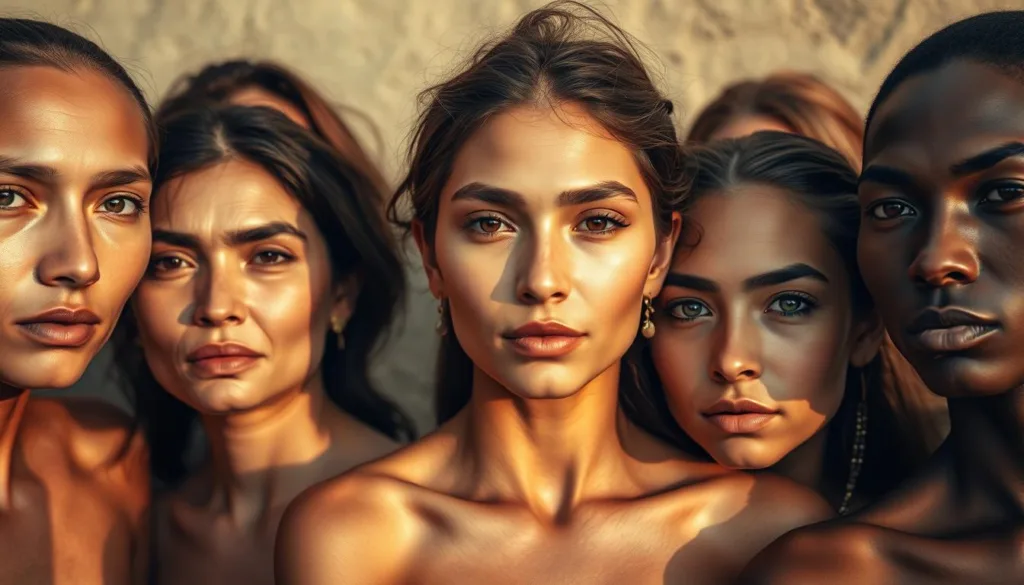
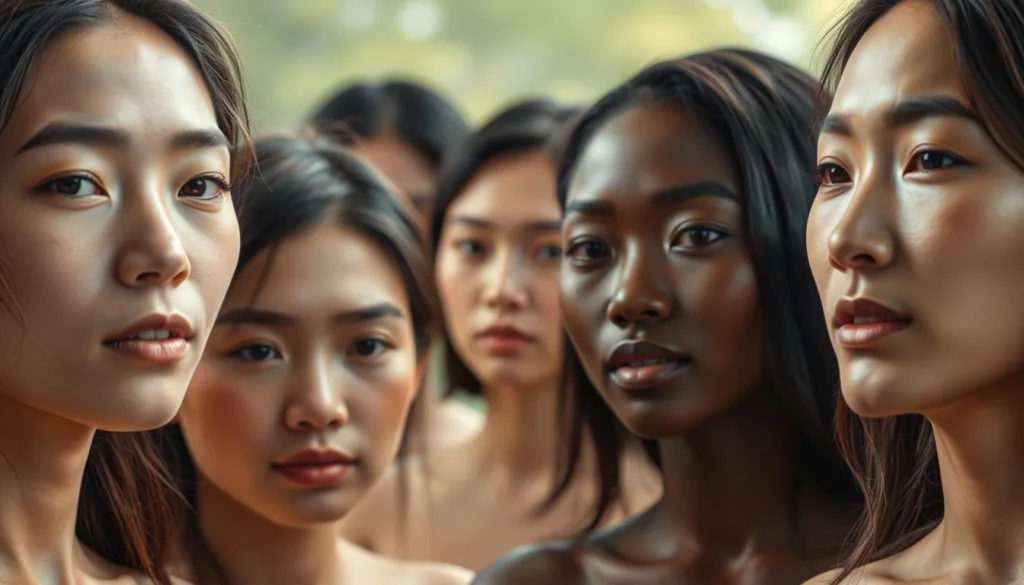
The beauty world has grown a lot, welcoming diversity and inclusivity. Yet, a key area is still ignored: the wide range of Asian skin tones. People often think Asian skin tones are the same, but they’re not. They vary a lot across different ethnic groups and places.
This variety is often underrepresented in beauty products and ads. They usually don’t match the wide range of Asian skin tones. It’s important to celebrate this diversity for true inclusivity.
Key Takeaways
The Asian population encompasses a wide range of skin tones.
The beauty industry still has a long way to go in representing Asian skin tones.
Acknowledging diversity in Asian skin tones is crucial for inclusivity.
Products and marketing should cater to the broad spectrum of Asian skin tones.
Celebrating diversity in Asian skin tones promotes a more inclusive beauty industry.
The Rich Spectrum of Asian Complexions
Exploring the diverse skin tones across Asia shows a mix of genetics, environment, and culture. The continent has a wide range of skin tones. From the fairest in the north to the darker in the south.
Breaking Down the Stereotype of “Yellow Skin”
The term “yellow skin” is often used for Asian complexions. But it’s misleading and simplifies the variety of skin tones in Asia. In truth, Asian skin tones vary widely in undertones and shades.
Common Misconceptions: Many think all Asians have the same skin tone. But this is not true. The diversity is clear when looking at different parts of Asia.
The Scientific Basis of Skin Tone Variation
Skin tone is mainly due to melanin levels and types. The variation in Asia is because of genetic changes to adapt to different climates and UV levels.
Region
Typical Skin Tone
Influencing Factors
East Asia
Generally lighter
Genetic adaptation to temperate climates
South Asia
Darker tones prevalent
Higher UV exposure near the equator
Southeast Asia
Varied, from light to dark
Mix of genetic and environmental factors
Understanding Undertones in Asian Skin
Undertones are key in skin tone appearance. Asian skin can have pink, neutral, or golden undertones.
Importance of Undertones: Knowing undertones is crucial for skincare and makeup. It also affects how skin tone is seen culturally.
Historical and Geographical Factors Influencing Asian Skin Tones
Asia’s skin tones are shaped by many historical and geographical factors. The continent’s wide range of landscapes, from icy tundras to sun-kissed beaches, has greatly influenced its people’s skin tones.
Migration Patterns Across Asia
Many groups have moved across Asia, mixing and adding to the genetic diversity. The Mongol conquests, for example, helped spread genes across huge areas, creating a mix of skin tones.
Climate Adaptation and Melanin Production
Different climates in Asia have led to changes in melanin production. People in sunny areas have more melanin to protect against the sun. This natural change is a big reason for the variety of skin tones in Asia.
Ancient Trade Routes and Cultural Exchange
Old trade paths, like the Silk Road, brought goods and cultures together. This mixing of cultures and genes has helped create the diverse skin tones seen in Asia today, as different groups intermarried.
These historical and geographical factors have made Asian skin tones incredibly diverse. They show that there’s no single “Asian skin tone,” but rather a complex range of human pigmentation.
East Asian Skin Tones: Beyond the Porcelain Stereotype
East Asia is more than just delicate, porcelain skin. It has a wide range of skin tones. These variations come from genetics, history, and the environment.
Chinese Regional Skin Tone Diversity
China’s huge size means different skin tones across the country. People in the south have darker skin, thanks to more melanin. This is because of the warmer, sunnier weather.
In the north, the skin is lighter. This is because of the colder, sunnier conditions.
Japanese Complexion Variations
Japan has a variety of skin tones too. The northern island of Hokkaido has fairer skin. The southern Okinawa has warmer tones.
This difference comes from Japan’s long stretch from north to south.
Korean Skin Tone Range
Korea is known for fair skin, but there’s more to it. There’s a growing acceptance of different skin tones. This move away from the old beauty standards is important.
Country
Regional Variations
Skin Tone Characteristics
China
North vs. South
Lighter in North, darker in South
Japan
Hokkaido vs. Okinawa
Fairer in Hokkaido, warmer in Okinawa
Korea
General
Fair complexion with growing diversity recognition
The variety of skin tones in East Asia shows the complexity of beauty here. It challenges old stereotypes. It shows we need to understand beauty and skin health in a deeper way.
Southeast Asian Complexion Diversity
The Southeast Asian region is known for its wide range of skin tones. This variety comes from its complex history and geography. Each country in the region has its own set of skin tones.
Filipino and Vietnamese Skin Tone Ranges
In the Philippines, people’s skin can be fair to medium brown. This is because of the country’s history with Spanish and American cultures. Vietnamese skin tones are generally darker, with many having medium to olive complexions.
Thai and Cambodian Skin Characteristics
Thais often have golden or olive skin, thanks to their location and climate. Cambodians also have similar skin tones, ranging from light brown to medium.
Indonesian and Malaysian Skin Diversity
Indonesia and Malaysia have a wide range of skin tones, from light to dark brown. This variety comes from the archipelagos’ diverse ethnic groups and historical trade routes.
The variety of Asian skin tones in Southeast Asia shows the region’s rich culture and geography. It’s important to understand and value this diversity. This helps promote inclusivity and challenges old beauty standards.
South Asian Skin Tone Spectrum
The skin tones in South Asia vary a lot. This is because of the region’s history and geography. The area’s complex past, including migrations and cultural exchanges, has shaped this diversity.
Regional Variations
North Indian and South Indian skin tones differ a lot. North Indians usually have fairer skin. South Indians often have darker skin. This is because of historical migrations and adapting to the climate.
Pakistani and Nepali Skin Tones
Pakistanis and Nepalis have a wide range of skin tones. Pakistanis have a mix of fair and olive skin. Nepalis have different skin tones because of their location between India and Tibet.
Sri Lankan and Bangladeshi Skin Characteristics
Sri Lankans and Bangladeshis have unique skin tones. Sri Lankans have skin tones from fair to dark, showing their cultural history. Bangladeshis have darker skin, influenced by their location near the Bay of Bengal.
The variety of skin tones in South Asia shows the region’s rich culture and complex history. It’s important to understand these differences to appreciate the beauty of diverse asian skin tones.
Central Asian Skin Characteristics
The skin of Central Asia is influenced by its geography and history. This area, home to Kazakhstan, Uzbekistan, Mongolia, and Tibet, shows a wide range of skin tones.
Complexions of Kazakh and Uzbek Populations
Kazakhs and Uzbeks have a mix of Asian and Caucasian traits. This mix leads to a variety of skin tones. Some have lighter skin from European influences, while others have darker skin from their Asian roots.
Mongolian and Tibetan Skin Tones
Mongolians have a strong skin type, often medium to dark, suited for the harsh Mongolian steppes. Tibetans, living high up, have skin that protects against strong UV rays, making their skin darker.
Influences of Silk Road Migrations
The Silk Road, a network of ancient trade routes, greatly influenced Central Asia’s genetic diversity. The mixing of ethnic groups along this route led to the diverse skin tones found in the region today.
Country
Typical Skin Tone Range
Influencing Factors
Kazakhstan
Light to Medium
European and Asian influences
Uzbekistan
Medium to Olive
Asian and Middle Eastern influences
Mongolia
Medium to Dark
Asian heritage and climate adaptation
Tibet
Dark
High-altitude UV adaptation
Not All Asians Have the Same Skin Tone: Debunking Media Representations
The media often shows Asian skin tones in a narrow way. This has been a big problem for a long time. It limits how we see Asian complexions in movies, TV, and ads.
Hollywood’s Limited Portrayal of Asian Skin Diversity
Hollywood has been criticized for not showing the real variety of Asian skin tones. Many movies and TV shows feature actors with lighter skin in main roles. This makes people think all Asians look the same.
This wrong idea affects how people see Asians worldwide. It also shapes beauty standards in Asian communities.
The Rise of Authentic Representation in Modern Media
But things are changing. Modern movies and TV shows are now showing more Asian actors. They come in different skin tones, reflecting the true diversity of the Asian diaspora.
This shift is key to breaking down old stereotypes. It helps us understand Asian beauty in a more inclusive way.
Social Media’s Role in Showcasing Asian Skin Diversity
Social media has been a big help in showing Asian skin tones. Sites like Instagram and TikTok let people share their stories. They show off their unique skin tones, challenging old beauty standards.
This way, we can celebrate the variety of Asian skin tones. It’s a step towards more inclusive media, showing the beauty of different complexions across Asia.
Cultural Attitudes Toward Skin Tone in Different Asian Societies
The way people view skin tone varies a lot in Asia. Some places value lighter skin, while others love their natural colors. It’s important to understand these differences to truly appreciate asian skin color diversity.
Historical Roots of Colorism
Colorism, or skin tone discrimination, has a long history in Asia. In some places, lighter skin meant wealth and status. This idea has lasted for generations, shaping today’s beauty ideals.
The Skin Whitening Industry in Asia
The skin whitening market in Asia is huge, worth billions of dollars. It shows how many people want lighter skin. With famous faces promoting these products, the industry is big and growing.
But, this industry also has dark sides. It spreads colorism and can be harmful to health. Some products use ingredients that are not safe for our skin.
Changing Perspectives on Skin Tone Beauty Standards
Lately, there’s a big push for accepting all skin tones. Social media has been key in this change. It shows off multiple asian skin tones through influencers and brands.
This movement is fighting against old beauty standards. It’s all about loving and accepting ourselves, no matter our skin color. As Asia changes, so do its views on beauty.
By embracing asian skin color diversity, these communities are becoming more inclusive. They’re learning to see beauty in all its forms.
Skincare Needs Across Different Asian Skin Types
It’s important to understand the unique skin needs of various Asian skin types. This is because Asia has a wide range of skin tones and types. Each type has its own skincare concerns that need to be addressed.
Unique Dermatological Considerations
Asian skin often has more melanin and is at risk for dark spots after skin issues. Many Asians also have combination skin. This means they need to balance controlling oil and keeping their skin hydrated.
Common Skin Concerns by Region
Different parts of Asia face different skin issues. In East Asia, people often want to look younger and have brighter skin. In Southeast Asia, the main concerns are fighting acne and keeping the skin moist.
Customized Approaches to Asian Skin Health
Skincare products and treatments need to be tailored to each Asian skin type. Using niacinamide for brightening and hyaluronic acid for hydration is key. Also, sun protection is vital for all Asian skin types to avoid dark spots and skin damage.
The Genetics Behind Asian Skin Tone Diversity
Recent studies have explored the genetic reasons behind the varied skin tones in Asian populations. They have uncovered the complex factors that influence these differences.
Key Genetic Markers Influencing Pigmentation
Genetic markers play a key role in skin pigmentation. Genes like MC1R and SLC24A4 are involved in melanin production. These genes vary across different Asian populations, leading to diverse skin tones.
MC1R gene variations can affect melanin production, influencing skin tone.
The SLC24A4 gene is associated with skin pigmentation and has been linked to skin tone diversity.
Mixed Heritage and Its Impact on Skin Tone
Mixed heritage greatly affects skin tone diversity in Asian populations. When people from different ethnic backgrounds marry, their genes mix. This mixing leads to a wider range of skin tones.
Recent Genetic Research on Asian Skin Diversity
Recent studies have made big progress in understanding Asian skin tone diversity. For example, research found many genetic loci linked to skin pigmentation in Asian populations.
These discoveries show how complex skin tone genetics are. They also highlight the need for more research in this field.
Asian Representation in Beauty and Fashion Industries
The beauty and fashion worlds are now more diverse. They recognize the wide range of Asian skin tones. This change is seen in more Asian models on runways and in new cosmetics for different Asian skin types.
The Evolution of Asian Models in Global Fashion
The fashion world used to lack diversity. But, in recent years, we’ve seen more Asian models on magazine covers and runways. This is a big step forward.
Makeup and Cosmetic Lines for Diverse Asian Skin Tones
The beauty industry has also made big changes. Now, there are makeup and cosmetic lines made for various Asian skin tones. Brands offer more foundation shades to match different Asian skin types.
Brand
Product Line
Shade Range
Brand A
Foundation
10 shades
Brand B
Concealer
8 shades
Challenges and Progress in Inclusive Beauty Standards
Even with progress, there are still challenges. The industry is working hard to include more diversity. They aim for better representation and more varied products.
Conclusion: Celebrating the Beautiful Diversity of Asian Skin
The wide range of Asian skin tones shows the complexity and richness of human variation. Not all Asians have the same skin tone. This diversity is seen in the different complexions across various regions and cultures.
Asian skin color diversity is more than just a natural fact. It’s also a key part of identity and beauty. By recognizing and celebrating this diversity, we move towards a more inclusive view of beauty.
To achieve inclusivity, we need to keep working on representing and celebrating Asian skin tones. This means promoting real representation in media, challenging old beauty standards, and embracing the unique traits of different Asian complexions.
By doing this, we can better understand Asian skin color diversity. We can also create a culture that values and celebrates individuality. This helps break down barriers and promotes inclusivity in the beauty and fashion worlds.
FAQ
What is the range of skin tones found in Asia?
In Asia, skin tones range from very light to very dark. They have various undertones. This shows the continent’s diverse ethnic, geographical, and historical backgrounds.
Are all Asians the same skin tone?
No, not all Asians have the same skin tone. The diversity of skin tones across Asia is significant. Different regions and countries have their unique skin tone characteristics.
What factors influence the diversity of Asian skin tones?
The diversity of Asian skin tones is influenced by historical and geographical factors. Migration patterns, climate adaptation, and cultural exchange have shaped the various complexions found across the continent.
How do skin tones vary across different Asian regions?
Skin tones vary significantly across different Asian regions. East Asia, Southeast Asia, South Asia, and Central Asia each have unique characteristics and ranges of complexions.
What is the significance of understanding undertones in Asian skin?
Understanding undertones in Asian skin is crucial. It helps determine the most suitable skincare and makeup products. This is because it can greatly impact the effectiveness of these products in enhancing or addressing specific skin concerns.
How has the representation of Asian skin tones in media evolved?
The representation of Asian skin tones in media has evolved. There is a growing trend towards more authentic and diverse representation. This is driven in part by social media’s role in showcasing the complexity of Asian skin tones.
What are the cultural attitudes toward skin tone in different Asian societies?
Cultural attitudes toward skin tone vary across different Asian societies. Some cultures value lighter skin, while others embrace their natural complexion. This reflects complex historical and social factors.
How do skincare needs vary across different Asian skin types?
Skincare needs vary across different Asian skin types. There are unique dermatological considerations and common skin concerns by region. This requires customized approaches to Asian skin health.
What is the genetic basis of Asian skin tone diversity?
The genetic basis of Asian skin tone diversity involves key genetic markers influencing pigmentation. Mixed heritage also plays a significant role in shaping skin tone, as revealed by recent genetic research.
How has the beauty and fashion industry responded to the diversity of Asian skin tones?
The beauty and fashion industry has made progress in responding to the diversity of Asian skin tones. There has been the evolution of Asian models in global fashion. There has also been the development of makeup and cosmetic lines catering to diverse Asian skin tones.
What is the importance of celebrating the diversity of Asian skin tones?
Celebrating the diversity of Asian skin tones is essential. It promotes inclusivity and challenges traditional beauty standards. It recognizes the rich spectrum of complexions that exist across Asia.
The COVID-19 pandemic changed how we see and interact with beauty. With the world locked down, people could explore beauty on their own terms. This allowed for a deeper dive into personal beauty.
This shift made beauty culture more about choice than duty. The beauty industry saw big changes, with new trends and standards emerging.
The makeup evolution shows how the beauty industry updates are moving towards flexibility and individuality.
Key Takeaways
The pandemic has accelerated the personalization of beauty.
Beauty standards are becoming more flexible and diverse.
The makeup industry is evolving to cater to individual preferences.
There’s a growing emphasis on self-care and personal expression.
Beauty trends are now more influenced by personal choice than societal norms.
The Transformation of Beauty Culture
The idea of beauty has changed a lot. Now, it’s more about being true to oneself than chasing perfection. This change shows in how we do makeup and beauty routines. We focus more on being ourselves and accepting who we are.
The Shift from Perfection to Authenticity
Old beauty standards focused on flawless skin and perfect makeup. But now, we’re moving towards a more natural and easy look. Aishwaria, 26, says she stopped trying to look perfect because she realized her skin is beautiful just the way it is.
This change is about accepting ourselves and rejecting fake beauty ideals. It’s about embracing our natural beauty and feeling good about who we are.
How the Pandemic Reshaped Our Relationship with Makeup
The COVID-19 pandemic changed the beauty world a lot. Lockdowns and social distancing made makeup sales drop. But, this also made people think differently about beauty.
Now, there’s more focus on skincare and self-care. People are interested in cosmetic innovations 2020 like at-home beauty tools and custom skincare. This shows a shift in how we see beauty and how we take care of ourselves.
Trend
Description
Impact
Authenticity
Embracing natural features
Reduced emphasis on perfection
Skincare-first approach
Prioritizing skincare over makeup
Increased demand for skincare products
Personalization
Seeking personalized beauty products
Rise of at-home beauty devices
Defining Makeup in the 2020s: A Revolution in Self-Expression
Makeup in the 2020s is more than just beauty. It’s a way to express oneself and show who you are. The decade has changed how we see and use makeup. Now, it’s all about being personal and diverse.
Breaking Free from Traditional Beauty Rules
The 2020s have broken free from old beauty rules. People are now more open to trying new things with makeup. They feel free to challenge what was once considered normal.
Key trends include:
Embracing bold and unconventional makeup looks
Experimenting with a wide range of colors and textures
Using makeup as a means of self-expression and storytelling
The Rise of Individualized Beauty
Beauty in the 2020s is all about being unique. Social media has made it easier for people to find products that let them show their true selves.
Experimental Looks Going Mainstream
Experimental makeup is now everywhere. It’s because more people are okay with different beauty standards. They want to express themselves in new ways.
Makeup as Personal Storytelling
Makeup is becoming a way to tell your story. It lets people share their feelings, beliefs, and experiences through their looks.
Trend
Description
Impact
Experimental Looks
Bold and unconventional makeup styles
Increased creativity and self-expression
Personalized Beauty
Tailored makeup approaches for individual identities
Enhanced personal confidence and identity
Storytelling through Makeup
Using makeup to convey personal stories and emotions
Deeper connection between makeup and personal identity
Social Media’s Powerful Influence on Beauty Standards
In the 2020s, social media has changed beauty culture a lot. It’s now how we see and interact with makeup. Sites like TikTok are key in the beauty world, setting trends and shaping what we buy.
TikTok Beauty Trends Transforming the Industry
TikTok has changed how beauty trends start and grow. Its huge user base and smart content system make it perfect for viral makeup trends. This has a big impact on makeup influences in the 2020s.
Viral Makeup Challenges and Their Impact
Viral makeup challenges on TikTok are big for beauty blog trends. Trends like “glass skin” get people to share their makeup, affecting millions.
Algorithm-Driven Beauty Discovery
TikTok’s smart system helps find new beauty content. It shows users what they’ll like, making it easy to find new makeup and products. This fits with the makeup trends 2020 focus on personal beauty.
The Push for Unfiltered Authenticity Online
The beauty world on social media wants real, true beauty. People want genuine, unedited content that shows natural beauty. This move away from fake, perfect posts is big.
This push for realness is seen in “no-makeup makeup” trends and using simple, natural products. It’s all about looking good without trying too hard, thanks to makeup influences in the 2020s.
The Inclusivity Revolution: Makeup for Everyone
In the 2020s, the makeup industry is changing fast. It’s focusing more on inclusivity and diversity. This change comes from people wanting products that look like them and a broader idea of beauty.
Expanded Shade Ranges and Representation
There’s a big push for more shades in makeup. This isn’t just about adding more products. It’s about celebrating the diversity of skin tones.
Brands are working hard to offer products for all skin tones. This means everything from the lightest to the darkest shades.
Social movements like #BlackLivesMatter have made a big impact. Brands are now tackling colorism and promoting diversity. For example, Unilever changed Fair & Lovely to Glow & Lovely to be more welcoming.
Brand
Initiative
Impact
Unilever
Rebranding Fair & Lovely to Glow & Lovely
Removing “fair” to promote inclusivity
Shaadi.com
Removing skin tone filter
Promoting equality in matchmaking
Gender-Inclusive Beauty Going Mainstream
Gender-inclusive beauty is becoming more common. The industry is moving away from old gender norms. It’s embracing a more fluid view of beauty and personal expression.
Men in Makeup: Normalizing Male Beauty
There’s less shame around men wearing makeup now. This change is thanks to society’s views shifting and social media. Male beauty influencers are becoming more popular.
Non-Binary Beauty Expressions
Non-binary people are seeing more products made for them. Brands are starting to recognize the diversity of gender identities. They’re offering products that go beyond traditional gender norms.
The beauty industry’s future is all about being inclusive and diverse. As it keeps growing, we’ll see even more products and marketing that serve a wide range of people.
Sustainability Reshaping Beauty Consumption
More people are thinking about the planet, and the beauty world is changing. It’s moving towards green, eco-friendly options. This big change is how beauty products are made, packaged, and used.
Eco-Conscious Formulations and Packaging
The beauty industry is now using natural, biodegradable ingredients. This makes products better for skin and the planet. Eco-friendly packaging is also on the rise, with less plastic and more recyclable materials.
People want products that work well and are good for the Earth. This has sparked the clean beauty movement. It focuses on using safe, sustainable ingredients in beauty products.
The Clean Beauty Movement’s Evolution
The clean beauty movement is growing fast. Brands are always finding new ways to make products safer and more eco-friendly. A big part of this is transparency in ingredient sourcing.
Transparency in Ingredient Sourcing
People want to know where their beauty products come from. Brands are now sharing more about their ingredients. This builds trust and makes the industry more accountable.
Waterless Beauty Products on the Rise
Waterless beauty products are becoming popular. They’re made without water, so they need less packaging. This cuts down on waste and helps the environment.
The beauty industry’s move towards sustainability is a good thing. It’s because of people wanting greener choices. As this trend grows, we’ll see even more creative, eco-friendly beauty solutions.
Technology and Digital Innovation in Cosmetics
Technology is changing the cosmetics world. It brings AI for makeup tips and AR for virtual try-ons. This mix of tech and beauty is making shopping better and changing how companies work.
AI and AR Transforming Makeup Shopping
AI and AR are making makeup shopping different. AI gives you makeup tips based on what you like. AR lets you try makeup online, so you don’t need to buy it first.
Key benefits of AI and AR in makeup shopping include:
Personalized product recommendations based on individual skin types and preferences
Virtual try-on capabilities that reduce returns and increase customer satisfaction
Enhanced online shopping experiences that simulate in-store interactions
Personalized Beauty Through Data and Tech
Data and tech are leading to personalized beauty. Companies use your data to make products just for you.
Custom-Formulated Products
Custom products are getting popular. They’re made just for you, based on your skin and what you like. This makes you happier and helps the planet.
Digital Skin Analysis Tools
Digital tools analyze your skin. They use AI to give you tips and product suggestions.
The cosmetics world is getting a tech makeover. It’s all about making beauty more personal, fun, and effective for you.
The Changing Consumer: New Priorities in Beauty
Makeup in the 2020s is changing, thanks to evolving consumer behavior. Today’s shopper is more informed and has different priorities. These changes affect what they buy in the beauty world.
Skincare-First Approach to Makeup
Now, people focus on skincare before makeup. They want healthy, glowing skin as a base. This shift is about simplicity and a natural look, with products that do both.
People spend more on skincare that solves specific skin problems.
Makeup is expected to have skincare benefits, like hydration or anti-aging.
Products that are both skincare and makeup are becoming more popular.
Value-Based Purchasing Decisions
Today, beauty shoppers look beyond just what a product does. They care about the brand’s values, how it’s made, and if it’s sustainable.
Supporting Ethical Brands
More people choose brands that are kind to animals, use eco-friendly packaging, and source materials responsibly. This shows a desire to buy what aligns with their values.
The Decline of Brand Loyalty
Brand loyalty is fading in the beauty world. With so many options, people are open to trying new things. Online reviews and easy access to information help them make better choices.
Industry Disruption: New Players and Business Models
The beauty industry is changing fast with new players and business models. This change comes from how consumers behave and the growth of digital tech.
Celebrity and Influencer Brands Dominating the Market
Celebrity and influencer beauty brands are taking over. They use their fame to sell products. For example, Rihanna’s Fenty Beauty introduced a wide range of shades. Kylie Jenner’s Kylie Cosmetics is famous for its online marketing.
Other brands to watch include:
Huda Kattan’s Huda Beauty, known for its high-quality products and massive social media following.
Glossier, founded by Emily Weiss, which has become synonymous with minimalist, effective skincare and makeup.
Direct-to-Consumer Models Challenging Traditional Retail
Direct-to-consumer (DTC) models are shaking up traditional retail. They offer personalized experiences and products. Brands like Il Makiage and Rare Beauty by Selena Gomez use online quizzes and AI to connect with customers.
Brand
DTC Strategy
Key Feature
Il Makiage
AI-driven product recommendations
Personalized foundation matching
Rare Beauty
Online quizzes
Mental health advocacy
The rise of these new players and models shows a big change in the beauty industry. It’s moving towards being more inclusive, personalized, and tech-savvy.
Conclusion: The Future of Beauty in a Redefined Landscape
The 2020s have changed the beauty industry a lot. This change comes from new consumer habits, tech progress, and the pandemic’s effect on society. Understanding these shifts is key to defining makeup in the 2020s.
The pandemic, as novelist Arundhati Roy said, opened a new world. It made us rethink beauty and cosmetics. Now, the beauty world focuses more on being inclusive, green, and digital.
Cosmetic innovations 2020 and later have focused on beauty that’s made just for you. This is thanks to AI and AR. Also, there’s a push for products and packaging that are good for the planet. As people want real and open beauty, the industry is changing to meet these needs.
The beauty world’s future will mix tech, green living, and being unique. Brands that listen to what people want and adapt will do well in this new world.
FAQ
What is driving the shift towards authenticity in beauty standards?
The pandemic has changed how we see beauty. People now prefer a more personal and flexible makeup look. Social media, especially TikTok, has helped by showing real, unfiltered beauty.
How has the pandemic influenced makeup habits?
The pandemic has made makeup routines more relaxed. Now, people aim for natural, effortless looks. Virtual events and less need for heavy makeup have also played a part.
What is the significance of expanded shade ranges in the beauty industry?
Expanded shade ranges make beauty more inclusive. They let people with different skin tones find matching products. Brands like Fenty Beauty have led this important change.
How is technology transforming the cosmetics industry?
Tech like AI and AR is changing makeup shopping. It lets customers try products virtually. Personalized beauty through data and tech is also growing, with brands making customized products.
What is the clean beauty movement, and how is it evolving?
The clean beauty movement focuses on eco-friendly products and packaging. It’s driven by consumers wanting sustainable, green beauty. Brands like Glossier and Drunk Elephant are leading this trend.
How are celebrity and influencer brands impacting the beauty industry?
Celebrity and influencer brands are changing how we shop for beauty. They sell directly to consumers, using social media to promote their products. This builds a loyal fan base.
What is driving the skincare-first approach to makeup?
People now value skin health and wellness more. This trend is also influenced by the growing importance of skincare for a natural look.
How are consumers making value-based purchasing decisions in the beauty industry?
Consumers are choosing products based on values like sustainability, ethics, and inclusivity. Brands that share these values are more appealing to those who want products that match their values.
The beauty world is always searching for products that do it all. Lip gloss blush has become a top pick. On TikTok, the hashtag #lipglossblush has millions of views. People love sharing how they use versatile makeup products.
Products like Fenty Beauty’s Gloss Bomb Universal Lip Luminizer and NYX PROFESSIONAL MAKEUP’s Butter Gloss are being used as blush. They give cheeks a natural glow. This shows how some lip glosses can be a great addition to your makeup.
Key Takeaways
Using lip gloss as blush is a trending makeup hack on social media.
Certain lip glosses can double as a natural-looking blush.
Fenty Beauty and NYX PROFESSIONAL MAKEUP offer popular products for this trick.
This versatile makeup technique can simplify your beauty routine.
It’s a cost-effective way to achieve a multi-dimensional look.
The Beauty of Multitasking Makeup
Multitasking makeup products are changing beauty routines. They offer versatility and make things easier. People want simple beauty without giving up on looks.
Why Product Versatility Matters in Modern Routines
Today, beauty routines need to be quick and easy. Multitasking makeup makes this possible. For example, lip gloss can also be used as blush. This saves space and makes applying makeup simpler.
This is great for those with little time. It helps them look good fast.
The Rise of Minimalist Makeup Approaches
The trend of minimalist makeup is growing. It’s all about using fewer, more versatile products. This way, you can get different looks with just a few items.
People want simple, efficient beauty. They’re looking for products that can do it all.
Benefit
Description
Convenience
Simplifies beauty routines by reducing the number of products needed.
Cost-Effective
Reduces the need for multiple purchases, saving money.
Versatility
Offers the ability to achieve multiple looks with a single product.
What Is Lip Gloss Blush Using the Same Product?
Using lip gloss as blush has become popular for its ease and results. It’s a way to get a dewy, flushed look by applying lip gloss to your cheeks. This method lets you use one product for both lips and cheeks, making your beauty routine simpler.
The Concept and Technique Explained
Applying lip gloss as blush is easy. First, put the gloss on your lips as usual. Then, take a bit of the leftover and apply it to your cheeks with your fingers or a brush. Blend it outwards and upwards for a natural glow.
Here are some tips to make it work better:
Choose a lip gloss that matches your skin tone.
Apply it lightly to your cheeks to avoid too much color.
Blend well to avoid any harsh lines.
Evolution of Multipurpose Makeup Products
The trend of using lip gloss as blush is part of a bigger trend towards multipurpose makeup. These products are versatile and convenient, fitting the modern beauty routine. The demand for these products has grown, as people want fewer, more versatile items.
Makeup is always changing, and we’ll see more products that do it all. This change makes beauty routines easier and helps the environment by reducing waste.
Benefits of Using Lip Gloss as Blush
Using lip gloss as blush is a growing trend in beauty. It offers many benefits for those wanting to make their makeup routine easier. This method is not only easy but also has several practical perks.
Time-Saving Advantages for Busy Lifestyles
One big plus of using lip gloss as blush is how much time it saves. By using one product for two tasks, you can cut down makeup time a lot. This is great for people with tight schedules who need to get ready fast.
Cost-Effective Makeup Solution
Another benefit is that it’s cost-effective. You don’t need to buy separate lip gloss and blush. Instead, you can use one product for both, saving money.
Travel-Friendly Makeup Option
For travelers, lip gloss as blush is a smart choice. It means you carry fewer products, making it perfect for those who like to pack light.
In summary, using lip gloss as blush is a smart choice for those wanting to simplify their makeup routine. It saves time and money, making it a great option for many.
Choosing the Right Lip Gloss for Dual Use
Finding the perfect lip gloss that doubles as a blush means looking at texture, color, and ingredients. It’s important to think about how these aspects will work on both your lips and cheeks.
Texture Considerations for Cheek Application
The texture of your lip gloss is key for cheek use. Lightweight formulas are best for a natural look.
Lightweight vs. Heavy Formulas
Lightweight lip glosses are better for cheeks because they don’t feel heavy. Heavy formulas might be too bold for cheeks.
Shimmer vs. Cream Finishes
Shimmer finishes give cheeks a nice glow. Cream finishes offer a soft, matte look. Your choice depends on what you like and the look you want.
Color Selection Tips for Different Skin Tones
Picking a lip gloss color that matches your skin tone is crucial. Cool skin tones look great with pink or berry shades. Warm skin tones do well with coral or peach tones.
Ingredients to Look For and Avoid
Look for hydrating components like hyaluronic acid or glycerin. They keep your lips and cheeks moist. Avoid lip glosses with drying alcohols or fragrances that can irritate your skin.
Step-by-Step Application Technique
Getting a natural flush with lip gloss as blush is easy. First, make sure your skin is ready.
Preparing Your Skin for Application
Before you start, clean and moisturize your skin. Exfoliate your lips and cheeks lightly for a smooth base. Use a light moisturizer to keep the area hydrated.
Applying to Lips: Techniques for Perfect Coverage
To apply lip gloss to your lips, line them first with a lip liner. Then, use the applicator to apply the gloss from the center outwards. Blot your lips gently with a tissue to stop feathering.
Applying to Cheeks: Methods for Natural Flush
There are two ways to apply lip gloss to your cheeks: with your fingers or a brush.
Finger Application Method
Finger application gives a natural flush. Just dab a bit of gloss on your cheek apples and blend outwards and upwards. Blend well to avoid harsh lines.
Brush Application Method
For a precise look, use a blush brush. Dip the brush in gloss and apply to cheek apples. Gently sweep the brush up and out towards your hairline for a smooth finish.
Here’s a quick summary of the application techniques:
Prepare your skin by exfoliating and moisturizing.
Apply lip gloss to lips using a liner and applicator.
Apply to cheeks using either finger or brush method.
Best Lip Gloss Blush Combo Products
Lip gloss blush combos are all the rage in beauty. They make your makeup routine easier and give you a look that’s perfect for any day or event.
Non-Sticky Options for Comfortable Wear
Looking for something that won’t feel sticky? There are many lip gloss blush options that are non-sticky. NYX PROFESSIONAL MAKEUP Butter Gloss is a favorite. It’s smooth and comfy for both your lips and cheeks.
Long-Lasting Formulations for All-Day Color
Need makeup that lasts all day? Fenty Beauty Gloss Bomb is perfect. It keeps your lips and cheeks looking vibrant all day long. It’s great for those who are always on the go.
Natural and Organic Choices for Sensitive Skin
Got sensitive skin? Look for natural and organic lip gloss blushes. Brands with natural ingredients and hypoallergenic formulas are safe for your skin. They offer the benefits of a dual-purpose product without irritation.
Product
Key Feature
Brand
Butter Gloss
Non-Sticky
NYX PROFESSIONAL MAKEUP
Gloss Bomb
Long-Lasting
Fenty Beauty
Lip & Cheek Tint
Natural Ingredients
Various Organic Brands
Adapting the Technique for Different Skin Types
Using lip gloss as blush works for many skin types with the right approach. Knowing your skin type is key for a perfect look.
Dry Skin Considerations and Hydrating Formulas
For dry skin, pick a lip gloss that’s hydrating. Look for ones with hyaluronic acid or glycerin. These keep your skin moist. Stay away from glosses with alcohol or strong fragrances, as they can dry out your skin.
Oily Skin Adjustments for Lasting Wear
Oily skin needs a special touch. Choose lip glosses that are oil-free or matte. This stops oiliness from getting worse. Try dusting your cheeks with powder before applying the gloss to make it last longer.
Sensitive Skin Precautions and Hypoallergenic Options
If you have sensitive skin, go for hypoallergenic and fragrance-free glosses. Always test a new product on a small area first to avoid any bad reactions.
Skin Type
Recommended Formula
Application Tip
Dry
Hydrating, moisturizing
Apply after moisturizer
Oily
Oil-free, matte
Use powder before application
Sensitive
Hypoallergenic, fragrance-free
Patch test before use
Adjusting your lip gloss technique to your skin type can give you a natural glow.
Seasonal Variations of Lip Gloss Blush
Seasons change, and so do our makeup needs. Lip gloss as blush is a great way to refresh your look. It adapts to the trends and skin needs of each season.
Summer Glow Techniques and Color Choices
In summer, aim for a natural glow with lip gloss blush. Choose light, shiny shades that match your skin. Corals and pinks are perfect for a sun-kissed look. Just apply a little to your cheek apples for a healthy glow.
Winter Hydration Focus for Dry Weather
In winter, focus on keeping your skin hydrated with lip gloss blush. Look for formulas with hyaluronic acid or vitamin E. Rich berry shades can add color to your look while moisturizing your skin.
Transitional Season Adjustments
In spring and autumn, adjust your lip gloss blush to the weather. For spring, try soft peach tones. For autumn, warm terracotta shades. These colors work well in both seasons, making your makeup versatile.
Common Mistakes to Avoid When Using Lip Gloss as Blush
Using lip gloss as blush can save time, but it’s important to avoid common mistakes. These errors can ruin the look you’re going for. Knowing what to avoid can help you achieve a beautiful finish.
Application Errors That Affect Longevity
Not preparing your skin before using lip gloss as blush is a big mistake. Exfoliating and moisturizing your cheeks helps the color stick better and last longer. Also, applying too much can make your skin look sticky and uneven.
Exfoliate cheeks before application
Moisturize to ensure even coverage
Apply lip gloss in light, gentle strokes
Product Selection Missteps for Different Occasions
Choosing the right lip gloss is crucial. For fancy events, pick a bold gloss. For casual days, a light shade is better. Think about the event and your outfit when picking a gloss.
Blending Issues and How to Fix Them
Blending is essential when using lip gloss as blush. To avoid harsh lines, blend the product upwards and outwards towards your hairline. If it’s too sticky, warm it up in your fingers first. This makes blending easier.
Affordable Lip Gloss Blush Options for Every Budget
Now, you can find budget-friendly lip glosses that work on both lips and cheeks. They fit different budgets and tastes.
Looking for something affordable? Start with drugstore favorites. They offer quality and versatility without costing a lot.
Drugstore Favorites Under $15
Many drugstore lip glosses can also be used as blush. They’re great for those who want value. Here are some popular ones:
NYX PROFESSIONAL MAKEUP Butter Gloss
Maybelline Baby Lips Moisturizing Lip Gloss
Revlon Lip Gloss
These glosses are not only cheap but also come in many shades. They match different skin tones.
Budget-Friendly Luxury Dupes
Want luxury but on a budget? There are dupes that offer similar quality at a lower price. Here are some examples:
Luxury Product
Budget-Friendly Dupe
Price
Tom Ford Lip Gloss
Milani Rose-Tinted Lip Gloss
$10
Charlotte Tilbury Matte Revolution Lipstick
Wet n Wild MegaLast Lip Color
$2-$3
Lip Gloss vs Blush: When to Use Each or Both
Knowing when to use lip gloss as blush or traditional blush is crucial. It’s all about the occasion and the look you want.
Occasions Best for the Combined Approach
For everyday or travel looks, lip gloss as blush is perfect. It gives a natural glow without needing many products. A sheer gloss can brighten both lips and cheeks, making your look cohesive.
Here are some times when this combo is great:
Casual daily wear
Outdoor events where minimal makeup is preferred
Travel, due to its multipurpose nature
When Traditional Separate Products Work Better
Formal events or when you need precise makeup call for separate products. They offer better control and a polished look. Also, if you want different shades or textures for lips and cheeks, separate products are best.
In summary, whether to use lip gloss as blush or traditional blush depends on your needs. Try both to see what suits you best.
Conclusion
Using lip gloss as blush is a smart makeup trick. It makes beauty routines easier and gives a natural glow. This method saves time, is budget-friendly, and is great for traveling.
Choosing the right lip gloss is key. It should match your skin tone and type for a smooth look. This way, you get a natural, effortless beauty.
This trick works for all skin types and tones. It’s easy to use and makes your skin look healthy and rosy. It’s a simple way to boost your natural beauty.
In short, using lip gloss as blush is a great makeup trick. It’s easy, effective, and makes your skin look natural and radiant. It’s a simple way to enhance your beauty routine.
FAQ
What is lip gloss blush, and how does it work?
Lip gloss blush is a makeup trick. It uses lip gloss on the cheeks for a natural look. Just apply a bit to the apples of your cheeks.
What are the benefits of using lip gloss as blush?
Lip gloss blush saves time and is cheaper. It’s great for travel too. Plus, it gives a natural flush with just one product.
How do I choose the right lip gloss for dual use as lip gloss and blush?
Pick a lip gloss that’s not sticky and lasts long. It should match your skin tone. Also, choose gentle ingredients for your skin.
Can I use any lip gloss as blush, or are there specific products recommended?
Some lip glosses work well as blush. Look for non-sticky, long-lasting ones. Brands like Buxom, Fenty Beauty, and Glossier are good choices.
How do I apply lip gloss as blush for a natural look?
Prep your skin first. Then, apply a small amount to your cheeks. Use your fingers or a brush and blend well.
Can I use lip gloss as blush on sensitive skin?
Yes, but choose a hypoallergenic, fragrance-free lip gloss. This reduces irritation risk. Look for products for sensitive skin.
Are there any common mistakes to avoid when using lip gloss as blush?
Avoid applying too much and not blending well. Also, pick a product that’s not too shiny or sticky. Use a light hand and blend well.
How do I adapt the lip gloss as blush technique for different skin types?
For dry skin, use a hydrating gloss. Oily skin? Choose a formula that controls oil. Sensitive skin? Go for hypoallergenic. Adjust amount and technique based on your skin.
Can I use lip gloss as blush in all seasons, or are there seasonal variations?
Yes, lip gloss blush works all year. Just change the color and formula with the seasons. Lighter shades for summer, deeper for winter.
Is using lip gloss as blush more cost-effective than buying separate products?
Yes, it’s cheaper. It means you don’t need to buy a separate blush. It simplifies your makeup and saves money.
When should I use lip gloss as blush versus traditional blush?
Use lip gloss for a natural look or to simplify your routine. Traditional blush is better for intense color or specific finishes like matte.
Can a simple makeup routine really enhance your natural beauty? For individuals with fair skin, the right techniques and products can make all the difference.
With the guidance of renowned beauty brands like L’Oréal Paris and Sephora Canada, it’s possible to achieve a flawless and radiant look that accentuates one’s natural complexion.
Enhancing natural beauty is not just about covering up; it’s about bringing out the best features of your skin. This article will explore the world of fair skin makeup. It will provide tips and recommendations on skincare and makeup application to help you look your best.
Key Takeaways
Understand the importance of skincare in enhancing natural beauty
Learn the right makeup techniques for fair skin
Discover recommended beauty products for fair skin
Find out how to achieve a flawless and radiant look
Get tips on how to accentuate your natural complexion
Understanding Fair Skin Characteristics
Knowing about fair skin is key to matching makeup to its delicate look. Fair skin has its own set of challenges and benefits. It’s important to grasp these to apply makeup well.
Common Challenges for Fair Skin
Fair skin often deals with redness, sallowness, and looking washed out. The right skincare and makeup can fix these problems. For example, color correctors can reduce redness, and the right foundation can avoid sallowness.
The Advantages of Fair Complexions
Despite its challenges, fair skin is great for makeup. It can handle many colors and styles, from natural to bold. Knowing your skin undertone is crucial for making the most of this.
Cool Undertones
People with cool undertones have a pink or blue skin tone. They look best with makeup that has a blue or pink base. This enhances their natural look without looking fake.
Warm Undertones
Those with warm undertones have a yellow or golden skin tone. They do well with makeup that has yellow or golden undertones. This complements their skin and adds a healthy glow.
Neutral Undertones
Neutral undertones are a mix of cool and warm. They offer flexibility with makeup choices. Neutral-toned people can try many colors without looking out of place.
Understanding your fair skin’s undertones helps you choose the right makeup. This way, you can highlight your natural beauty.
Preparing Your Fair Skin for Makeup
Before you start with makeup, fair skin needs some prep work. This ensures a flawless and natural look. A few key steps help make your skin ready for makeup.
Essential Skincare Steps
Begin with a good skincare routine. This includes cleansing, moisturizing, and exfoliating. Sephora Canada says a well-cared-for skin is key for makeup to stick well.
Importance of Sun Protection
Sun protection is a must. UV rays can harm your skin, causing early aging and discoloration. Daily use of broad-spectrum sunscreen keeps your skin healthy and young.
Primers for Fair Skin
Primers are crucial for fair skin. They make your skin smooth and address specific issues.
Color-Correcting Primers
Color-correcting primers fix redness or sallowness, common in fair skin. They even out your tone, making makeup look natural.
Illuminating Primers
Illuminating primers add a glow to fair skin. They brighten your complexion, making it radiant.
Choosing the Perfect Foundation for Fair Skin
For those with fair skin, finding the right foundation is key. It boosts their natural beauty and prepares their skin for other makeup. The right foundation makes a big difference.
Finding Your Shade Match
Finding a foundation that matches your skin tone is crucial. Testing foundation shades on the jawline is a good way to find the perfect match. Fair skin often has pink undertones, so look for foundations that match these.
Best Foundation Formulas for Fair Complexions
There are many foundation formulas that work well for fair skin. The choice depends on how much coverage you want and the finish you prefer.
Liquid Foundations
Liquid foundations are great for fair skin because they offer flexibility. They can give a natural look and often have skincare benefits.
Powder Foundations
Powder foundations are perfect for a light, matte finish. They’re great for fair skin that tends to get oily.
BB and CC Creams
BB and CC creams give a light, natural coverage. They also have skincare benefits, making them ideal for everyday use.
Application Techniques for a Natural Finish
The way you apply foundation affects the final look. Using a makeup sponge or brush helps get a smooth, natural finish. Make sure to blend well, especially around the hairline and jawline, to avoid harsh lines.
Knowing about different foundations and how to apply them can greatly improve your look. It helps you enhance your natural beauty and get a flawless, natural look.
Concealing and Correcting on Fair Skin
For those with fair skin, learning to conceal and correct is key. It helps achieve a smooth, even look. These steps are vital for neutralizing imperfections and making your skin look flawless and bright.
Color Correctors for Redness and Dark Circles
Color correctors are a game-changer for fair skin. They help reduce redness and dark circles. Sephora Canada suggests using a green color corrector to neutralize redness. For dark circles, peach or orange correctors can brighten the under-eye area.
Tip: Apply a small amount of color corrector to the affected area and blend well before applying concealer.
Concealer Selection and Application
Choosing the right concealer is crucial for fair skin. Pick one that’s one shade lighter than your foundation to brighten the under-eye area. When applying, use a gentle patting motion with your ring finger to blend seamlessly into the skin.
Setting Techniques That Won’t Wash You Out
Using the right setting techniques is key to keeping makeup in place all day. There are two main methods: translucent powders or setting sprays.
Translucent Powders
Translucent powders are perfect for fair skin. They set makeup without adding color. Apply a light dusting over the T-zone to control shine and set the concealer.
Setting Sprays
Setting sprays lock in makeup, ensuring it lasts all day. Makeup artists say they also prevent concealer from creasing into fine lines.
Product
Description
Benefit for Fair Skin
NARS Radiant Creamy Concealer
Creme concealer for under-eye coverage
Provides medium to high coverage without looking cakey
MAC Pro Longwear Concealer
Long-lasting concealer for imperfections
Lasts all day without creasing or fading
“The key to effective concealing is to use the right amount of product and blend, blend, blend!” – Makeup Artist
Fair Skin Makeup: Eye Enhancement Techniques
For fair skin, the right eye techniques can really change your look. Making the eyes stand out is key in makeup. It’s about picking the right shades and methods to highlight the eyes’ natural beauty.
Flattering Eyeshadow Colors for Fair Skin
Choosing the right eyeshadow colors is key for fair skin. Soft neutrals are perfect for day, while richer shades work for night.
Daytime Eyeshadow Palettes
For a natural day look, go for soft shades like champagne, beige, or light brown. These colors look great on fair skin without being too bold.
Evening Eyeshadow Options
At night, try richer, bolder shades. Smoky eyes with grays, blacks, or deep berry tones are stunning. L’Oréal Paris suggests using a light shade on the lid, a medium shade in the crease, and a dark shade along the lash line for depth.
Time of Day
Eyeshadow Shades
Effect
Daytime
Soft neutrals (champagne, beige, light brown)
Natural, subtle look
Evening
Rich shades (grays, blacks, deep berry)
Dramatic, smoky eye
Eyeliner Approaches for a Soft or Dramatic Look
Eyeliner adds definition to the eyes. For a soft look, use brown or neutral eyeliner. Black eyeliner is better for a dramatic cat eye or winged liner.
Tip: Start with a thin line and build up for a thicker look.
Mascara Tips for Fair Lashes
Mascara makes lashes look bigger and more defined. For fair lashes, choose a mascara that adds volume and length without being too heavy.
L’Oréal Paris recommends applying mascara lightly to avoid clumps. Wiggle the wand from base to tip for even coating.
Eyebrow Definition for Fair-Haired Individuals
Defining the eyebrows frames the face and enhances makeup. For fair-haired individuals, use a brow product that matches your natural color. This helps define the shape without looking harsh.
Tip: Fill in sparse areas with short, light strokes. Avoid overfilling for a natural look.
Adding Color: Blush and Bronzer for Fair Skin
To give fair skin a healthy glow, adding blush and bronzer is key. These products add warmth and definition, enhancing your natural beauty.
Selecting Blush Shades That Complement Fair Skin
Choosing the right blush shade is crucial for fair skin. Soft, gentle colors work best.
Pink and Peach Tones
Pink and peach tones are especially flattering on fair skin. They add a natural-looking flush, says Sephora Canada. These shades create a healthy, rosy glow.
Application Placement for Different Face Shapes
The way you apply blush changes with your face shape. For round faces, apply blush higher on the cheeks for a defined look.
Face Shape
Blush Application
Round
Apply higher on the apples of the cheeks
Oval
Apply directly on the apples of the cheeks
Square
Apply slightly lower on the apples of the cheeks
Bronzer Application Without Looking Orange
Bronzer can be tricky on fair skin, as it can look orange if not applied right. Choose a bronzer one to two shades deeper than your skin tone. Apply it sparingly.
Tip: Use a light hand when applying bronzer, and blend well for a natural glow.
Highlighting Techniques for a Luminous Glow
Highlighting can make your complexion glow. Apply highlighter to the high points of your face, like the tops of your cheekbones, nose, and cupid’s bow.
Lip Colors That Enhance Fair Complexions
For those with fair skin, finding the perfect lip color is key. It’s about balancing between natural and bold shades. The right lip color can make your complexion pop, while the wrong one can make it fade.
Nude Lip Options for Fair Skin
Nude lip colors are a must-have for many. They offer a natural look that complements fair skin without overpowering it. Shades that are slightly lighter or match your natural lip color are best. L’Oréal Paris has a range of nude lipsticks that are perfect for fair skin, giving a subtle, natural look.
Bold Lip Colors That Pop Against Fair Skin
Bold lip colors can make a big statement, especially against fair skin. The trick is to find a shade that complements your skin tone.
Reds and Berries
Reds and berry shades are especially flattering on fair skin. They add a pop of color and create a stunning contrast. Deep reds and rich berry shades are especially effective, creating a dramatic look.
Pinks and Corals
Pinks and corals are bold options that can enhance fair complexions. Soft pinks add elegance, while corals give a healthy, vibrant glow.
Application Tips for Long-Lasting Lip Color
To make your lip color last longer, start by lining your lips with a lip liner. Then, apply your lipstick or lip gloss. For an extra-lasting finish, blot your lips gently with a tissue and reapply.
By choosing the right lip color and applying it correctly, you can enhance your fair complexion. This makes your makeup look more polished.
Complete Makeup Looks for Different Occasions
Learning makeup for various occasions is easy with the right tools and techniques for fair skin. Whether it’s for work, a casual outing, or a fancy event, adjusting your makeup can boost your look and confidence.
Everyday Natural Makeup for Fair Skin
For everyday makeup, aim to enhance your features gently. Use a light foundation that matches your skin, and a soft concealer for blemishes. Define your brows and add mascara to brighten your eyes. Finish with a light powder to set your look.
Office-Appropriate Makeup
Office makeup should be professional and neat. Choose a foundation with a warm undertone to brighten your skin. Use concealer for dark circles and blemishes, and a soft blush for your cheeks. Keep your eyes simple with neutral shades and defined brows.
Evening and Special Occasion Glamour
For evening events, go bold with makeup. Try a smoky eye or a vibrant lip color. Fair skin looks great with many shades, from deep berry lips to sparkly eyeshadows.
Seasonal Adjustments for Fair Skin Makeup
Change your makeup with the seasons to stay on-trend. In summer, opt for light, natural makeup. In winter, choose warmer, richer tones.
Summer vs. Winter Makeup Approaches
In summer, aim for a sun-kissed look with subtle bronzer and highlighter. In winter, use warmer foundations and richer lip colors.
Adapting to Seasonal Color Changes
Seasonal colors change with the weather. In spring, try soft pastels and pinks. In autumn, go for golden bronzes and deep berry shades.
Conclusion
Fair skin makeup is all about highlighting your natural look. It starts with knowing your skin type and preparing it well. Then, picking the right makeup products is key.
It’s all about making your natural beauty shine. Choose makeup that matches your skin tone and go for a natural finish. Whether you’re going for a casual look or something more glamorous, aim for a polished yet natural appearance.
Mastering fair skin makeup is crucial for a flawless look. Start with good skincare, find the perfect foundation, and learn makeup techniques that bring out your natural glow. With these tips, anyone with fair skin can enjoy a variety of makeup styles that boost their confidence and beauty.
FAQ
What is the best foundation for fair skin?
The best foundation for fair skin is one that matches your skin tone. It should also give you the coverage you want. Look for foundations labeled “fair” or “porcelain”. Try liquid, powder, or BB/CC creams from brands like MAC, NARS, or Laura Mercier.
How do I determine my skin undertone for fair skin makeup?
To find your skin undertone, look at the veins on the inside of your wrist. Blue or purple veins mean you have a cool undertone. Green veins indicate a neutral undertone. Yellow or golden veins mean you have a warm undertone. This helps choose the right foundation and makeup.
What are some common challenges for fair skin, and how can I overcome them?
Fair skin often deals with redness and sallowness. Use a color corrector to reduce redness. Apply a primer for a smooth makeup base. Choose a foundation that matches your skin tone and offers the right coverage.
How can I enhance my eyes with makeup if I have fair skin?
To make your eyes pop, pick eyeshadow colors that suit your fair skin. Soft neutrals are good for day, while richer shades are better for night. Use eyeliner for definition and mascara to highlight your lashes. Defining your eyebrows also frames your face.
What are some tips for applying blush and bronzer on fair skin?
For blush, soft pink or peach tones work well on fair skin. Apply it to the apples of your cheeks for a natural glow. For bronzer, use a light touch. Apply it to areas where the sun would naturally kiss your skin, like the tops of your cheekbones and nose.
What lip colors are suitable for fair skin?
Fair skin can pull off many lip colors. Try nude shades or bold colors like reds, berries, pinks, and corals. Pick a lip color that complements your skin tone and style. Line your lips with a lip liner to make the color last longer.
How can I create a natural everyday look with fair skin makeup?
For a natural look, start with a lightweight foundation or tinted moisturizer. Use concealer to cover blemishes. Add mascara to your eyes and define your eyebrows. Use a soft pink blush for color. Finish with a nude lip color.
What are some fair skin makeup tips for different occasions?
Adjust your makeup for different occasions. For the office, go for a subtle look. For evening or special occasions, try bolder colors and dramatic eye makeup. For summer, use lighter makeup. For winter, choose warmer tones.