Sunscreen pills under makeup when layered products roll into tiny crumbs instead of staying smooth. Too many layers, repeated rubbing, and how particular formulas behave together can contribute; simplify the products underneath and adjust your technique without reducing your sunscreen application.
Is It Sunscreen Pilling, Dry Skin, or Foundation Separation?
These problems can look similar, but they need different fixes:
- Product pilling: Little rolls or crumbs appear as you spread sunscreen or makeup. They may collect around the hairline, eyebrows, or jaw and brush away like eraser shavings.
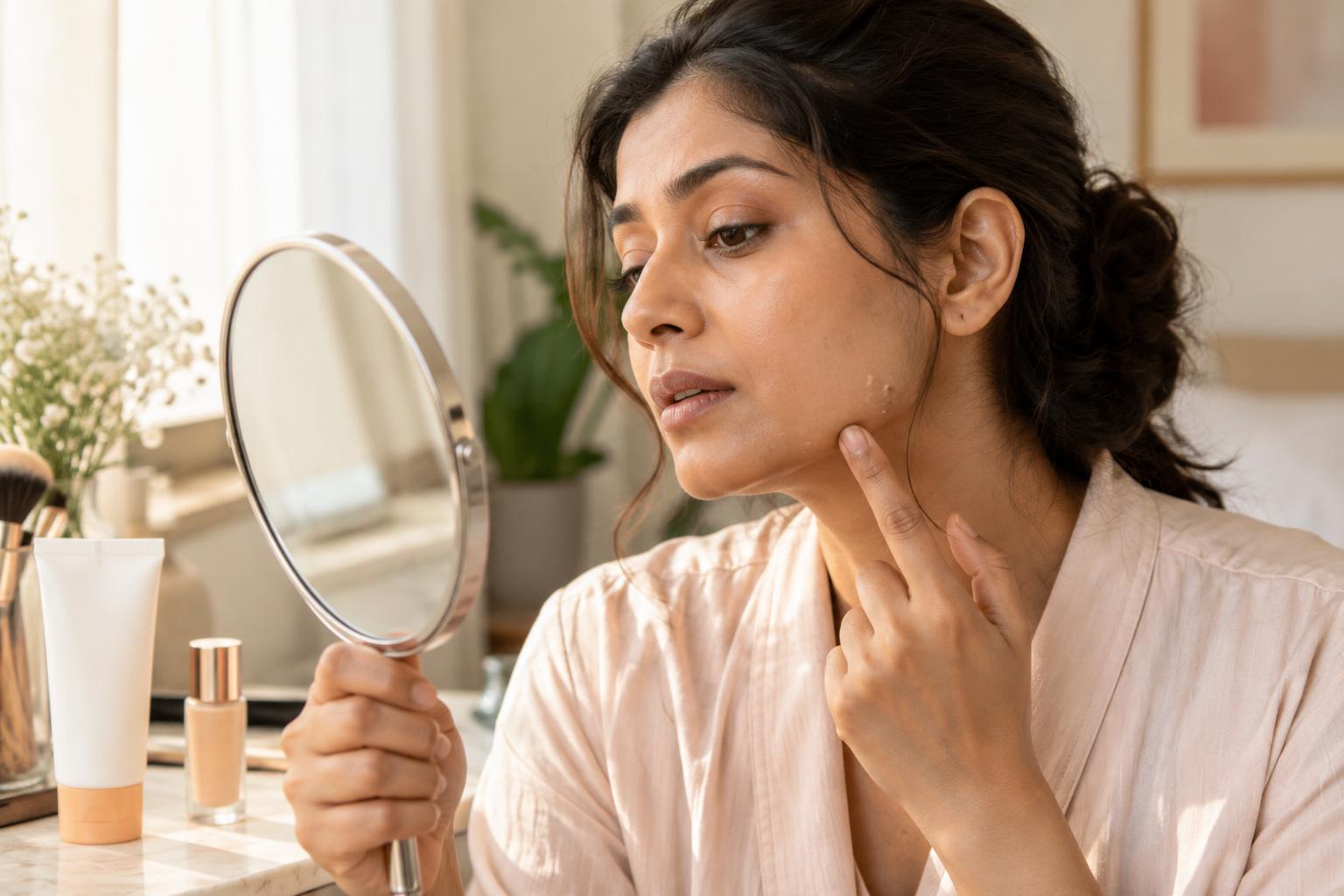
- Dry skin flaking: Irregular skin scales may be visible before products go on and remain attached at their edges. Skin may also feel tight or irritated.
- Foundation separation: Coverage breaks into patches, beads, or pools rather than forming rolled-up crumbs.
- Cakiness: Makeup looks thick, powdery, or built up around pores and lines, without necessarily rolling off.
Check freshly cleansed, dry skin before your routine. Existing flakes suggest dryness, although dry skin and product pilling can happen together. Persistent redness, itching, or peeling deserves professional advice rather than more exfoliation.
Why Sunscreen Pills Under Makeup
Formula interactions—not a simple silicone-versus-water rule
Sunscreens, moisturizers, serums, and foundations can contain silicones, oils, powders, and polymers that thicken products or help form a film. Layering these finished formulas can sometimes produce a surface that rolls up when rubbed.
Silicones are not automatically the problem. Neither are gels or water-based products. Many formulas contain both water and silicones, so matching products by their first ingredient is not a dependable compatibility test. A gel serum, rich moisturizer, or blurring primer may work beautifully alone but pill in a particular combination.
The evidence has limits: Sunscreen-use guidance is much clearer than guidance about specific cosmetic pairings. Without testing the finished products together, ingredient lists cannot reliably identify the culprit. Treat claims that “all silicones clash with water-based makeup” as oversimplifications, not established rules.
Too much supporting skincare or too much friction
Several generous skincare layers can leave more product on the surface than your makeup routine handles comfortably. Repeated massaging, buffing, or going back over partly set layers can then encourage rolling.
The fix is not to skimp on sunscreen. Reduce optional serums, excess moisturizer, primer, or foundation first. Uneven skin texture can also make application less smooth, but scrubbing away flakes immediately before makeup may worsen irritation.
A Step-by-Step Morning Routine to Reduce Pilling
1. Cleanse gently
Use a gentle cleanser suited to your skin, rinse thoroughly, and pat dry. Avoid leaving cleanser residue or starting with an abrasive scrub.
2. Keep serum optional
If you use a serum, apply a thin layer according to its directions. While troubleshooting, skip it for a few mornings. This is especially useful when several gel-like or sticky products are stacked together.
3. Moisturize where needed
Apply enough moisturizer for comfort, rather than a thick blanket underneath every other product. Let obvious wetness settle. If your sunscreen is moisturizing enough for your skin, a separate moisturizer may be unnecessary.
4. Apply the full recommended sunscreen amount
The American Academy of Dermatology’s sunscreen application guidance recommends broad-spectrum, water-resistant sunscreen with SPF 30 or higher, applied generously to exposed skin about 15 minutes before going outdoors. Follow your sunscreen’s directions and cover commonly missed areas such as the ears and neck.
Spread it gently and evenly. If smaller passes make application easier, divide the same full amount between passes—do not turn a thinner application into the solution.
5. Let it settle, then apply makeup lightly
Follow any product-specific timing instructions. The AAD’s 15-minute advice concerns application before sun exposure; it is not proof that every sunscreen needs exactly 15 minutes before foundation.
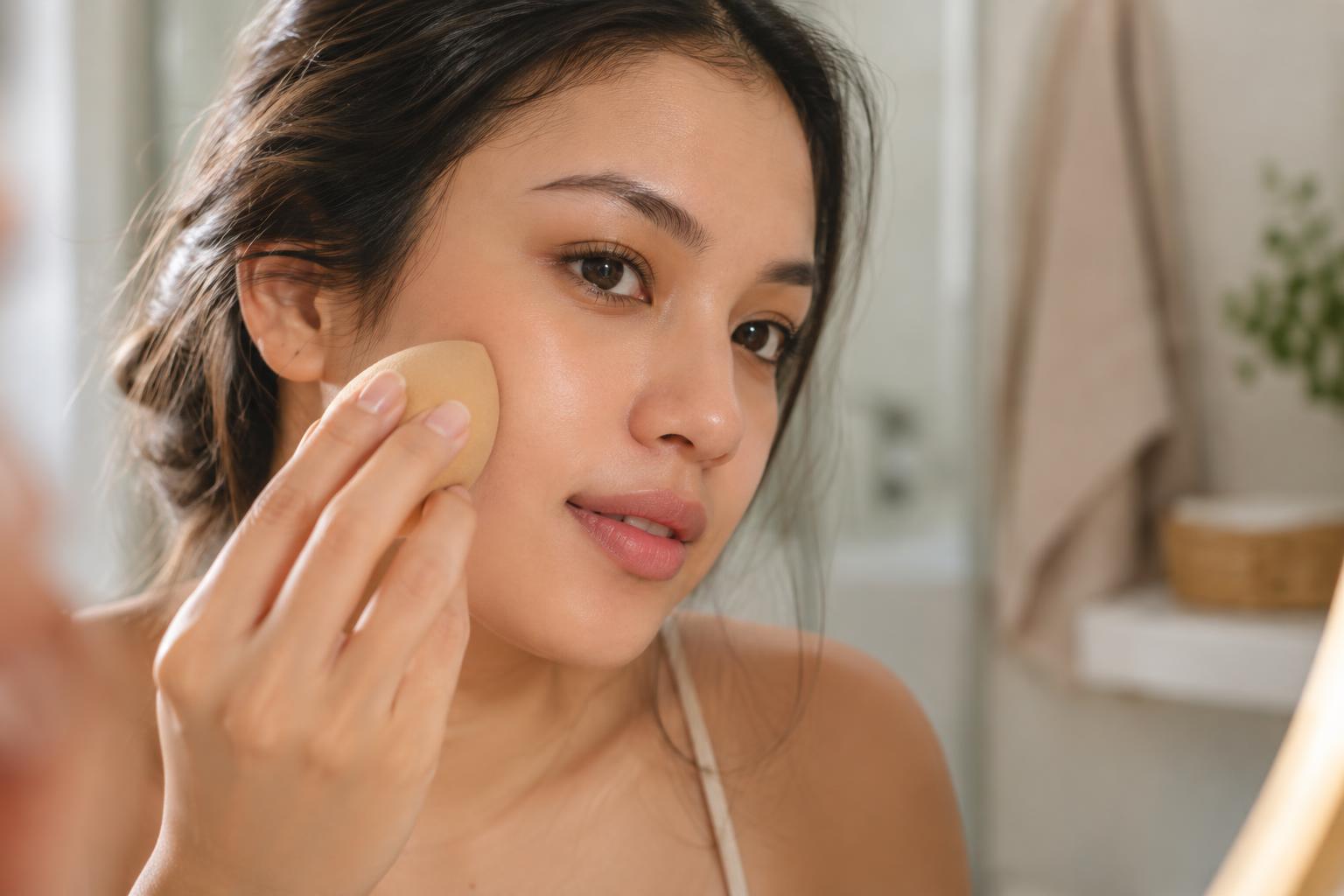
Once the surface is no longer obviously wet or slippery, apply foundation in light layers. Try pressing or tapping with fingers, a sponge, or a brush rather than repeatedly buffing the same area. Use powder selectively instead of piling it over crumbs.
Sunscreen Pilling Troubleshooting Table
| Symptom | Possible cause | Practical fix |
|---|---|---|
| Crumbs appear before makeup | Sunscreen interacting with skincare, or repeated rubbing | Test sunscreen over a simpler routine and spread gently. |
| Pilling starts with primer or foundation | A particular pairing or buffing technique | Skip primer, tap on foundation, and change one product at a time. |
| Rolling occurs mainly near the hairline | Product buildup or repeated passes | Distribute layers evenly and avoid repeatedly working the edges. |
| Flakes are visible before skincare | Dry or irritated skin | Use gentle cleansing and moisturizer; pause irritating steps. |
| Foundation becomes patchy without crumbs | Separation rather than pilling | Try less-rich supporting skincare or a different foundation pairing. |
| Makeup looks thick and chalky | Too much foundation or powder | Reduce makeup layers, not sunscreen. |
Adjust the Routine for Your Skin Type
- Oily skin: Start with fewer supporting layers. Consider a lighter-feeling sunscreen you can comfortably apply generously, rather than stacking mattifying serum, primer, and powder.
- Dry skin: Keep a comfortable moisturizer in the routine and minimize rubbing. Avoid trying to fix every flake with acids or scrubs.
- Combination skin: Apply extra moisturizer only to dry areas and use less powder there. Keep sunscreen coverage generous and even across all exposed areas.
When to Change Products Instead of Waiting Longer
A short settling period can help when layers are still wet. But if the same pairing pills after settling, extending the wait indefinitely is unlikely to be practical. Remove one optional product at a time, starting with primer or serum, while keeping sunscreen application consistent.
If sunscreen works alone but pills beneath one foundation, try another foundation or application method. If it repeatedly pills even over a minimal routine, a different sunscreen texture may be the more useful change.
Common mistakes include mixing foundation or moisturizer into sunscreen, scrubbing away pills and assuming protection is unchanged, and using less sunscreen to improve makeup wear. Keep sunscreen as its own layer. If it visibly rolls off substantially, gently remove the affected layers and reapply sunscreen before restarting makeup; appearance alone cannot confirm the remaining protection.
FAQ
Does sunscreen pilling mean it is not working?
Pilling does not tell you the exact protection remaining. Visible product loss creates uncertainty, so do not assume the labeled SPF still describes your application. Reapply a complete, even sunscreen layer if substantial product has rolled away.
Are mineral sunscreens or silicone-free formulas less likely to pill?
Neither label guarantees a smoother result. The entire formula, the products underneath and above it, and application technique matter more than avoiding one ingredient category.
How long should I wait before applying foundation?
Follow the product directions and let obvious wetness settle. There is no universal makeup waiting time. If a pairing still pills, simplify or switch products rather than repeatedly extending the wait.
How do I reapply sunscreen over makeup without making it worse?
The AAD advises reapplying approximately every two hours outdoors and after swimming or sweating, following the label. For the most straightforward full application, remove makeup as needed, reapply sunscreen evenly, and touch up makeup afterward. Do not assume a light dusting of SPF powder replaces a generous sunscreen application; also use shade, hats, and other sun-protective clothing.